|

Nasdaq Elliott Wave: End of correction?
Executive summary

  • Trend bias: Wave ii rally.
  • Key support level: 24,629 – 24,842.
  • If correct, wave ii could rally to 26,200 with higher levels possible.

For the past 3 months, Nasdaq has traded in a sideways range. The range low experienced a retest this week. The decline leading into the low was sloppy and overlapping, but the rally from Monday appears to be impulsive.

This implies another 3-5% rally may develop later this week pressuring all-time highs.

Current Elliott Wave analysis
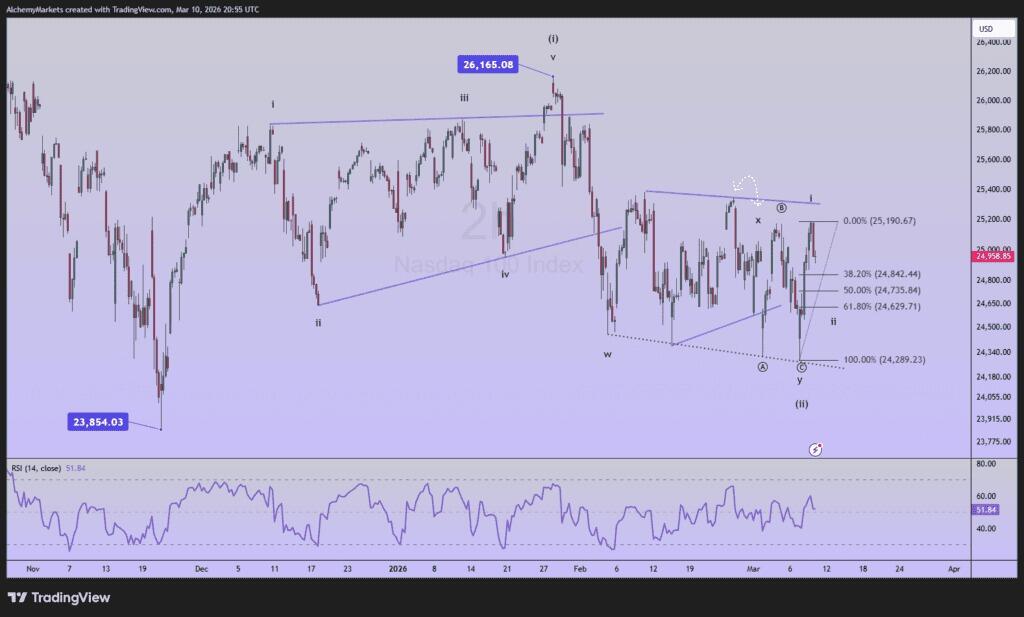
Our Elliott wave analysis of the Nasdaq 100 (NDX) chart shows the rally from the November 2025 low was a diagonal pattern, a rising wedge.

The decline from the January high was sloppy and overlapping as well, indicative of a corrective pattern.

From a larger perspective, this implies new all-time highs may be around the corner.

When we look at the rally from Monday March 9 low, it appears to take the structure of an Elliott wave impulse pattern. This is likely wave ‘i’ of a larger impulse.

If correct, then look for a temporary decline in wave ‘ii’ that may reach 24,629 – 24,842, which is guarded by the 38% and 61% Fibonacci retracement levels.

Once ‘ii’ is finalized, then a strong push higher in wave ‘iii’ may propel NDX up to retest all time highs near 25,200.

If NDX declines back to and below horizontal support at 23,854, then we’ll reconsider other bearish wave counts.

Bottom line

The structure of the rally from Monday, March 9 indicates NDX may be in the beginning stages of a rally to retest all-time highs near 26,200.

A break below 23,854 will be reason to pause and consider alternate wave counts.

Author

Zorrays Junaid

Zorrays Junaid

Alchemy Markets

Zorrays Junaid has extensive combined experience in the financial markets as a portfolio manager and trading coach. More recently, he is an Analyst with Alchemy Markets, and has contributed to DailyFX and Elliott Wave Forecast in the past.


More from Zorrays Junaid
Share:

Editor's Picks

AUD/USD gains traction near  0.7100 as the post-Fed USD rally pauses

AUD/USD finds fresh buyers and retakes 0.7100 in the Asian session on Thursday as the US Dollar pauses its hawkish Fed-inspired rally to its highest level since late July. However, RBA rate-hike bets and hopes for US-Iran diplomatic efforts lift risk sentiment and support the risk-sensitive Australian Dollar and the major.

USD/JPY reverses a dip below 156.00 as focus shifts to BoJ

USD/JPY is reversing a brief dip below 156.00 in the Asian session on Thursday, looking to snap a three-day winning streak to a nearly two-week top set the previous day. The US Dollar pauses following the post-Fed rally to seven-week highs, while a more hawkish repricing of the BoJ's policy normalization path supports the Japanese Yen. This keeps the pair's upside limited, with the focus now shifting to the BoJ policy decision due on Friday.

Gold pops to weekly highs near $4,400

Gold climbs sharply and clinches fresh weekly peaks around the $4,480 zone per troy ounce on Thursday. The precious metal’s bounce leaves behind three daily declines in a row and follows the marked retracement in the US Dollar as well as another negative performance of crude oil prices.

BoE recap: A cautious stance amid rising inflation risks

The Bank of England left Bank Rate unchanged at 3.75% but delivered a distinctly hawkish message as its inflation outlook deteriorated sharply.

One hike down, more to come? The Fed’s new rate path says yes

The Federal Reserve (Fed) raised its Fed Fund Target Range (FFTR) range by 25 basis points to 3.75%-4.00% in a unanimous decision, saying the move would support a timelier return to its 2% inflation goal.

How Japan became the World's Banker and why that era may be ending

Japan's ultra-low interest rates helped finance trillions of dollars in global investments for more than a decade, making the Japanese Yen one of the world’s cheapest sources of funding. With the Bank of Japan expected to tighten policy again this week, that advantage may be entering a new phase. While most major economies raised interest rates, Japan remained the world's outlier.