Modi to India: Don’t buy Gold for a year
- Indian Prime Minister Narendra Modi urges citizens not to buy Gold for a year to save foreign exchange.
- Modi’s pledge comes along with other cost-cutting recommendations as the country struggles with high Oil prices.
- Analysts don’t expect the announcement to significantly hit demand for Gold.

Indian Prime Minister Narendra Modi urged the nation’s citizens to avoid buying Gold for a year, in an effort to cut spending and save foreign exchange as the country grapples with the macroeconomic consequences of the Iran war.
“For a year, be it any function, we shouldn’t buy Gold jewelry,” Modi said on Sunday, according to Bloomberg, along with other announced cost-cutting measures such as fuel conservation, increasing working from home or limiting overseas trips.
Modi’s recent call is significant because India (along with China) is the world’s largest consumer of Gold. Prices of the precious metal haven’t moved significantly in response to the news, as it is unclear if Indians will follow these recommendations, but shares of Indian jewelers fell sharply afterwards.
Indian Gold demand stood at 151 tonnes in the first quarter of 2026, marking a 10% year-on-year increase, driven by a 54% surge in investment, according to the World Gold Council (WGC).
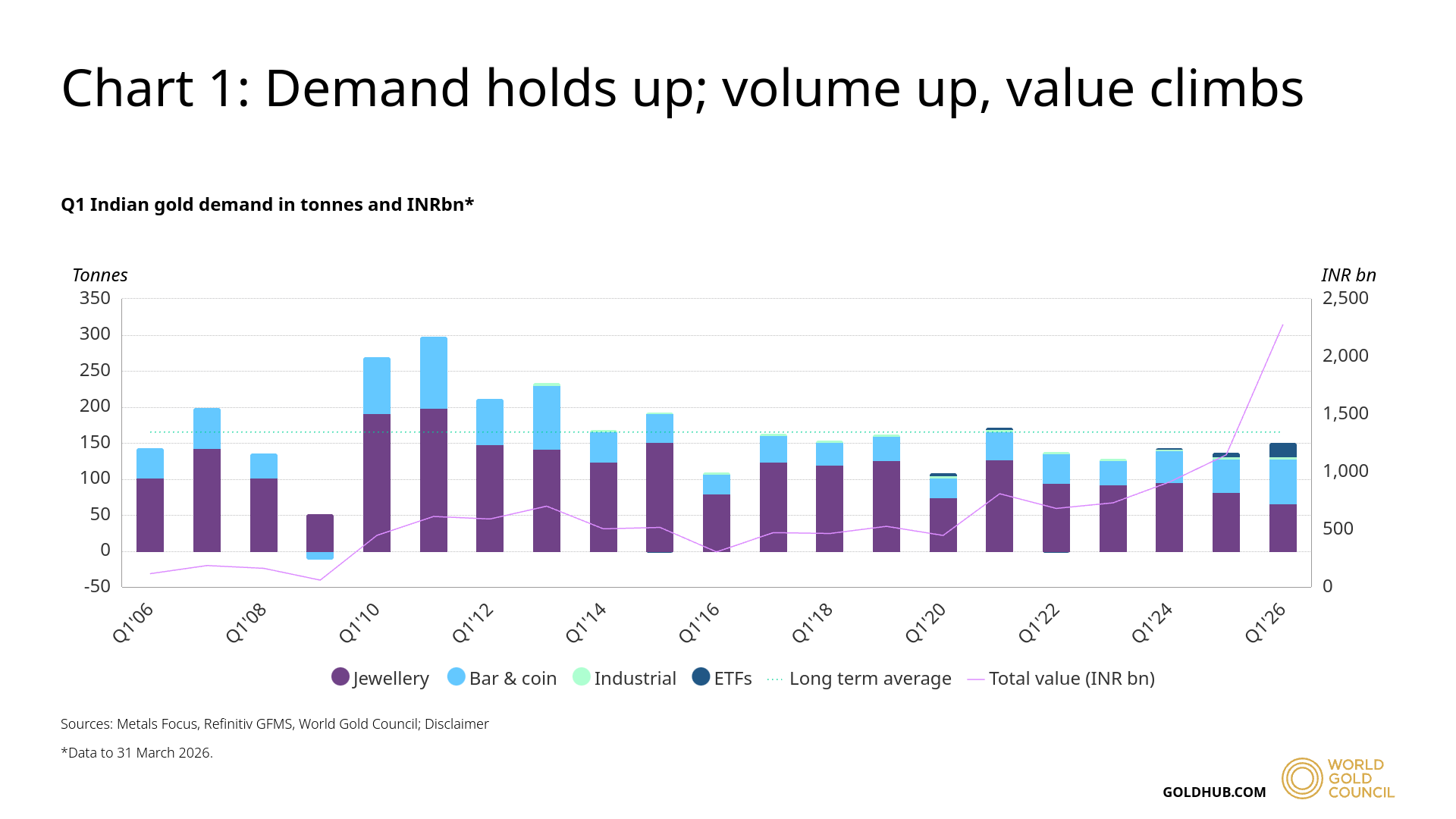
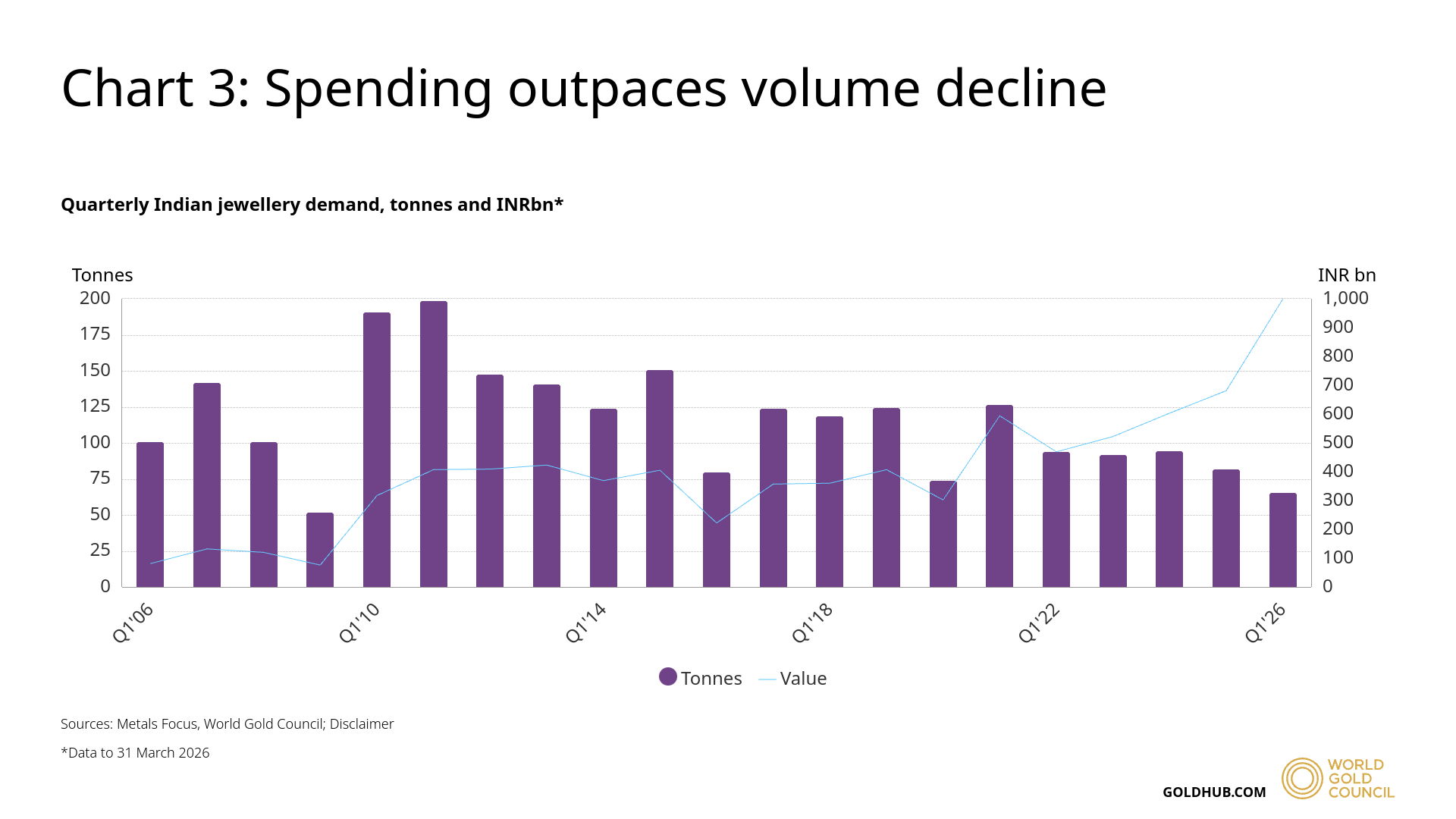
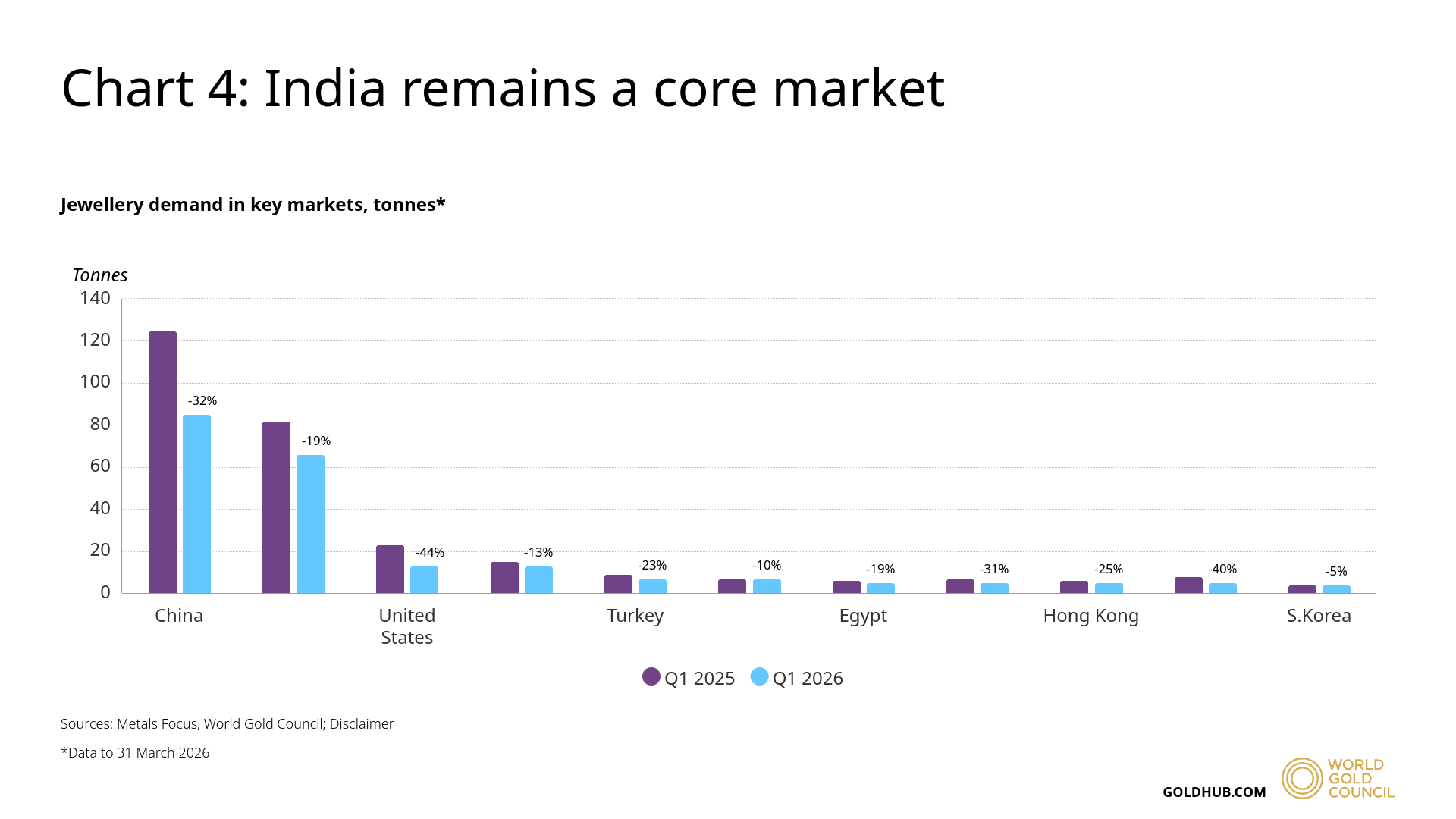
Still, while the commodity’s total demand rose, that for jewelry dropped 19% due to record-high prices, the data shows. Spending, however, surged to a record high, underscoring resilient consumer demand but also adding to Modi’s worries:
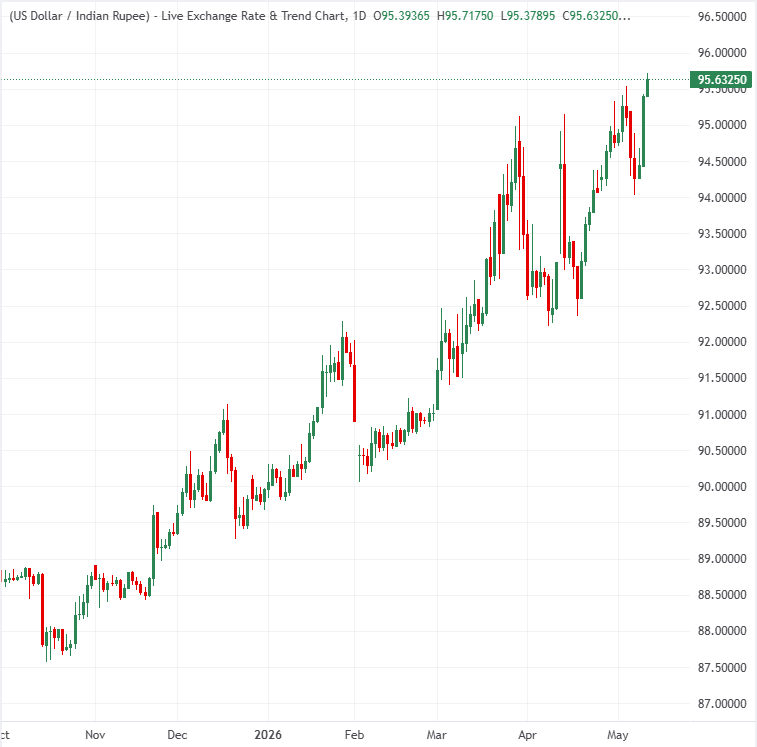
India, along with many other Asian countries, is facing the consequences of the prolonged conflict in the Middle East. The Iran war has sent Oil prices surging, and India imports almost 90% of its crude needs. The spike in prices is expected to deteriorate the country’s balance of trade and, to make matters worse, the Indian Rupee’s (INR) record low against the US Dollar (USD) is making imports even more expensive, as seen on the USD/INR daily chart below.
Gold is considered one of the safest stores of wealth for Indians. Apart from its value as a financial asset, the precious metal is deeply embedded in the local culture as it’s seen as an auspicious present for weddings and plays a central role in many religious and regional festivals.
Jateen Trivedi, Vice President and Research Analyst for Commodity and Currency at LKP Securities, told the Indian business newspaper The Economic Times that Modi’s appeal is unlikely to materially alter India’s long-term appetite for Gold, given how deeply the metal is embedded in savings behavior, investments and cultural buying patterns. Still, he added that the comments could temporarily slow discretionary purchases.
Modi's words may slow short-term Gold purchases, but India's deep cultural and financial ties to the precious metal are unlikely to change. The government's push to save foreign exchange seeks to alleviate the country’s economic pressures, but the underlying issue – high energy prices – is unlikely to be resolved by buying less Gold.
Gold FAQs
Gold has played a key role in human’s history as it has been widely used as a store of value and medium of exchange. Currently, apart from its shine and usage for jewelry, the precious metal is widely seen as a safe-haven asset, meaning that it is considered a good investment during turbulent times. Gold is also widely seen as a hedge against inflation and against depreciating currencies as it doesn’t rely on any specific issuer or government.
Central banks are the biggest Gold holders. In their aim to support their currencies in turbulent times, central banks tend to diversify their reserves and buy Gold to improve the perceived strength of the economy and the currency. High Gold reserves can be a source of trust for a country’s solvency. Central banks added 1,136 tonnes of Gold worth around $70 billion to their reserves in 2022, according to data from the World Gold Council. This is the highest yearly purchase since records began. Central banks from emerging economies such as China, India and Turkey are quickly increasing their Gold reserves.
Gold has an inverse correlation with the US Dollar and US Treasuries, which are both major reserve and safe-haven assets. When the Dollar depreciates, Gold tends to rise, enabling investors and central banks to diversify their assets in turbulent times. Gold is also inversely correlated with risk assets. A rally in the stock market tends to weaken Gold price, while sell-offs in riskier markets tend to favor the precious metal.
The price can move due to a wide range of factors. Geopolitical instability or fears of a deep recession can quickly make Gold price escalate due to its safe-haven status. As a yield-less asset, Gold tends to rise with lower interest rates, while higher cost of money usually weighs down on the yellow metal. Still, most moves depend on how the US Dollar (USD) behaves as the asset is priced in dollars (XAU/USD). A strong Dollar tends to keep the price of Gold controlled, whereas a weaker Dollar is likely to push Gold prices up.
Author

FXStreet Team
FXStreet
Composed of a group of economic journalists and FX experts, the FXStreet content team produces and oversees all content published on FXStreet. It provides a purely journalistic approach to the Forex market.