|

Mexican Peso: USMCA risks and Banxico stance – Societe Generale
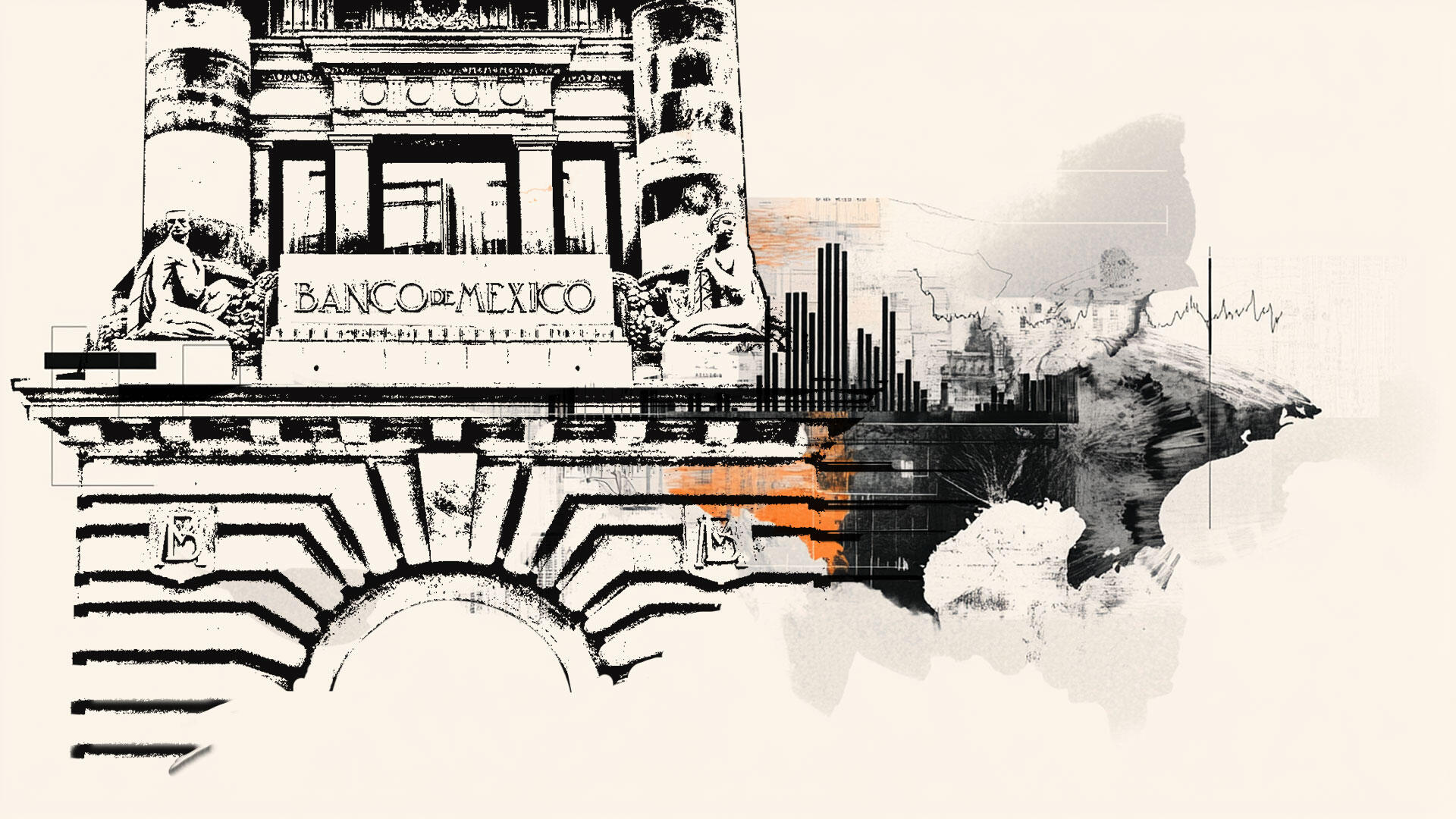
Societe Generale analysts Dev Ashish and Brendan McKenna discuss how ongoing United States-Mexico-Canada Agreement (USMCA) review uncertainty is likely to prolong policy risk for Mexico and weigh on growth and capex. They note that Banxico’s inclination to ease and new bond-buying authority intersect with their existing short EUR/MXN trade recommendation and 2-year rate receiver position, which they currently keep unchanged.

Steady with USMCA uncertainty

"The July 1 review will go ahead but will likely only serve as a starting point, with no immediate decision; the most probable outcome is a move toward annual reviews, prolonging policy uncertainty."

"Mexico’s exports remain strong, supported by US demand and supply-chain shifts, but investment and capacity expansion are lagging, leaving utilization tight and raising inflation risks."

"Ongoing USMCA uncertainty will continue to weigh on growth and capex, keeping Banxico inclined to ease; however, a hawkish Fed could drive FX volatility and limit policy flexibility."

"USMCA-related uncertainty is perhaps the underlying force for Banxico being extended new bond buying authority."

"We do not view Banxico’s enhanced ability to purchase bonds as disruptive to our existing short EUR/MXN trade recommendation or 2-year rate receiver position, but will keep an eye on whether bond purchases evolve going forward."

(This article was created with the help of an Artificial Intelligence tool and reviewed by an editor.)

Author

FXStreet Insights Team

The FXStreet Insights Team is a group of journalists that handpicks selected market observations published by renowned experts. The content includes notes by commercial as well as additional insights by internal and external analysts.


More from FXStreet Insights Team
Share:

Editor's Picks

GBP/USD slides below 1.3250 after failing to break through 23.6% Fibo

The GBP/USD pair meets with a fresh supply during the Asian session on Wednesday and moves away from a nearly two-week high around the 1.3275 region, touched the previous day. Spot prices currently trade around the 1.3235 zone, down 0.20% for the day, as traders look to speeches from Bank of England Governor Andrew Bailey and Federal Reserve Chair Kevin Warsh for a fresh impetus.

EUR/USD tests daily lows near 1.1380; focus on ECB Forum

EUR/USD remains under pressure below 1.1400 on Wednesday amid extra gains in the US Dollar. In addition, softer-than-expected inflation data in Germany and the Euroland fuel expectations of a less aggressive ECB, contributing to the downside mood.

Gold clings to daily gains beyond $4,000 ahead of Warsh

Gold manages to regain composure and advance past the key $4,000 per troy ounce on Wednesday, reversing two daily drops in a row. The yellow metal’s decent bounce comes despite uncertainty surrounding Iran and growing expectations of a Fed rate hike continue to support the Greenback for now.


ISM Manufacturing PMI expected to signal continued expansion in the US

Attention shifts to Wednesday’s release of the June ISM Manufacturing Purchasing Managers Index, one of the most closely followed indicators of activity in the US manufacturing sector and an important barometer of the broader economy. Markets expect the headline index to remain unchanged at 54.

Kevin Warsh isn't expected to say much in Sintra: That's exactly why markets will listen

Financial markets could find an important catalyst in the enchanting, fairytale-like landscape of  Sintra this week. The European Central Bank Forum will, as it does every year, gather the crème de la crème of central banks. The new boss at the Federal Reserve, who has clearly said that the Fed should stop explaining everything, will need to talk – and traders should listen.

Just like Fed, is BoJ’s independence under threat?

When talking about central bank independence, most of the focus has been on Donald Trump’s pressure on the Federal Reserve. But a similar story, a quieter one for now, seems to be happening on the other side of the Pacific: Japan’s government may be testing the Bank of Japan’s independence.