Long gamma looks attractive as momentum becomes the AI trade by another name
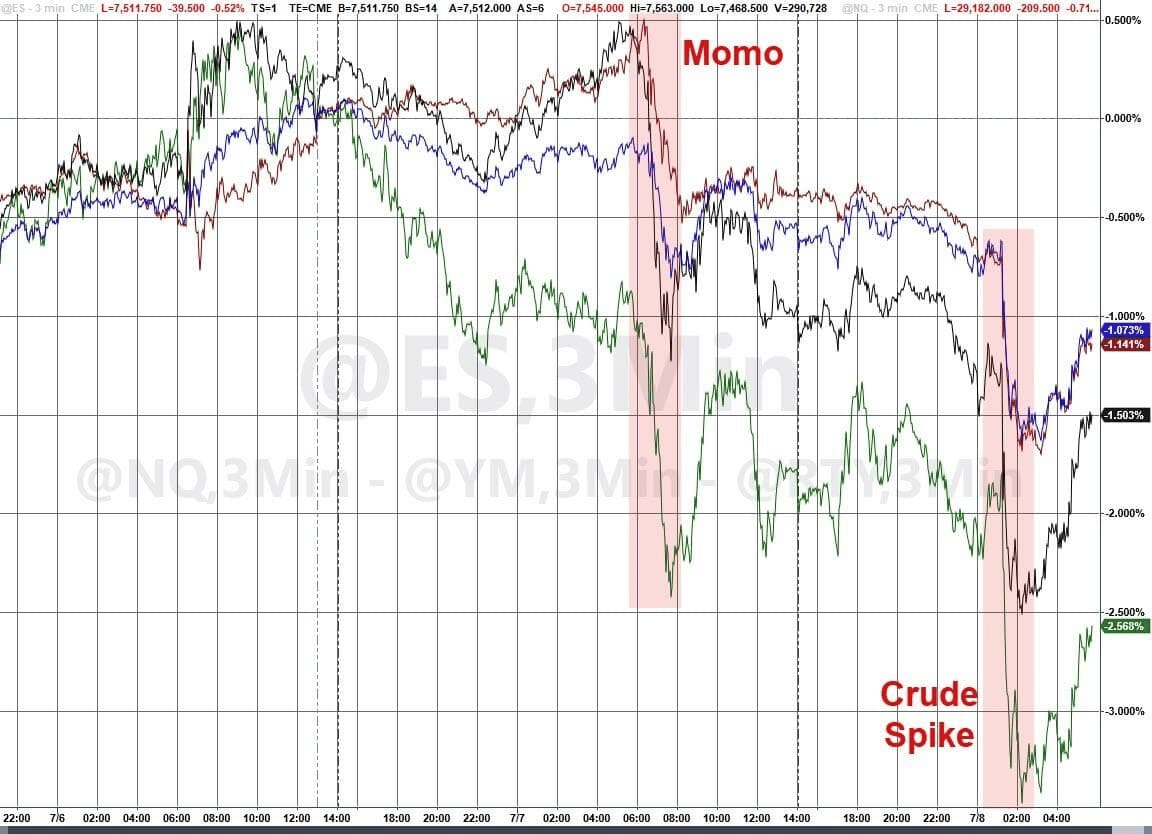
- Momentum is AI in disguise. The basket may be called “momo,” but its engine room is packed with semis, memory, opticals and AI infrastructure. When momentum cracks, the AI trade is cracking beneath it.
- Price has reset faster than volatility. Goldman’s Rich Privorotsky sees the market as oversold on price, but not yet calm enough on volatility. That means the first break may be done, but the hangover is not.
- This is a two-to-three-week unwind, not a two-day tantrum. Crowded trades rarely clear in one clean flush. First comes the price damage, then the volatility fog, then the rebuild.
- Long gamma fits the regime. When leadership is wobbling, oil is adding geopolitical heat, and the dollar is no longer a clean risk-off shelter, optionality looks better than trying to catch the falling AI knife.Momentum Becomes the AI Trade by Another Name.
Momentum becomes the AI trade by another name
To avoid confusion, this is my interpretation of Rich’s note and some of my own takes, not a copy-and-paste.
Goldman Sachs one-delta desk head Rich Privorotsky framed the overnight price action as a sharp reversal of this year’s most crowded consensus trades. Markets did not simply sell off. They rotated away from the ideas that had become almost too easy to own.
The AI complex stayed under pressure, but the broader market was not nearly as weak beneath the surface. The S&P ex-AI closed higher by roughly 0.5%, while the parts of the market most tied to the AI infrastructure boom were hit again. Memory fell around 6%, opticals lost about 5%, and the broader AI hardware chain remained heavy.
That distinction matters. This was not a plain-vanilla equity risk-off session. It was a crowding event. Defensives, bond proxies, and ex-momentum sectors outperformed, while the market punished the baskets that had become the shorthand for AI enthusiasm.
Author

Stephen Innes
SPI Asset Management
With more than 25 years of experience, Stephen has a deep-seated knowledge of G10 and Asian currency markets as well as precious metal and oil markets.

















