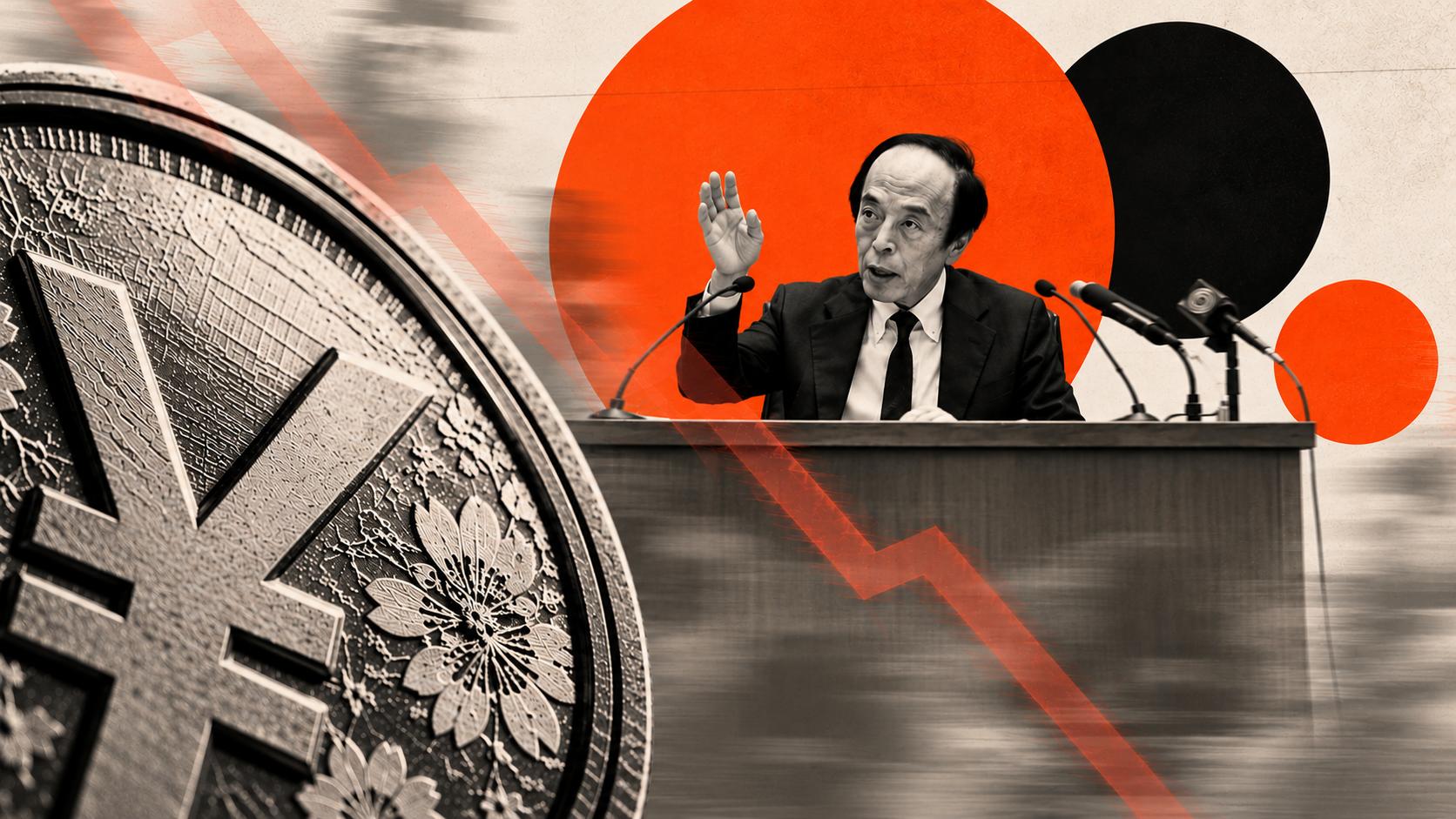
Japanese Yen weakens as Fed hold reveals hawkish divide
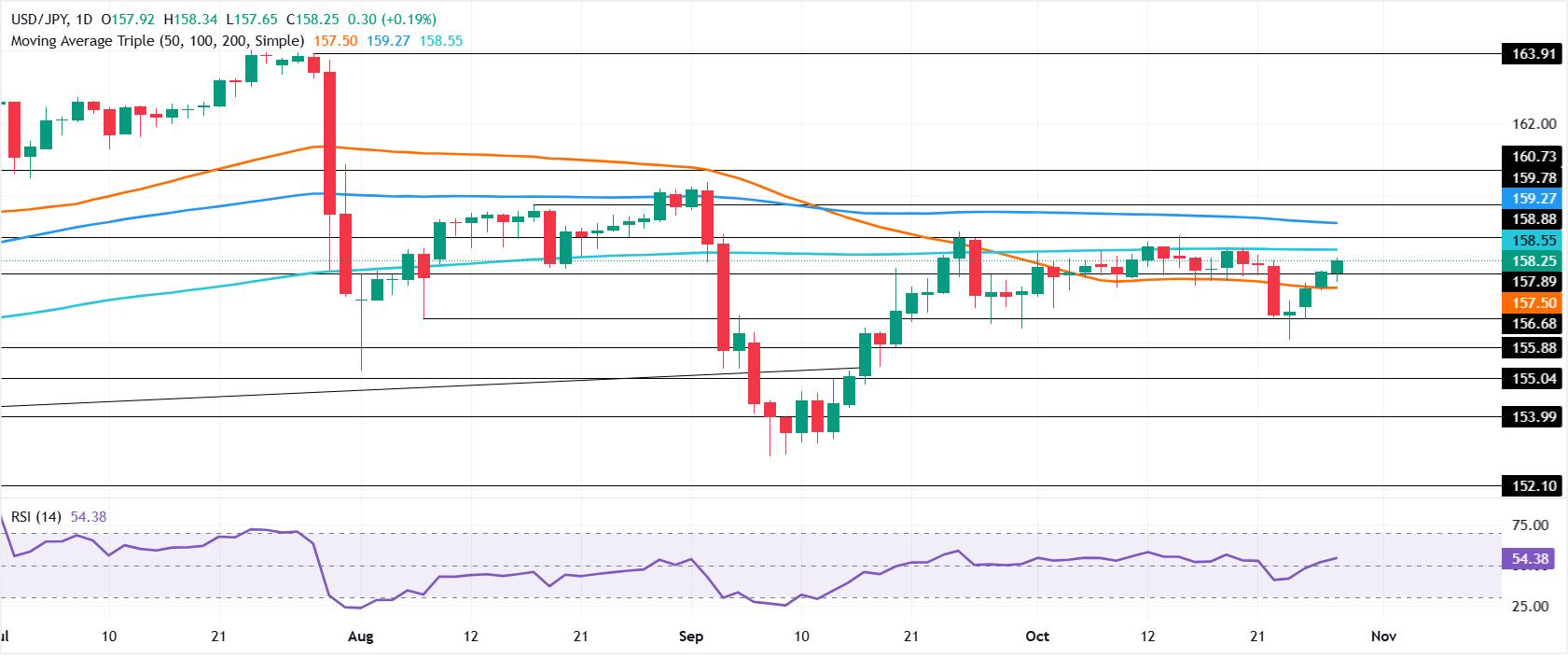
- USD/JPY gains 0.21% to 158.28 following the Fed's rate decision.
- Fed holds rates at 3.75%-4%, with two officials favoring tightening.
- Persistent inflation and resilient US economic activity keep rate hike prospects alive.

The Japanese Yen (JPY) loses ground against the US Dollar (USD) after the Federal Reserve (Fed) kept rates steady on Wednesday, even though US inflation remains well above its 2% target. Of note, the decision was not unanimous, with two dissenters in favor of a quarter-percentage-point rate hike. USD/JPY trades at 158.28, up 0.21%.
USD/JPY climbs toward 158.50 as two Fed officials dissent against holding rates amid persistent inflation
On Wednesday, the Fed held rates at 3.75%-4% and acknowledged that economic activity is expanding, that domestic spending “has been resilient, that productivity growth is strong and that capital investment is robust,” and that productivity growth is strong. Regarding its employment mandate, the Fed noted that “Job gains have kept pace with the workforce, and the unemployment rate has changed little.”
On inflation, the central bank said it remains elevated but chose to hold off on rate hikes while gathering more information and assessing the appropriate policy stance.
The FOMC’s two dissenters were Fed Governor Lisa Cook and Cleveland Fed President Beth Hammack.
USD/JPY Price Chart – Daily
Japanese Yen FAQs
The Japanese Yen (JPY) is one of the world’s most traded currencies. Its value is broadly determined by the performance of the Japanese economy, but more specifically by the Bank of Japan’s policy, the differential between Japanese and US bond yields, or risk sentiment among traders, among other factors.
One of the Bank of Japan’s mandates is currency control, so its moves are key for the Yen. The BoJ has directly intervened in currency markets sometimes, generally to lower the value of the Yen, although it refrains from doing it often due to political concerns of its main trading partners. The BoJ ultra-loose monetary policy between 2013 and 2024 caused the Yen to depreciate against its main currency peers due to an increasing policy divergence between the Bank of Japan and other main central banks. More recently, the gradually unwinding of this ultra-loose policy has given some support to the Yen.
Over the last decade, the BoJ’s stance of sticking to ultra-loose monetary policy has led to a widening policy divergence with other central banks, particularly with the US Federal Reserve. This supported a widening of the differential between the 10-year US and Japanese bonds, which favored the US Dollar against the Japanese Yen. The BoJ decision in 2024 to gradually abandon the ultra-loose policy, coupled with interest-rate cuts in other major central banks, is narrowing this differential.
The Japanese Yen is often seen as a safe-haven investment. This means that in times of market stress, investors are more likely to put their money in the Japanese currency due to its supposed reliability and stability. Turbulent times are likely to strengthen the Yen’s value against other currencies seen as more risky to invest in.
Author

Christian Borjon Valencia
FXStreet
Markets analyst, news editor, and trading instructor with over 14 years of experience across FX, commodities, US equity indices, and global macro markets.