Gold pulls back as US yields recover after Treasury buyback
- Gold retreats as Treasury yields recover after buyback-driven slump.
- Solid jobless claims revive Fed hike bets.
- Bulls defend $4,500 as 200-day SMA remains pivotal.
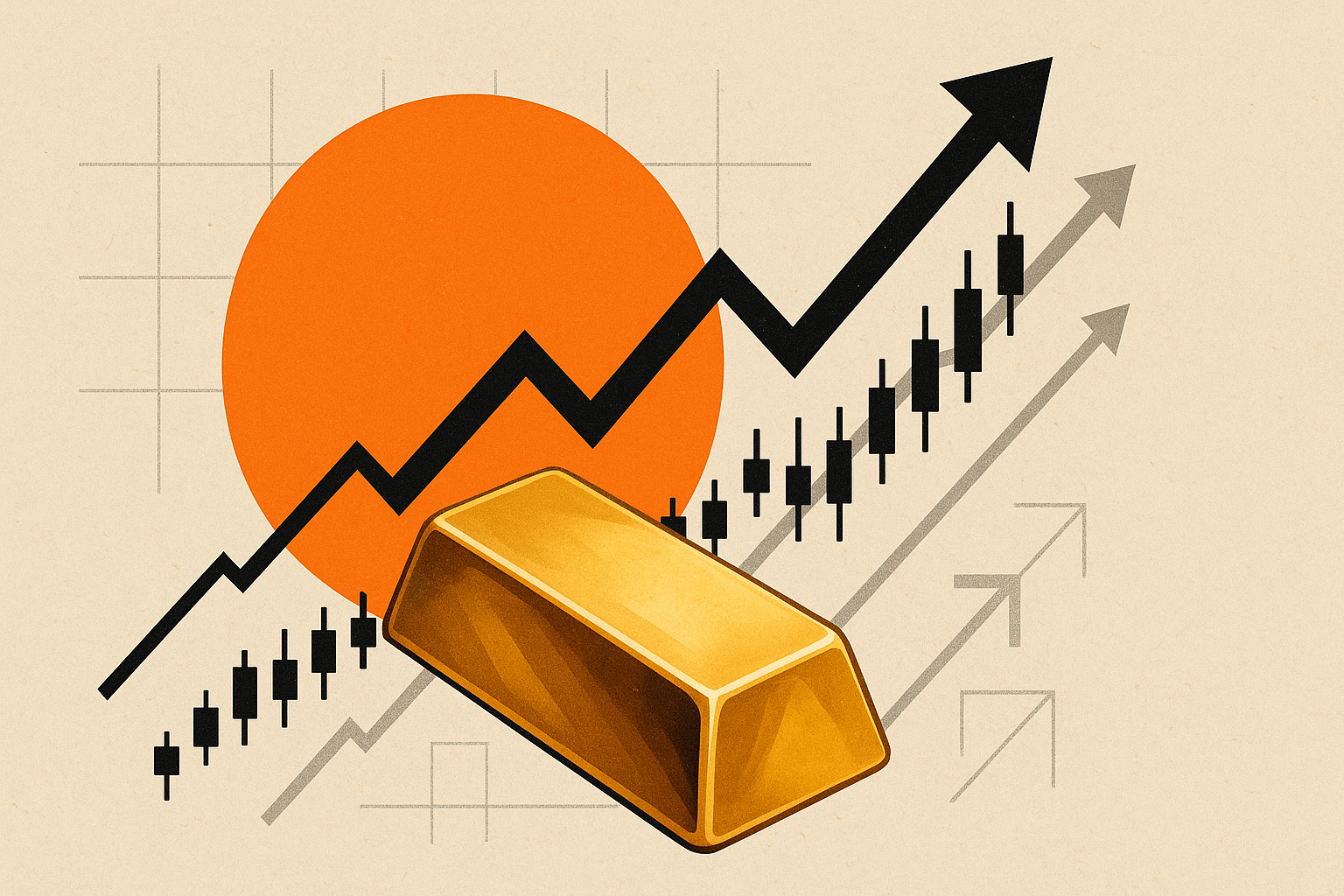
Gold (XAU/USD) price retreats about 0.33% on Thursday as US Treasury yields trim some of their Wednesday losses, weighing on bullion, which is also pressured by the recovery of the US Dollar. The XAU/USD pair trades at $4,509, after hitting a daily high of $4,540.
XAU/USD holds above $4,500 as solid claims revive Fed caution
The yellow metal remains bullish-biased, despite the Greenback’s advance. The US Dollar Index (DXY), which tracks the performance of the American currency against six other currencies, is up 0.14% at 98.91, exerting downward pressure on XAU.
On Wednesday, the US Treasury Department announced an adjustment to its bond buyback program, focusing on the long end of the tenors, from 10- to 30-year bonds. The Treasury wrote that the objective is to provide liquidity in the 10- to 30-year bond market. Nevertheless, traders see this as some form of Yield Curve Control (YCC) aimed at impeding a jump in the 30-year yield.
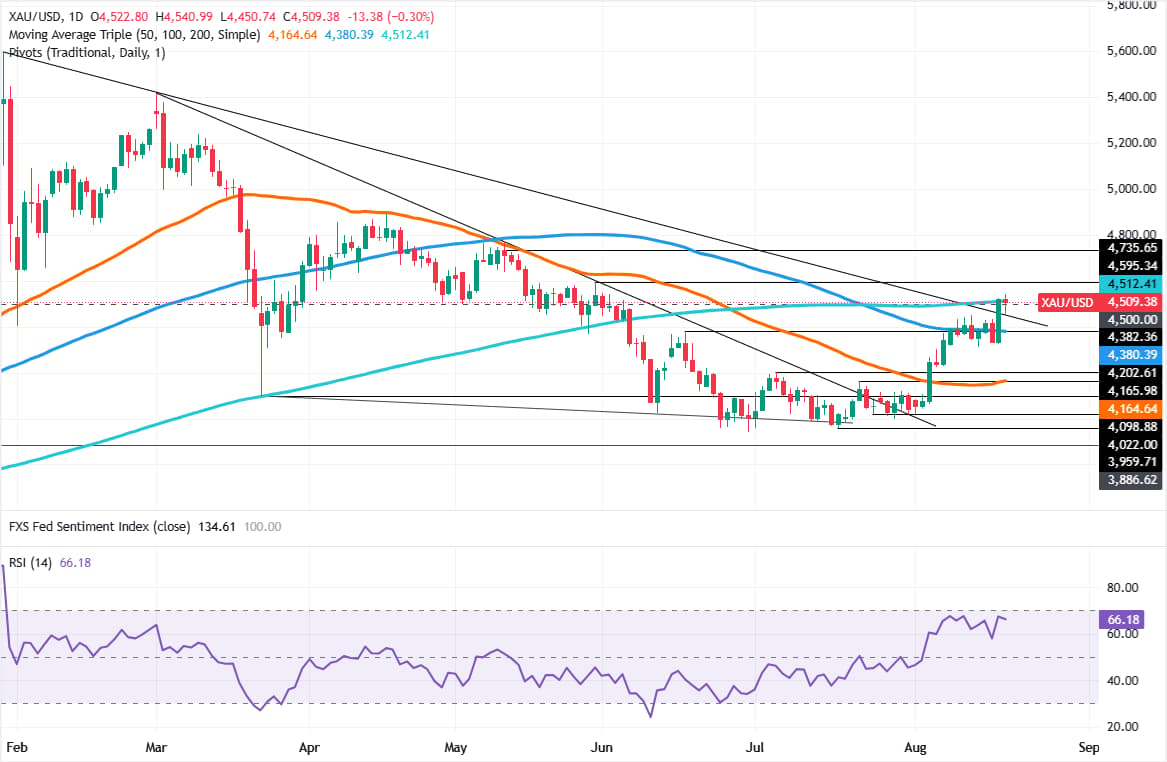
Amid this backdrop, Gold soared sharply by over 4.35% and reclaimed the $4,500 figure. Still, solid US jobs data and higher US Treasury yields exacerbated the pullback towards the 200-day Simple Moving Average (SMA) at $4,512.
US Initial Jobless Claims for the week ending August 15 came in lower than anticipated at 206K, down from 212K and below the expected 210K. Meanwhile, the 4-week moving average rose by 5K, climbing from 199.75K to 204K.
Meanwhile, Fed officials hit the wires. St. Louis Fed President Alberto Musalem said the bond market is being affected by robust growth and capital expenditure. He further noted that although he favored rate hikes in July, he maintains an open mind regarding the upcoming September meeting.
San Francisco Fed's Mary Daly said rising long-term bond yields are a global concern, reducing their effectiveness as an indicator. She believes Fed credibility remains intact and that the short-term market mainly reacts to recent data.
On Wednesday, the Fed’s last meeting minutes revealed that some participants remained concerned about inflation, indicating that other policymakers besides Hammack, Kashkari, and Logan are open to raising interest rates if inflation remains high.
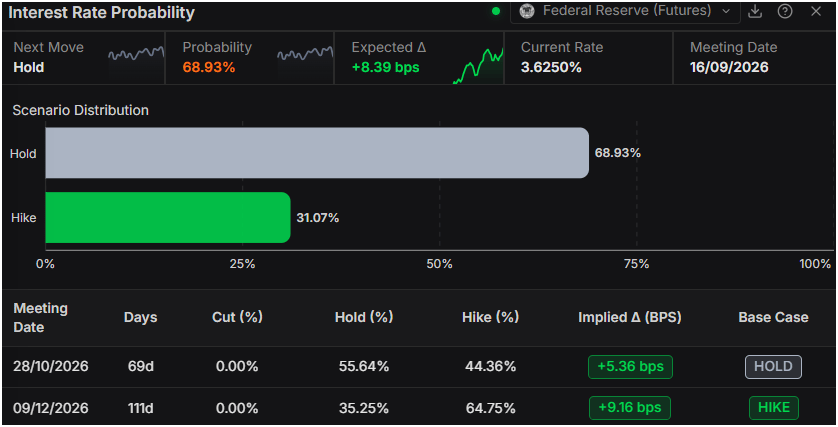
Money markets priced in a 68% chance that the Fed will hold rates unchanged at the September meeting, with odds of a 25-basis-point rate hike remaining near 32%, according to Prime Terminal.
On Friday, the US economic schedule will feature S&P Global Flash PMIs amid a sparse calendar.
XAU/USD technical outlook: Gold meanders near the 200-day SMA, above $4,500
From a technical perspective, Gold remains upward-biased after reclaiming the 200-day SMA. Worth noting that on its way north, XAU/USD broke a five-month-old downward resistance trendline, drawn from all-time highs near $5,600, which could open the door for higher prices.
The Relative Strength Index (RSI) is bullish, though dipping modestly, indicating that traders are booking some profits before the uptrend resumes.
If Gold ends on a daily basis above $4,500, buyers could expect a test of May’s 20 daily high of $4,595 ahead of the psychological $4,600. The next area of interest is $4,700, with the May 12 daily high at $4,735, surrounded by a cluster of six candles.
Downwards, the first support is $4,500. A breach of the latter would expose the 100-day SMA at $4,380, ahead of $4,300. Below this area, the next support is the 50-day SMA at $4,164.
Gold FAQs
Gold has played a key role in human’s history as it has been widely used as a store of value and medium of exchange. Currently, apart from its shine and usage for jewelry, the precious metal is widely seen as a safe-haven asset, meaning that it is considered a good investment during turbulent times. Gold is also widely seen as a hedge against inflation and against depreciating currencies as it doesn’t rely on any specific issuer or government.
Central banks are the biggest Gold holders. In their aim to support their currencies in turbulent times, central banks tend to diversify their reserves and buy Gold to improve the perceived strength of the economy and the currency. High Gold reserves can be a source of trust for a country’s solvency. Central banks added 1,136 tonnes of Gold worth around $70 billion to their reserves in 2022, according to data from the World Gold Council. This is the highest yearly purchase since records began. Central banks from emerging economies such as China, India and Turkey are quickly increasing their Gold reserves.
Gold has an inverse correlation with the US Dollar and US Treasuries, which are both major reserve and safe-haven assets. When the Dollar depreciates, Gold tends to rise, enabling investors and central banks to diversify their assets in turbulent times. Gold is also inversely correlated with risk assets. A rally in the stock market tends to weaken Gold price, while sell-offs in riskier markets tend to favor the precious metal.
The price can move due to a wide range of factors. Geopolitical instability or fears of a deep recession can quickly make Gold price escalate due to its safe-haven status. As a yield-less asset, Gold tends to rise with lower interest rates, while higher cost of money usually weighs down on the yellow metal. Still, most moves depend on how the US Dollar (USD) behaves as the asset is priced in dollars (XAU/USD). A strong Dollar tends to keep the price of Gold controlled, whereas a weaker Dollar is likely to push Gold prices up.
Author

Christian Borjon Valencia
FXStreet
Markets analyst, news editor, and trading instructor with over 14 years of experience across FX, commodities, US equity indices, and global macro markets.