Fed Chair Warsh reaffirms they will deliver price stability
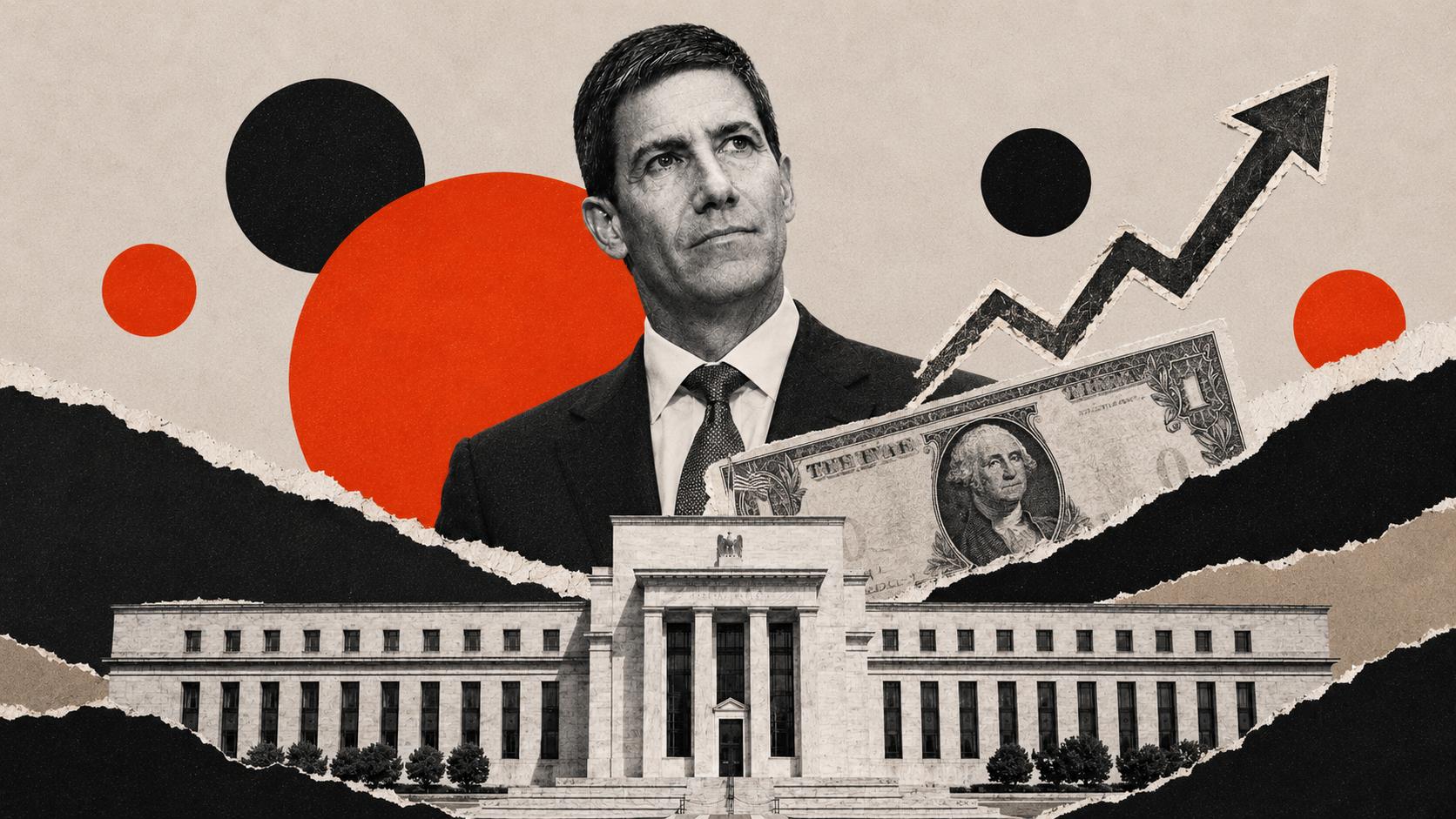

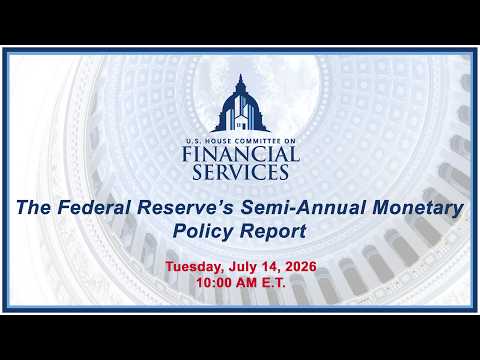
While testifying on the Semiannual Monetary Policy Report before the US House Financial Services Committee, Federal Reserve (Fed) Chairman Kevin Warsh reiterated that the Fed is making a commitment on price stability and the goal of 2% inflation.
Key takeaways
"Inflation is a choice."
"Fed won't pass buck."
"Will deliver price stability."
"We have tools to deliver that."
"Will revisit inflation frameworks to understand what causes inflation and what we can do."
"Task forces are in discovery mode, starting with blank sheet of paper."
"Task forces will share views first with 19 policymakers."
"Will be a public discussion, happy to share results and thinking periodically."
"Balance sheet is part of monetary policy."
"Balance sheet is not merely about plumbing."
"Any change in balance sheet policy would be previewed, explained, have advance notice broadly."
"Fed must stay clear of fiscal policy."
"Committed to conducting independent monetary policy."
"Have demonstrated commitment to independence and reform, will deliver on both."
"Don't expect any change in communications to be about hiding the ball."
"Mortgages are higher than they have been in part because inflation is above Fed's target."
"Containing inflation would be consistent with lower long-term treasury yields, more affordable mortgages."
"We are not afraid of productivity-led growth."
"Two parts of Fed mandate are not in conflict."
"Have some work to do on inflation front."
"We do not want to be in the bailout business."
"Want to be in a position we aren't bailing out anyone including crypto."
"No cruel choice between stable prices and full employment."
"Don't have to run a balancing test."
"Over the long term technologies will improve productivity but it can be quite far out."
"Fed can think hard about when we're going to be buying debt from the treasury."
"Want resilient strong safe financial system."
"We'll have deeper, more serious discussions among us, fewer pronouncements."
In his prepared remarks, Warsh noted that the Fed has no tolerance for persistently elevated inflation.
Highlights from Warsh's prepared testimony
"If we get policy right - and we will- the inflation surge of the last five years will be a thing of the past."
"Underlying inflation over longer time horizons is determined largely by monetary policy."
"Household consumption growth is moderate; manufacturing output has moved up steadily this year."
"Housing sector continues to lag."
"Economic activity is expanding at a solid pace, showing resilience in the face of recent developments."
"Don’t know the extent to which the economy will benefit from AI buildout."
"Most striking feature of the economy right now is business investment, which appears to be accelerating and reflects AI projects and spending."
"Equipment overall increased about 8% in Q1; high-tech spending grew at annualized rate of nearly 25%."
"Productivity growth has been strong, predating gains from AI adoption."
"Labor market appears broadly stable."
"Fed is monitoring implications for inflation and labor market."
"Have a duty to take a fresh look at current practices to make sure we are serving our objectives."
"Purpose of task forces is to equip Fed to make better monetary policy decisions, put years of high inflation behind us."
"Job creation has kept pace with workforce; unemployment rate is low and has changed little over the past year; seeing relatively few layoffs; solid growth in nominal wages."
"Balance sheet task force will probe advantages and disadvantages of ample reserves regime and explore alternatives."
Warsh underscores Fed resolve on inflation as activity and AI investment stay solid
Fed Chair Warsh’s testimony scores 7/10 on the FXS Speechtracker, in-line with the 7/10 historical average. This signals a steady, firmly anti-inflation stance rather than an escalation in hawkishness. The assertion that “if we get policy right…the inflation surge of the last five years will be a thing of the past” and the emphasis that underlying inflation is largely determined by monetary policy, alongside “no tolerance for persistently elevated inflation,” reinforce confidence in sustained restrictive policy even as economic activity, business investment tied to AI, and a broadly stable labor market point to solid underlying momentum.
The FXS Fed Sentiment Index remains at 127.19, confirming that the speech leaves the overall policy tone firmly in hawkish territory relative to the historical average. The combination of a stable index reading and a speech score matching the established baseline suggests that markets should view Warsh’s remarks as a continuation of the existing hawkish narrative.
US Dollar Price Today
The table below shows the percentage change of US Dollar (USD) against listed major currencies today. US Dollar was the weakest against the New Zealand Dollar.
| USD | EUR | GBP | JPY | CAD | AUD | NZD | CHF | |
|---|---|---|---|---|---|---|---|---|
| USD | -0.64% | -0.59% | -0.45% | -0.70% | -0.89% | -1.40% | -0.95% | |
| EUR | 0.64% | 0.05% | 0.19% | -0.06% | -0.25% | -0.75% | -0.30% | |
| GBP | 0.59% | -0.05% | 0.15% | -0.09% | -0.28% | -0.80% | -0.35% | |
| JPY | 0.45% | -0.19% | -0.15% | -0.25% | -0.46% | -0.98% | -0.53% | |
| CAD | 0.70% | 0.06% | 0.09% | 0.25% | -0.21% | -0.72% | -0.26% | |
| AUD | 0.89% | 0.25% | 0.28% | 0.46% | 0.21% | -0.51% | -0.04% | |
| NZD | 1.40% | 0.75% | 0.80% | 0.98% | 0.72% | 0.51% | 0.46% | |
| CHF | 0.95% | 0.30% | 0.35% | 0.53% | 0.26% | 0.04% | -0.46% |
The heat map shows percentage changes of major currencies against each other. The base currency is picked from the left column, while the quote currency is picked from the top row. For example, if you pick the US Dollar from the left column and move along the horizontal line to the Japanese Yen, the percentage change displayed in the box will represent USD (base)/JPY (quote).
Author
Eren Sengezer
FXStreet
As an economist at heart, Eren Sengezer specializes in the assessment of the short-term and long-term impacts of macroeconomic data, central bank policies and political developments on financial assets.