|

EUR/USD: Risk reversals and volatility gauge indicate the EUR may have bottomed out

  • Risk reversals have retraced put bias volatility has dropped since August 14, confirming the common currency has likely bottomed out as indicated by the technical charts.
  • A stronger corrective rally could be seen if the Eurozone consumer price index, due today at  09:00 GMT, beats the estimates.

The EUR/USD has likely found a temporary low at 1.13, the options market and technical studies indicate.

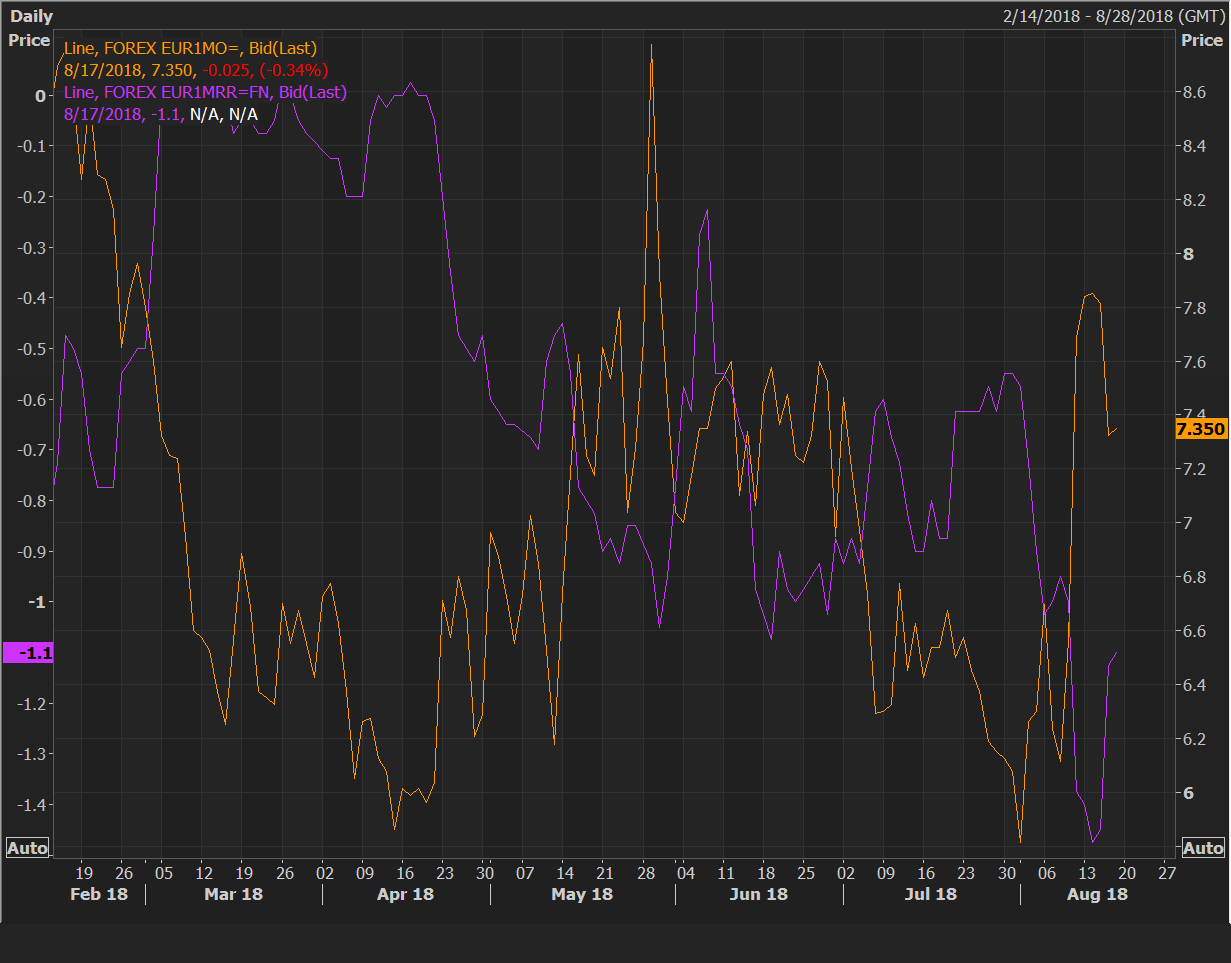
Currently, the EUR/USD one-month 25 delta risk reversals (EUR1MRR) stand at -1.1 vs -1.5 seen on August 14. The rise in the risk reversals represents a drop in the implied volatility premium (drop in demand) for the EUR put options (bearish bets).

More importantly, the one-month at the money option volatility (EUR1MO) has eased to 7.35 from the weekly high of 7.85, indicating the panic selling has run its course.

Hence, it seems safe to say the pair has bottomed out for now. Further, a similar message is being conveyed by the bullish doji reversal seen in the daily chart.

All-in-all, the stage is set for a stronger corrective rally. The common currency could pick up a strong bid if the Eurozone July CPI prints above the estimate of 0.3 percent month-on-month drop.

As of writing, the pair is trading at 1.1380.

EUR/USD Technical Levels

Resistance: 1.14 (psychological level), 1.1456 (10-day moving average). 1.1508 (June 21 low)

Support: 1.1357 (200-week MA), 1.1336 (previous day's low), 1.1301 (weekly low)

EUR1MRR and EUR1MO
Author

Omkar Godbole

Omkar Godbole

FXStreet Contributor

Omkar Godbole, editor and analyst, joined FXStreet after four years as a research analyst at several Indian brokerage companies.


More from Omkar Godbole
Share:

Editor's Picks

GBP/USD slides below 1.3250 after failing to break through 23.6% Fibo

The GBP/USD pair meets with a fresh supply during the Asian session on Wednesday and moves away from a nearly two-week high around the 1.3275 region, touched the previous day. Spot prices currently trade around the 1.3235 zone, down 0.20% for the day, as traders look to speeches from Bank of England Governor Andrew Bailey and Federal Reserve Chair Kevin Warsh for a fresh impetus.

EUR/USD keeps losses near 1.1400 after soft Eurozone inflation data

EUR/USD keeps the offered tone intact near 1.1400 in European trading on Wednesday, pressured by softer Euronze and German inflation readings and receding bets for aggressive tightening by the European Central Bank (ECB). Traders will take more cues from the US Manufacturing PMI due later in the day.

Gold stays in red below $4,000, awaits Warsh's speech

Gold remains under selling pressure below $4,000, in the red for the third straight day on Wednesday. The Iran uncertainty and Fed hike bets support the USD, weighing on the commodity. Traders now look to Fed Chair Warsh's speech and the US data for a fresh impetus.


ISM Manufacturing PMI expected to signal continued expansion in the US

Attention shifts to Wednesday’s release of the June ISM Manufacturing Purchasing Managers Index, one of the most closely followed indicators of activity in the US manufacturing sector and an important barometer of the broader economy. Markets expect the headline index to remain unchanged at 54.

Kevin Warsh isn't expected to say much in Sintra: That's exactly why markets will listen

Financial markets could find an important catalyst in the enchanting, fairytale-like landscape of  Sintra this week. The European Central Bank Forum will, as it does every year, gather the crème de la crème of central banks. The new boss at the Federal Reserve, who has clearly said that the Fed should stop explaining everything, will need to talk – and traders should listen.

Kevin Warsh isn't expected to say much in Sintra: That's exactly why markets will listen

Financial markets could find an important catalyst in the enchanting, fairytale-like landscape of Sintra this week. The ECB Forum will, as it does every year, gather the crème de la crème of central banks. The new boss at the Fed, who has clearly said that the Fed should stop explaining everything, will need to talk – and traders should listen.