Crude Oil claws back as Hormuz blockade outlasts deal hopes
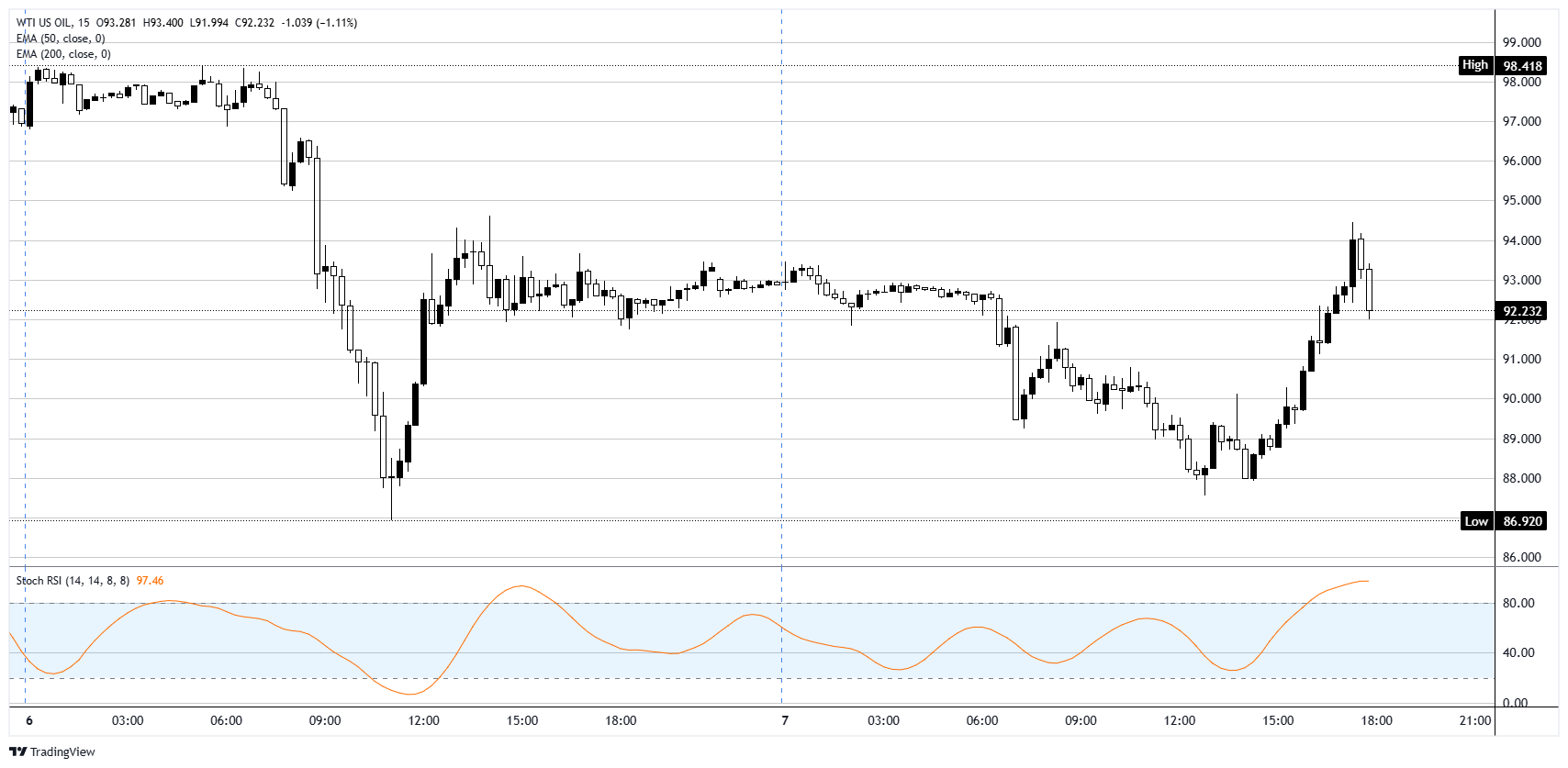
- WTI Crude Oil briefly tested below $90 a barrel before reversing back above $93.
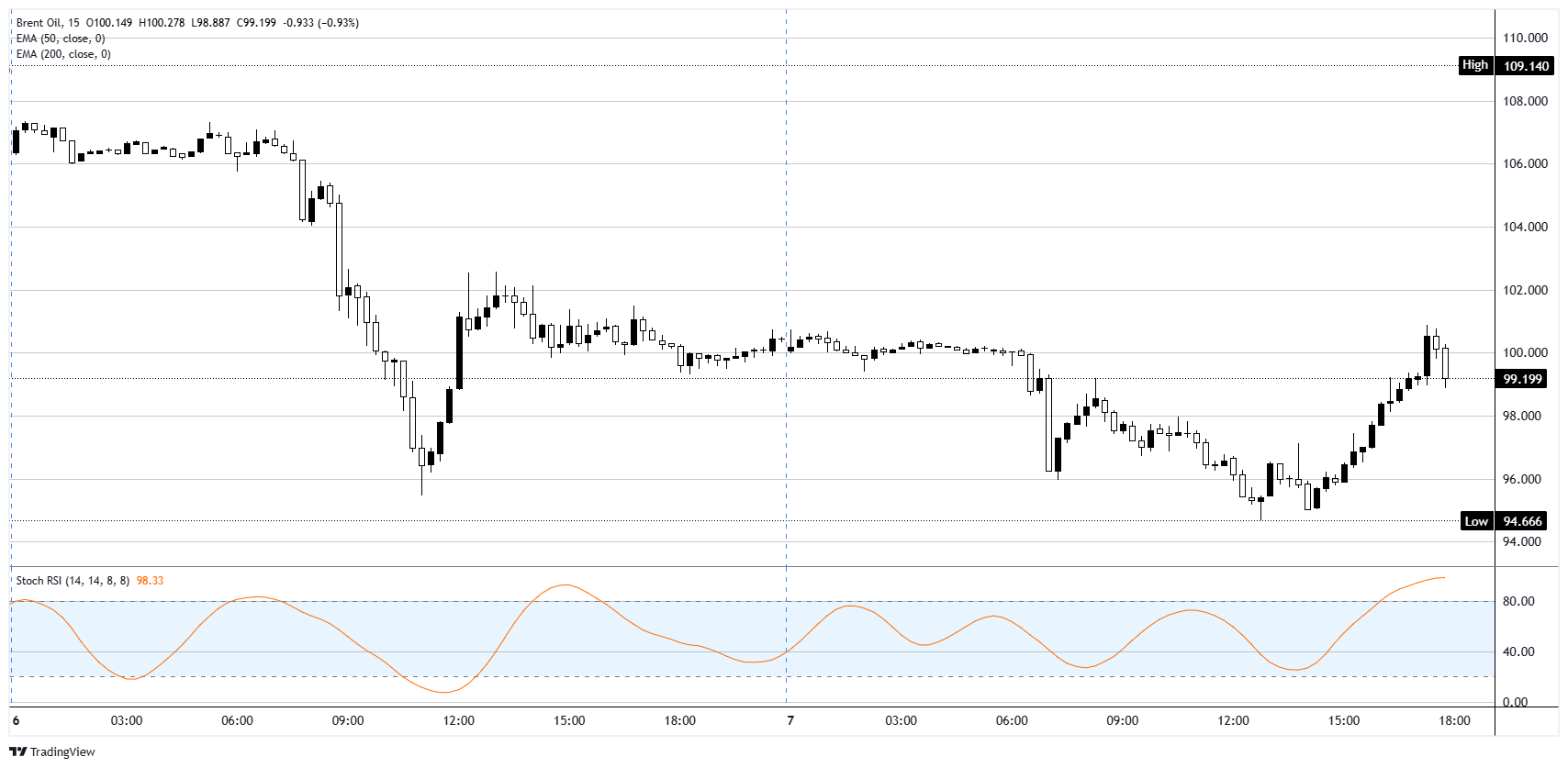
- Brent Crude Oil slid toward $95 in early trade before recovering to reclaim $100.
- Iran's response to the latest US 14-point proposal awaited via Pakistani mediators.
- US naval blockade and Iran's claims on the Strait of Hormuz remain unresolved.

Crude Oil markets staged a sharp intraday reversal on Thursday, with West Texas Intermediate (WTI) futures briefly tagging lows below $90 a barrel before clawing back above $93, while Brent slid toward $95 before recovering to reclaim the $100 handle. The early weakness mirrored equities' hope-driven bid on reports that Iran was close to delivering its response to the latest US ceasefire proposal. The afternoon reversal told a different story, namely that the Oil complex had run ahead of what the actual diplomatic and physical situation would support.
Hope versus reality on the deal
The catalyst on the way down was the same one driving equities, namely Iran's expected response via Pakistani mediators to a 14-point US proposal. The framework, structured as a one-page memorandum, would declare an end to the war and trigger a 30-day window to negotiate the harder questions of nuclear enrichment, frozen Iranian assets, and security in the Strait of Hormuz. President Donald Trump described "very good talks" overnight, yet in the same breath warned earlier this week of strikes "at a much higher level and intensity" if Iran fails to deliver. Tehran has tied any further progress to the lifting of the US naval blockade, while its Islamic Revolutionary Guard Corps (IRGC) continues to insist that passage through the Strait of Hormuz is governed by Iranian "new procedures". The hope trade was real; a deal is not.
The physical market hasn't moved
The reversal also reflects what is actually happening on the water. Maersk this week confirmed that one of its US-flagged vessels transited the Strait of Hormuz under US Navy escort, but the broader Project Freedom escort operation has been paused at the reported request of Pakistan and Saudi Arabia. The US blockade on Iranian-bound shipping remains in place, and the IRGC is still issuing public notices thanking captains for "complying with Iran's Strait of Hormuz regulations". US gasoline at the pump is tracking near $4.54 a gallon, the highest level since July 2022, while QatarEnergy's earlier force majeure on LNG shipments and the cumulative damage to regional energy infrastructure have not been reversed. None of the structural drivers have eased. What changed today was sentiment around a piece of paper that has not been signed. For now, both WTI and Brent are settling somewhere between hope and reality, and neither side has yet been delivered.
WTI 15-minute chart
Brent 15-minute chart
WTI Oil FAQs
WTI Oil is a type of Crude Oil sold on international markets. The WTI stands for West Texas Intermediate, one of three major types including Brent and Dubai Crude. WTI is also referred to as “light” and “sweet” because of its relatively low gravity and sulfur content respectively. It is considered a high quality Oil that is easily refined. It is sourced in the United States and distributed via the Cushing hub, which is considered “The Pipeline Crossroads of the World”. It is a benchmark for the Oil market and WTI price is frequently quoted in the media.
Like all assets, supply and demand are the key drivers of WTI Oil price. As such, global growth can be a driver of increased demand and vice versa for weak global growth. Political instability, wars, and sanctions can disrupt supply and impact prices. The decisions of OPEC, a group of major Oil-producing countries, is another key driver of price. The value of the US Dollar influences the price of WTI Crude Oil, since Oil is predominantly traded in US Dollars, thus a weaker US Dollar can make Oil more affordable and vice versa.
The weekly Oil inventory reports published by the American Petroleum Institute (API) and the Energy Information Agency (EIA) impact the price of WTI Oil. Changes in inventories reflect fluctuating supply and demand. If the data shows a drop in inventories it can indicate increased demand, pushing up Oil price. Higher inventories can reflect increased supply, pushing down prices. API’s report is published every Tuesday and EIA’s the day after. Their results are usually similar, falling within 1% of each other 75% of the time. The EIA data is considered more reliable, since it is a government agency.
OPEC (Organization of the Petroleum Exporting Countries) is a group of 12 Oil-producing nations who collectively decide production quotas for member countries at twice-yearly meetings. Their decisions often impact WTI Oil prices. When OPEC decides to lower quotas, it can tighten supply, pushing up Oil prices. When OPEC increases production, it has the opposite effect. OPEC+ refers to an expanded group that includes ten extra non-OPEC members, the most notable of which is Russia.
Author

Joshua Gibson
FXStreet
Joshua joins the FXStreet team as an Economics and Finance double major from Vancouver Island University with twelve years' experience as an independent trader focusing on technical analysis.














