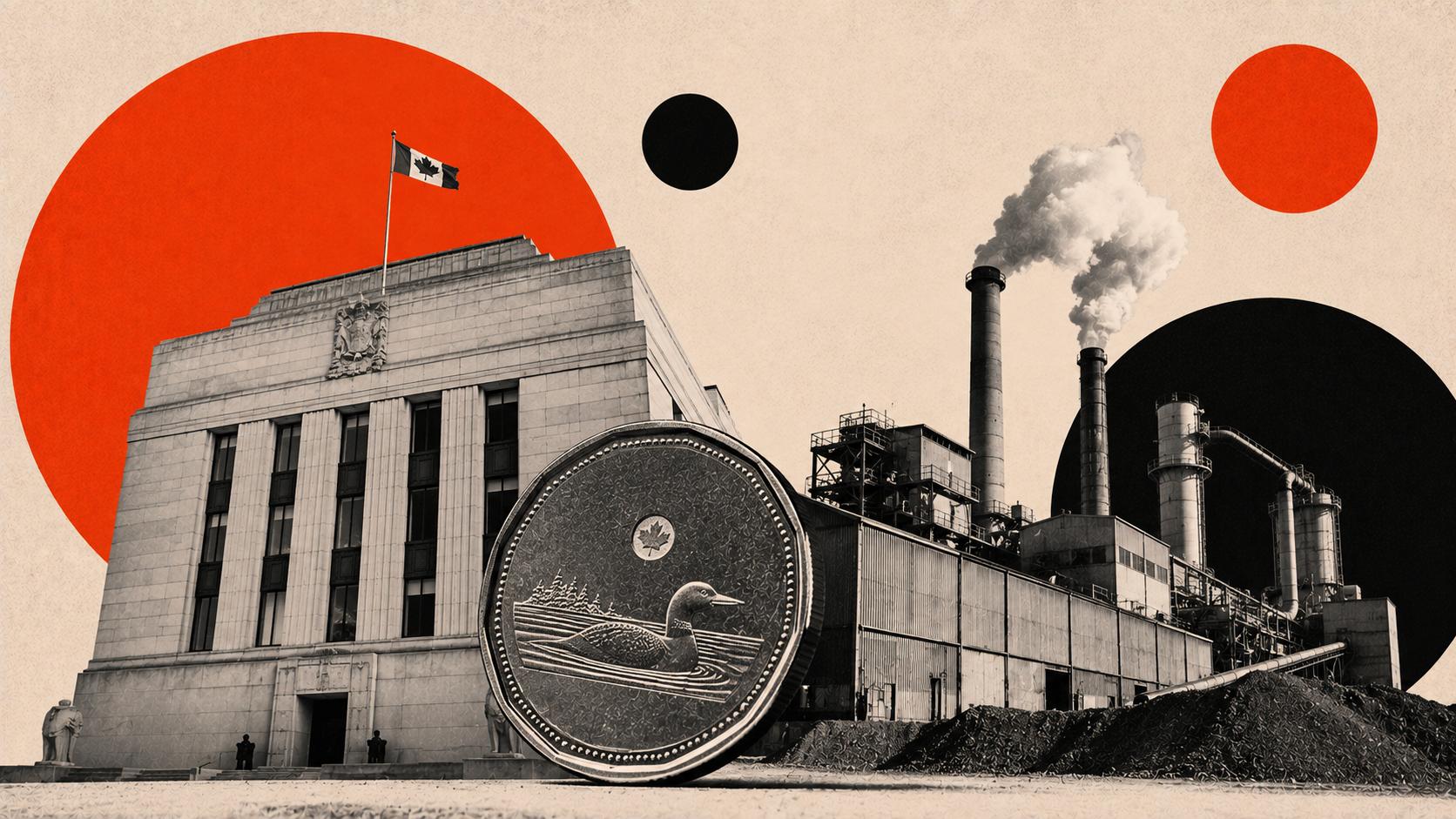
Canadian Dollar outperforms as Trump’s address boils oil again
- The Canadian Dollar gains against its major peers as oil prices rally on renewed Middle East conflicts.
- US President Trump warns of intensified attacks on Iran.
- Middle East risks have underpinned the risk-off impulse.

The Canadian Dollar (CAD) trades higher against its major currency peers, except the US Dollar (USD), during the European trading session on Thursday. The Loonie outperforms as oil prices have rallied, following United States (US) President Donald Trump’s address to the nation, in which he warned of intensified attacks against Iran in the next two to three weeks.
Canadian Dollar Price Today
The table below shows the percentage change of Canadian Dollar (CAD) against listed major currencies today. Canadian Dollar was the strongest against the Australian Dollar.
| USD | EUR | GBP | JPY | CAD | AUD | NZD | CHF | |
|---|---|---|---|---|---|---|---|---|
| USD | 0.68% | 0.90% | 0.56% | 0.38% | 0.92% | 0.83% | 0.79% | |
| EUR | -0.68% | 0.23% | -0.13% | -0.31% | 0.25% | 0.17% | 0.10% | |
| GBP | -0.90% | -0.23% | -0.34% | -0.51% | 0.02% | -0.04% | -0.13% | |
| JPY | -0.56% | 0.13% | 0.34% | -0.17% | 0.36% | 0.27% | 0.21% | |
| CAD | -0.38% | 0.31% | 0.51% | 0.17% | 0.53% | 0.43% | 0.38% | |
| AUD | -0.92% | -0.25% | -0.02% | -0.36% | -0.53% | -0.08% | -0.18% | |
| NZD | -0.83% | -0.17% | 0.04% | -0.27% | -0.43% | 0.08% | -0.07% | |
| CHF | -0.79% | -0.10% | 0.13% | -0.21% | -0.38% | 0.18% | 0.07% |
The heat map shows percentage changes of major currencies against each other. The base currency is picked from the left column, while the quote currency is picked from the top row. For example, if you pick the Canadian Dollar from the left column and move along the horizontal line to the US Dollar, the percentage change displayed in the box will represent CAD (base)/USD (quote).
As of writing, WTI Oil price trades 8% higher at around $102.00. Currencies from economies, such as Canada, which are net oil exporters, are favored in times of global energy crisis.
Earlier in the day, US President Trump said in his address to the nation that Washington is going to “hit Iran extremely hard over the next two to three weeks, and bring them back to the stone ages”. Trump’s latest threats have revived fears of further damage on Gulf’s energy infrastructure, prompting fears of prolonged oil supply disruptions.
Meanwhile, global leaders remain worried about the Iranian military’s dominance of the Strait of Hormuz, a passage to almost 20% of global oil supply. French President Emmanuel Macron said during the day that it is difficult to reopen the Hormuz without military action. “It's unrealistic to free the Strait of Hormuz by military means,” Macron said.
US President Trump’s threats to intensify attacks against Iran have underpinned the demand for safe-haven assets. As of writing, the US Dollar Index (DXY), which tracks the Greenback’s value against six major currencies, trades 0.6% higher to near 100.15.
Canadian Dollar FAQs
The key factors driving the Canadian Dollar (CAD) are the level of interest rates set by the Bank of Canada (BoC), the price of Oil, Canada’s largest export, the health of its economy, inflation and the Trade Balance, which is the difference between the value of Canada’s exports versus its imports. Other factors include market sentiment – whether investors are taking on more risky assets (risk-on) or seeking safe-havens (risk-off) – with risk-on being CAD-positive. As its largest trading partner, the health of the US economy is also a key factor influencing the Canadian Dollar.
The Bank of Canada (BoC) has a significant influence on the Canadian Dollar by setting the level of interest rates that banks can lend to one another. This influences the level of interest rates for everyone. The main goal of the BoC is to maintain inflation at 1-3% by adjusting interest rates up or down. Relatively higher interest rates tend to be positive for the CAD. The Bank of Canada can also use quantitative easing and tightening to influence credit conditions, with the former CAD-negative and the latter CAD-positive.
The price of Oil is a key factor impacting the value of the Canadian Dollar. Petroleum is Canada’s biggest export, so Oil price tends to have an immediate impact on the CAD value. Generally, if Oil price rises CAD also goes up, as aggregate demand for the currency increases. The opposite is the case if the price of Oil falls. Higher Oil prices also tend to result in a greater likelihood of a positive Trade Balance, which is also supportive of the CAD.
While inflation had always traditionally been thought of as a negative factor for a currency since it lowers the value of money, the opposite has actually been the case in modern times with the relaxation of cross-border capital controls. Higher inflation tends to lead central banks to put up interest rates which attracts more capital inflows from global investors seeking a lucrative place to keep their money. This increases demand for the local currency, which in Canada’s case is the Canadian Dollar.
Macroeconomic data releases gauge the health of the economy and can have an impact on the Canadian Dollar. Indicators such as GDP, Manufacturing and Services PMIs, employment, and consumer sentiment surveys can all influence the direction of the CAD. A strong economy is good for the Canadian Dollar. Not only does it attract more foreign investment but it may encourage the Bank of Canada to put up interest rates, leading to a stronger currency. If economic data is weak, however, the CAD is likely to fall.
Author

Sagar Dua
FXStreet
Sagar Dua is associated with the financial markets from his college days. Along with pursuing post-graduation in Commerce in 2014, he started his markets training with chart analysis.