BoE’s Bailey warns persistent high energy prices could challenge rate stance
- BoE's Andrew Bailey says the pass-through from higher energy prices remains subdued for now.
- A prolonged period of high energy prices could make it harder to maintain rates unchanged.
- The Governor also sees Artificial Intelligence as a potential positive supply shock.
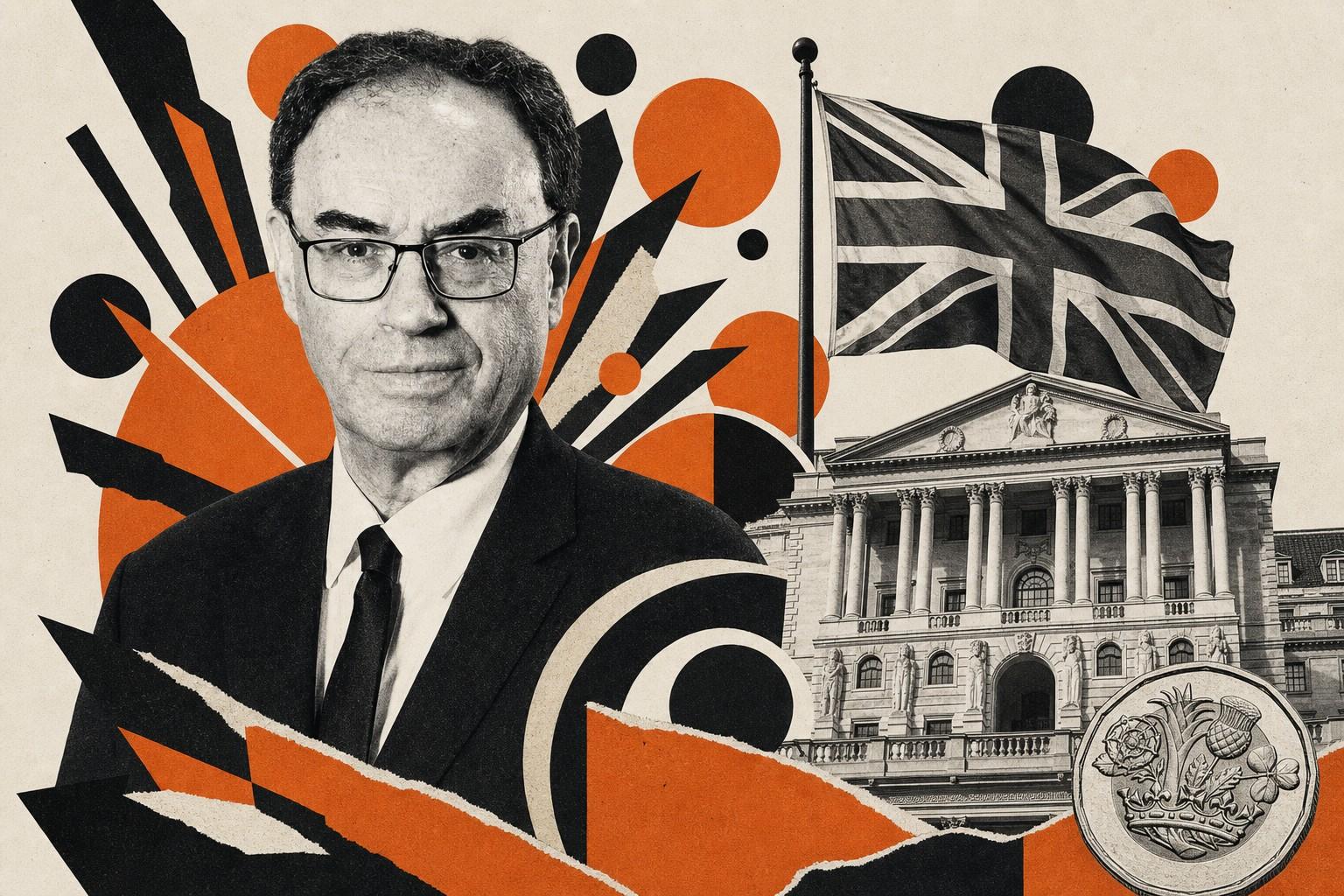
Bank of England (BoE) Governor Andrew Bailey said on Friday that the pass-through from higher energy prices remains “quite subdued” so far, while stressing that it is still early days.
Speaking at the Monetary Economics Conference hosted by the University of Oxford, Bailey warned that the longer energy prices remain elevated, the harder it becomes for the central bank to maintain a stance of not raising interest rates.
The Governor also noted that the BoE takes the rise in mortgage rates into consideration when assessing economic and monetary conditions. Looking further ahead, Bailey struck a more positive tone on Artificial Intelligence (AI). He said the technology could provide a positive supply shock at a time when economies have been facing a series of negative supply shocks.
Market reaction
Bailey’s comments have no immediate impact on the British Pound (GBP). GBP/USD gains 0.15% on Friday, hovering just below the 1.3240 level at the time of writing.
BoE FAQs
The Bank of England (BoE) decides monetary policy for the United Kingdom. Its primary goal is to achieve ‘price stability’, or a steady inflation rate of 2%. Its tool for achieving this is via the adjustment of base lending rates. The BoE sets the rate at which it lends to commercial banks and banks lend to each other, determining the level of interest rates in the economy overall. This also impacts the value of the Pound Sterling (GBP).
When inflation is above the Bank of England’s target it responds by raising interest rates, making it more expensive for people and businesses to access credit. This is positive for the Pound Sterling because higher interest rates make the UK a more attractive place for global investors to park their money. When inflation falls below target, it is a sign economic growth is slowing, and the BoE will consider lowering interest rates to cheapen credit in the hope businesses will borrow to invest in growth-generating projects – a negative for the Pound Sterling.
In extreme situations, the Bank of England can enact a policy called Quantitative Easing (QE). QE is the process by which the BoE substantially increases the flow of credit in a stuck financial system. QE is a last resort policy when lowering interest rates will not achieve the necessary result. The process of QE involves the BoE printing money to buy assets – usually government or AAA-rated corporate bonds – from banks and other financial institutions. QE usually results in a weaker Pound Sterling.
Quantitative tightening (QT) is the reverse of QE, enacted when the economy is strengthening and inflation starts rising. Whilst in QE the Bank of England (BoE) purchases government and corporate bonds from financial institutions to encourage them to lend; in QT, the BoE stops buying more bonds, and stops reinvesting the principal maturing on the bonds it already holds. It is usually positive for the Pound Sterling.
Author

Ghiles Guezout
FXStreet
Ghiles Guezout is a Market Analyst with a strong background in stock market investments, trading, and cryptocurrencies. He combines fundamental and technical analysis skills to identify market opportunities.