Bitcoin surges above $80,000: Why the rally is gaining momentum

Bitcoin has returned to the spotlight after months of subdued trading, climbing above $80,000 for the first time since May. The BTC/USD pair rose as high as $81,236 on Tuesday, extending a rally of roughly 24% last week according to ActivTrades’ trading data. The move marks a sharp reversal from the weakness that had characterized much of the year and has revived debate over whether Bitcoin is entering a new bullish phase.
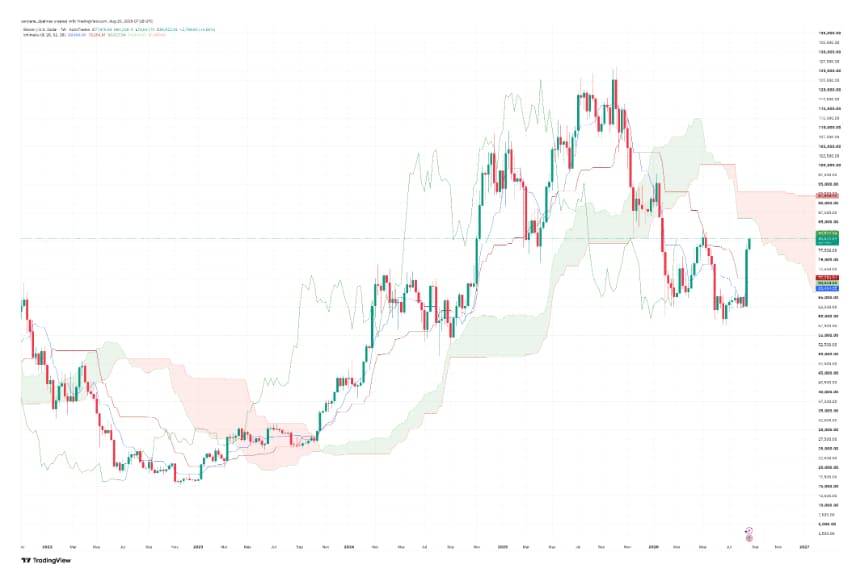
Several catalysts have converged behind the rally. The U.S. Treasury’s decision to expand its purchases of long-dated government bonds provided the initial trigger, while a weaker dollar, renewed concerns over U.S. debt, and stronger institutional demand helped amplify the move. At the same time, President Donald Trump’s renewed support for the cryptocurrency industry has improved sentiment around the regulatory outlook.
Treasury buybacks revive the "debasement trade"
The most immediate catalyst came on August 19, when Treasury Secretary Scott Bessent announced that the U.S. government would increase the size of some of its buyback operations for longer-dated Treasury securities. The Treasury plans to raise individual buybacks from $2 billion to at least $4 billion, targeting 10- to 30-year bonds.
The measure is intended to improve liquidity and ease pressure on the long end of the bond market after the 30-year Treasury yield reached 5.34%, its highest level since 2007. Markets interpreted the announcement as a signal that policymakers are increasingly concerned about elevated long-term borrowing costs. The announcement initially pushed Treasury yields lower and contributed to renewed selling of the U.S. dollar.
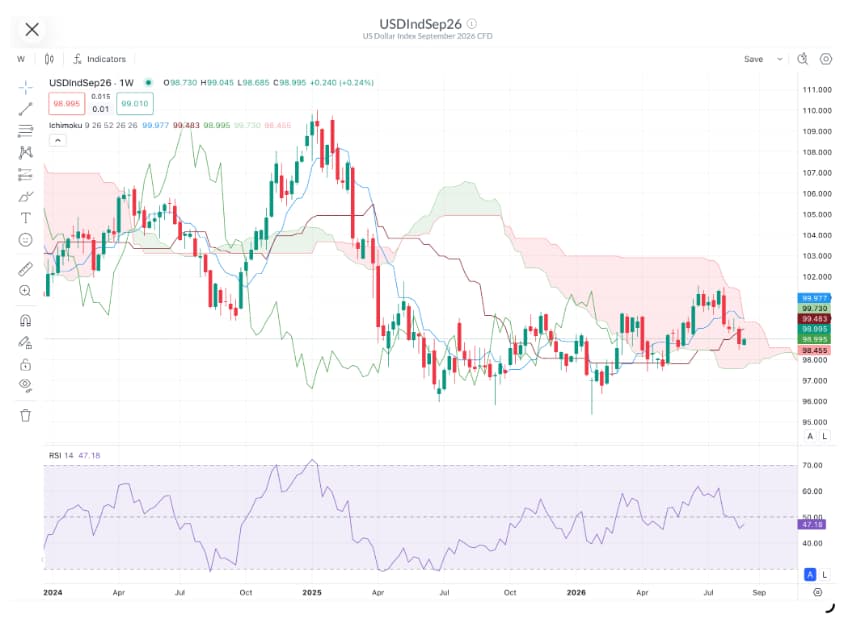
That reaction was particularly important for Bitcoin. The cryptocurrency has increasingly been treated by some investors as part of the so-called “debasement trade” — a strategy focused on assets that could preserve purchasing power if confidence in fiat currencies deteriorates.
If investors become concerned that governments will tolerate higher inflation, larger deficits or policies that indirectly reduce the real value of debt, demand can shift toward scarce assets such as gold and Bitcoin. The simultaneous strength of gold and Bitcoin reinforces the idea that investors are currently looking beyond traditional safe-haven assets.
Dollar weakness and growing concerns over US debt
The Bitcoin rally also reflects a broader deterioration in confidence surrounding the U.S. fiscal outlook. The national debt has surpassed $40 trillion, while elevated long-term yields are increasing the cost of servicing that debt. At the same time, investors are questioning whether policymakers can simultaneously contain inflation, maintain economic growth and keep Treasury borrowing costs under control.
This backdrop has strengthened Bitcoin’s appeal as an alternative to dollar-denominated assets. The argument does not necessarily depend on an imminent collapse of the U.S. financial system. Rather, investors are increasingly considering the possibility that persistent fiscal deficits and rising debt could gradually undermine the dollar’s purchasing power.
Bridgewater founder Ray Dalio has also recently argued that investors should consider Bitcoin as a hedge against the risks associated with a potential debt crisis. This is an important shift in Bitcoin’s investment narrative. Rather than simply being viewed as a high-risk asset, the cryptocurrency could increasingly be positioned alongside gold as an alternative store of value when confidence in traditional currencies and government finances weakens.
However, the fiscal backdrop remains a double-edged sword. If long-term Treasury yields resume their climb, higher risk-free returns could once again compete with Bitcoin for investors’ capital. The sustainability of the rally will therefore depend partly on whether the recent decline in yields proves durable.
A short squeeze adds fuel to the rally
Macro fundamentals alone do not fully explain the speed of Bitcoin’s advance. Positioning also played a major role. After months of disappointing price action, many traders had positioned themselves for further declines. Once Bitcoin moved decisively higher, those bearish positions began to unwind. Traders who had sold Bitcoin short were forced to repurchase the cryptocurrency to close their positions, creating additional buying pressure. According to market analysts, roughly $4 billion of bearish crypto positions were liquidated over two days as Bitcoin accelerated higher.
This created a classic short squeeze: rising prices forced short sellers to buy, those purchases pushed prices higher, and the resulting momentum triggered further liquidations. The significance for traders is that part of Bitcoin’s recent performance may therefore be technical rather than purely fundamental. A rally initially triggered by a relatively small change in Treasury policy became much larger because market positioning was heavily skewed toward the bearish side.
That also introduces a risk. Once the forced buying fades, Bitcoin will need genuine demand to maintain its gains.
Institutional demand and Trump's crypto push
There are signs that such demand is emerging. Spot Bitcoin ETFs have recorded a significant recovery in inflows, with more than $500 million entering the products on August 21. Weekly inflows have subsequently reached around $650 million, suggesting that institutional investors are once again increasing their exposure to Bitcoin.
ETF flows are particularly important because they provide a clearer indication of whether the rally is attracting fresh capital rather than simply being driven by speculative traders covering shorts.
Political developments have provided another source of support. President Trump recently met with cryptocurrency executives at the White House and urged Congress to move quickly on the Clarity Act, legislation designed to establish a clearer regulatory framework for digital assets. The message reinforced expectations that the administration intends to maintain a relatively supportive stance toward the cryptocurrency industry.
For the crypto market, regulatory clarity could have a much longer-lasting impact than the Treasury announcement. A clearer framework could reduce uncertainty for financial institutions, asset managers and companies seeking to develop digital-asset products.
Stay up to date with what's moving and shaking on the world's markets and never miss another important headline again! Check ActivTrades daily news and analyses here.
Author

Carolane de Palmas
ActivTrades
Carolane graduated with a Masters in Corporate Finance & Financial Markets and got the AMF Certification (Financial Markets Regulator in France). Afterward, she became an independent trader, investing mostly in European and American stocks/indices.