Australian Dollar underperforms after RBA Bullock’s remarks on economy
- The Australian Dollar trades lower to near 0.6965 against the US Dollar on stagflation risks in Australia.
- RBA’s Bullock warns of a slowing economy and housing market, with risks to inflation remaining on the upside.
- The Fed is expected to leave interest rates unchanged on Wednesday.
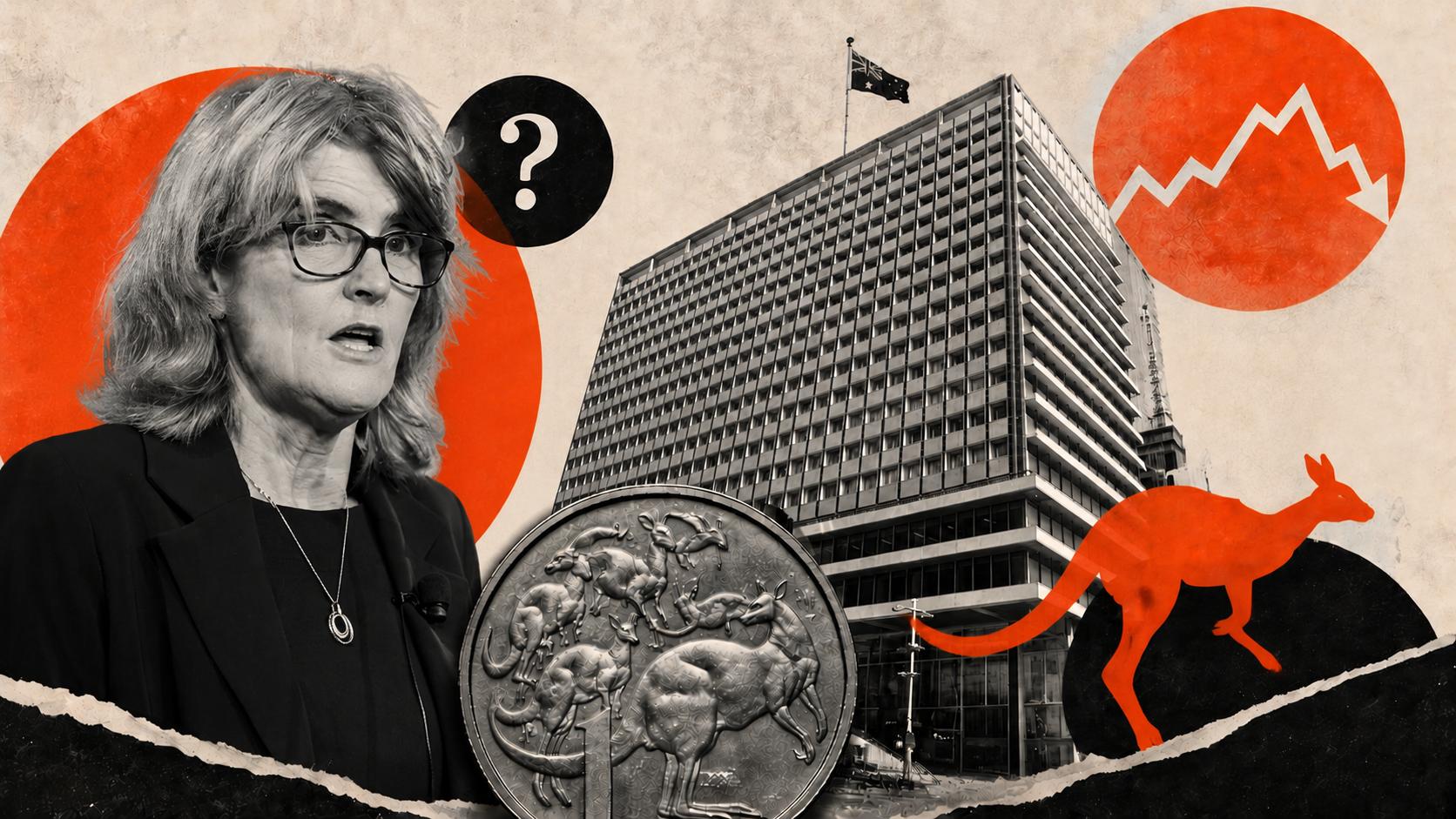
The Australian Dollar (AUD) is down against its major currency peers, trading 0.35% lower at around 0.6965 against the US Dollar (USD) during the European trading session on Tuesday. The antipodean faces intense selling pressure following remarks from Reserve Bank of Australia (RBA) Governor Michele Bullock, which triggered fears of stagflation in the economy.
Australian Dollar Price Today
The table below shows the percentage change of Australian Dollar (AUD) against listed major currencies today. Australian Dollar was the weakest against the Canadian Dollar.
| USD | EUR | GBP | JPY | CAD | AUD | NZD | CHF | |
|---|---|---|---|---|---|---|---|---|
| USD | 0.06% | 0.09% | 0.11% | -0.11% | 0.35% | 0.10% | 0.06% | |
| EUR | -0.06% | 0.03% | 0.06% | -0.19% | 0.29% | 0.06% | -0.00% | |
| GBP | -0.09% | -0.03% | 0.02% | -0.17% | 0.28% | 0.04% | -0.00% | |
| JPY | -0.11% | -0.06% | -0.02% | -0.23% | 0.23% | -0.00% | -0.04% | |
| CAD | 0.11% | 0.19% | 0.17% | 0.23% | 0.48% | 0.21% | 0.18% | |
| AUD | -0.35% | -0.29% | -0.28% | -0.23% | -0.48% | -0.22% | -0.30% | |
| NZD | -0.10% | -0.06% | -0.04% | 0.00% | -0.21% | 0.22% | -0.04% | |
| CHF | -0.06% | 0.00% | 0.00% | 0.04% | -0.18% | 0.30% | 0.04% |
The heat map shows percentage changes of major currencies against each other. The base currency is picked from the left column, while the quote currency is picked from the top row. For example, if you pick the Australian Dollar from the left column and move along the horizontal line to the US Dollar, the percentage change displayed in the box will represent AUD (base)/USD (quote).
Earlier in the day, RBA’s Bullock warned of “Economy slowing, housing market cooling more than anticipated,” while keeping the option of cash rate hikes on the table to bring inflation down. Bullock didn’t offer any guidance for the upcoming policy meeting, but clarified that the board will have some difficult decisions to make if it thinks inflation is not coming down.
Technically, upside inflation risks and a subdued economic outlook prompt the risk of stagflation in an economy.
For fresh cues regarding the current status of inflation, investors await the Australian Q2 and June Consumer Price Index (CPI) data, which will be released on Wednesday. On an annualized basis, Australian Q2 and June CPI are expected to have grown steadily by 4.1% and 4%, respectively.
On the US Dollar front, financial markets await the Federal Reserve’s (Fed) monetary policy announcement on Wednesday, in which it is expected to leave interest rates unchanged in the range of 3.50%-3.75%.
Fed Chair Kevin Warsh is unlikely to deliver any remarks regarding the monetary policy outlook, as he said in the June meeting that “so-called forward guidance is not well-suited in the current policy juncture”.
Economic Indicator
Quarterly Consumer Price Index (YoY)
The Consumer Price Index (CPI), released by the Australian Bureau of Statistics on a quarterly basis, measures the changes in the price of a fixed basket of goods and services acquired by household consumers. The quarterly CPI data series are calculated as the average of the three relevant monthly CPIs. The YoY reading compares prices in the reference quarter to the same quarter a year earlier. A high reading is seen as bullish for the Australian Dollar (AUD), while a low reading is seen as bearish.
Read more.Next release: Wed Jul 29, 2026 01:30
Frequency: Quarterly
Consensus: 4.1%
Previous: 4.1%
Source: Australian Bureau of Statistics
The quarterly Consumer Price Index (CPI) published by the Australian Bureau of Statistics (ABS) has a significant impact on the market and the AUD valuation. The gauge is closely watched by the Reserve Bank of Australia (RBA), in order to achieve its inflation mandate, which has major monetary policy implications. Rising consumer prices tend to be AUD bullish, as the RBA could hike interest rates to maintain its inflation target. The data is released nearly 25 days after the quarter ends.
Author

Sagar Dua
FXStreet
Sagar Dua is associated with the financial markets from his college days. Along with pursuing post-graduation in Commerce in 2014, he started his markets training with chart analysis.