AI markets bounced despite war risk – Can it hold?
Markets had two problems to digest: the FOMC minutes and a fresh wave of war headlines.
The first event may already have been priced in, as it is merely a summary of the previous Fed meeting – traders already knew the Fed was not rushing back into rate cuts. The bigger pressure came from renewed geopolitical risk, which pushed oil and yields back into focus and hit risk sentiment early in the session.
Yet the AI markets have been recovering. That suggests that risks were largely priced in.
Nasdaq/US two-year yield ratio is range-bound
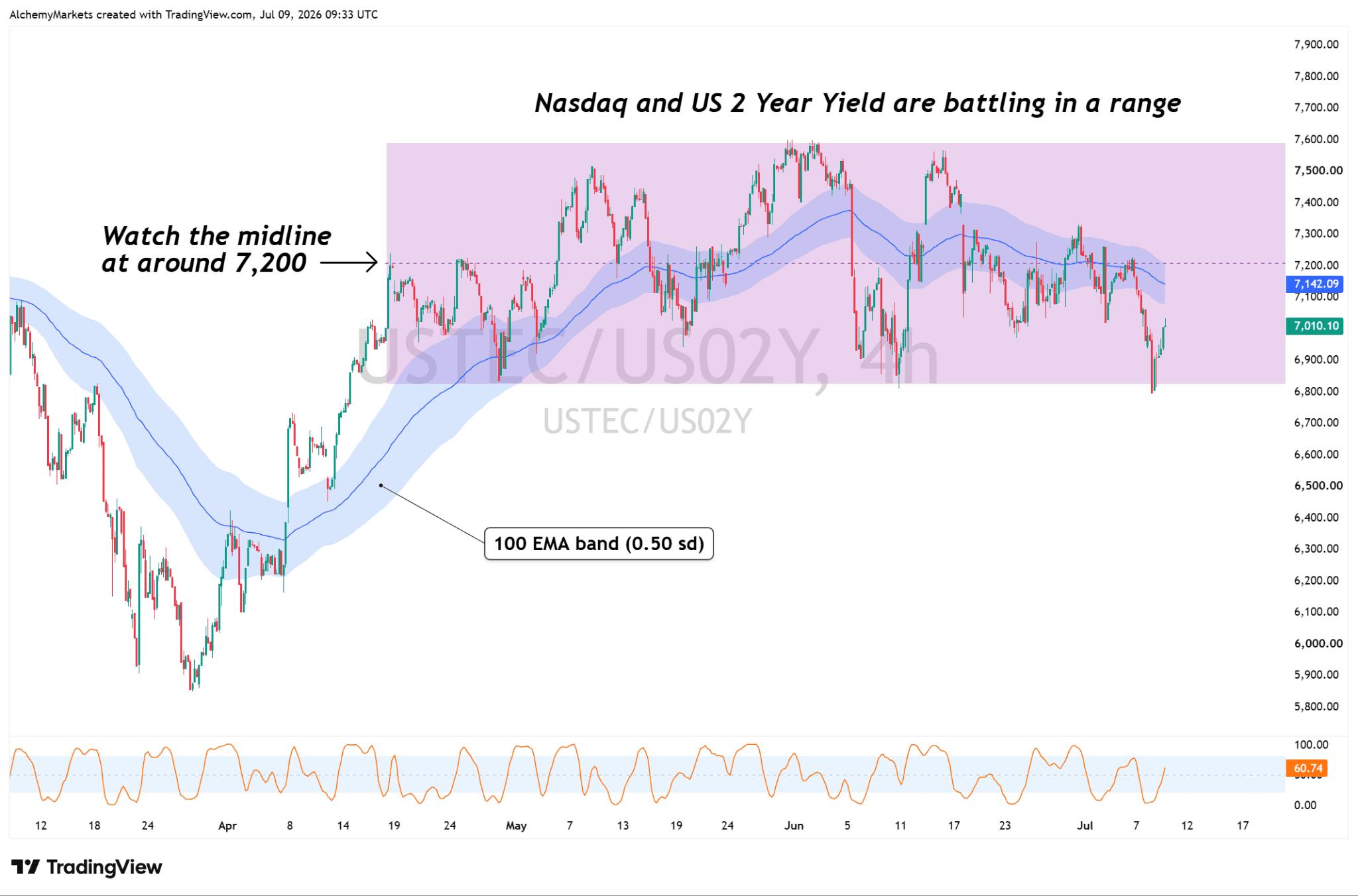
The cleaner chart is USTEC/US02Y on the 4H timeframe. It shows whether Nasdaq strength is improving relative to front-end yield pressure. The ratio bounced from the lower end of its recent range, but it is now reacting near the 100 EMA band.
That makes the next move important.
A push back above the range midline near 7,200 would suggest the AI bounce is gaining strength against rate pressure. A rejection would keep the market in a regime where yields still cap upside.
This is why the bounce should not be treated as a full reversal yet. A relief move from support is not the same as confirmed leadership. For confirmation, the market needs price to reclaim key support and resistance levels, not just stop falling for one session.
Semiconductors attempt to recover
It was reported that Asian chip sentiment faded after earlier optimism around Samsung and SK Hynix. That makes KOSPI useful because it gives a cleaner read on whether the AI hardware trade is stabilising across regions, not just in the US.
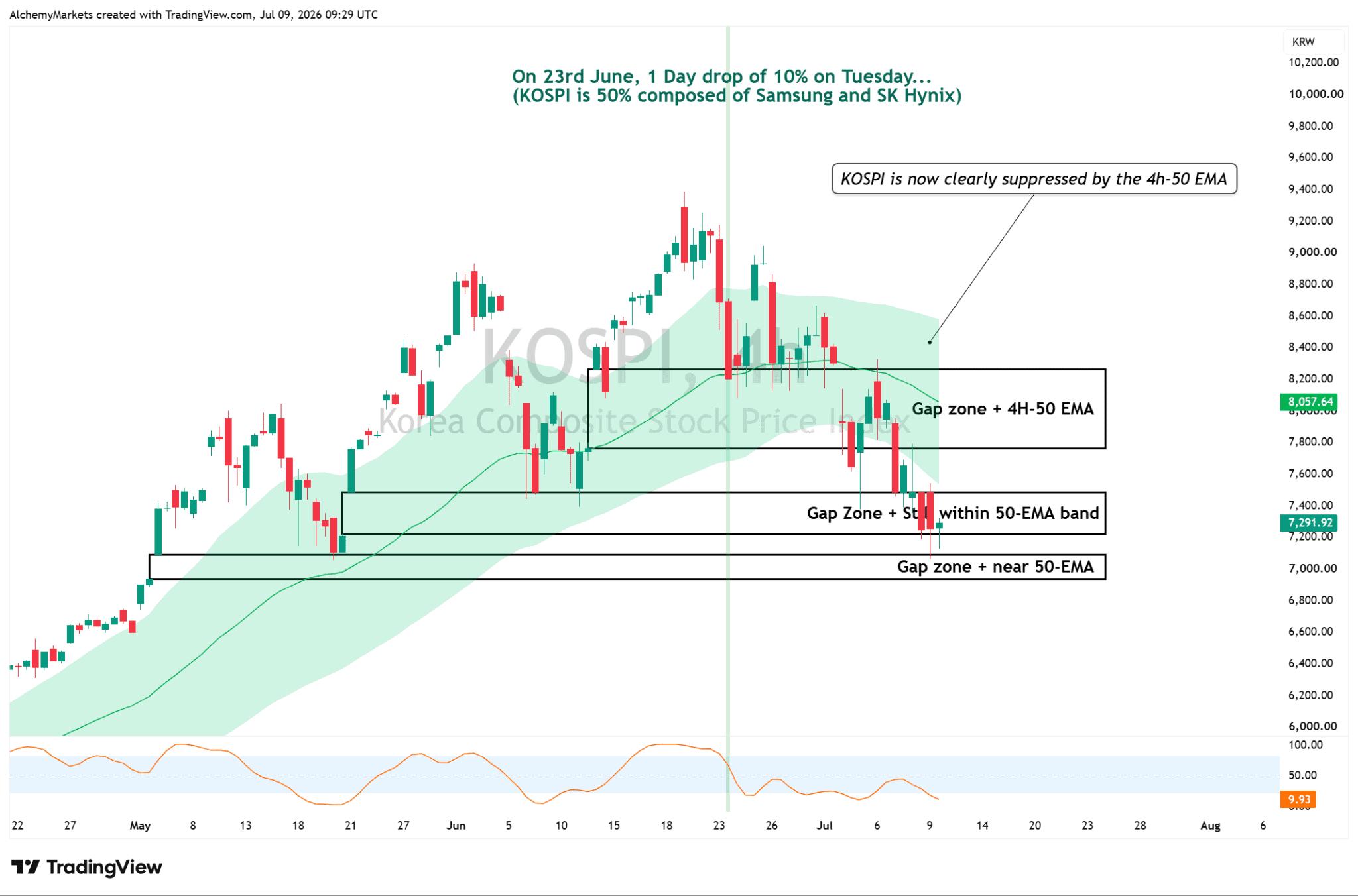
The KOSPI 4H chart still shows price suppressed below the 50 EMA band. That does not confirm a bearish collapse, but it does show that buyers have not fully regained control. If KOSPI can reclaim that band, the AI hardware bounce becomes more credible. If it fails there, the market is still warning that semiconductor buyers are cautious.
Micron tells the same story on a stock level. MU bounced, but the rebound is moving into a heavy resistance area near the prior high-volume zone. Volume Profile can be useful here because it shows where previous trading activity was concentrated. If sellers defend that area, MU’s move may be a retest rather than a clean recovery.
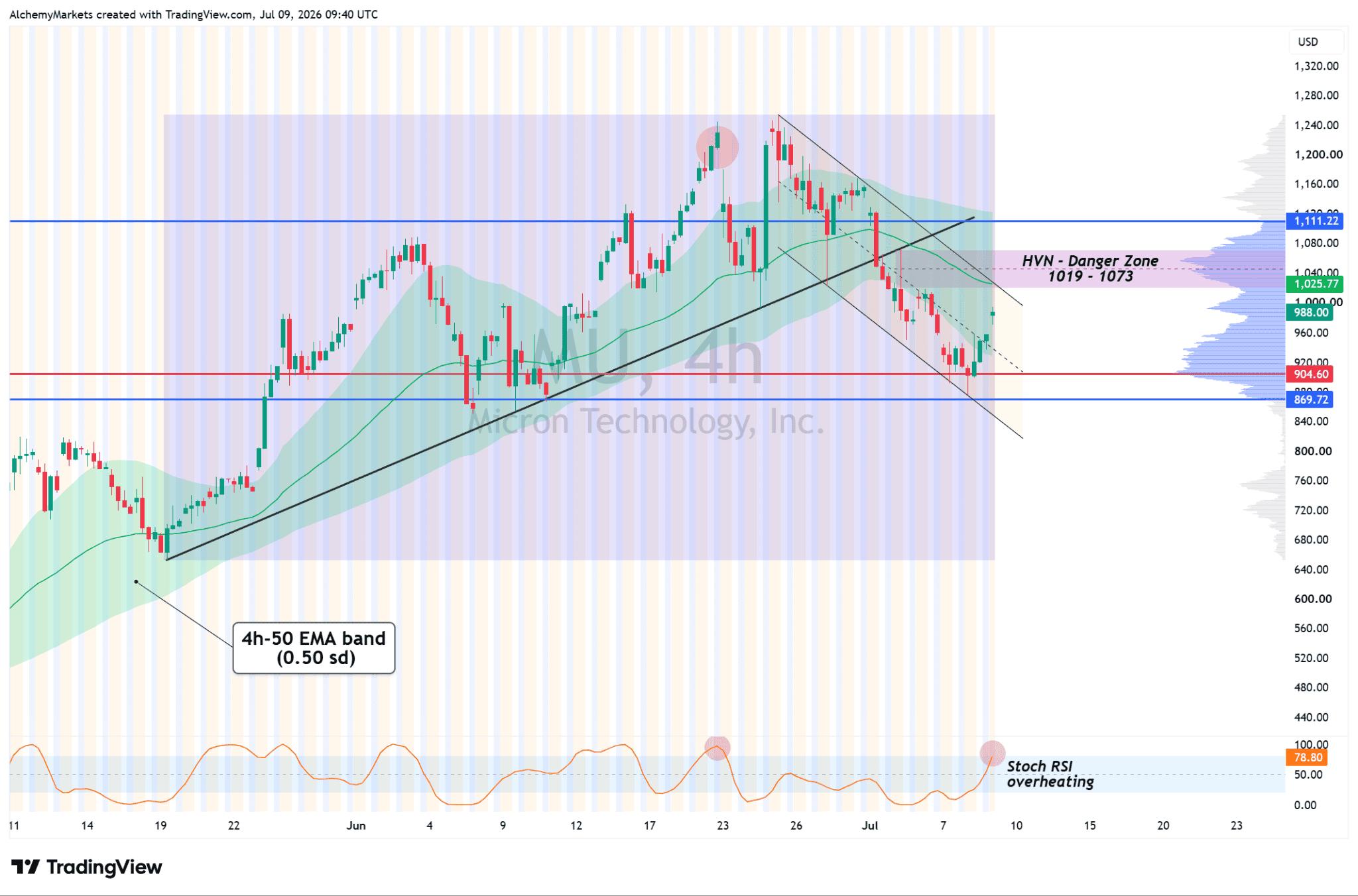
The stronger bull case is that nothing fundamental has really changed for AI. The recent weakness was driven more by macro risk than by companies cutting guidance or abandoning capex plans. If war risk cools, oil settles and yields stop rising, the names that were hit hardest could recover quickly.
The FOMC minutes may have been mostly priced in, while war headlines delivered the real shock. Buyers defended key levels, but the next test is whether USTEC/US02Y can reclaim the 100 EMA band and whether KOSPI can break back above its 4H 50 EMA band.
Until then, this is a relief bounce with conditions attached.
Author

Zorrays Junaid
Alchemy Markets
Zorrays Junaid has extensive combined experience in the financial markets as a portfolio manager and trading coach. More recently, he is an Analyst with Alchemy Markets, and has contributed to DailyFX and Elliott Wave Forecast in the past.