1.20 in sight: Why narrowing rate differentials are dragging AUD/NZD lower

The Australian Dollar (AUD) strength against the New Zealand Dollar (NZD) may be about to reverse.
Recent data from Australia reveals a softer-than-expected inflation alongside underwhelming employment figures, prompting market participants to scale back expectations for further interest rate hikes by the Reserve Bank of Australia (RBA). Conversely, a hawkish holding stance from the Reserve Bank of New Zealand (RBNZ) is providing strength to the Kiwi, leading major financial institutions to project a softer outlook for the Australian Dollar when compared to its main antipodean peer.
The cross is already losing more than 1.2% on Wednesday, a daily decline not seen since the end of 2019.
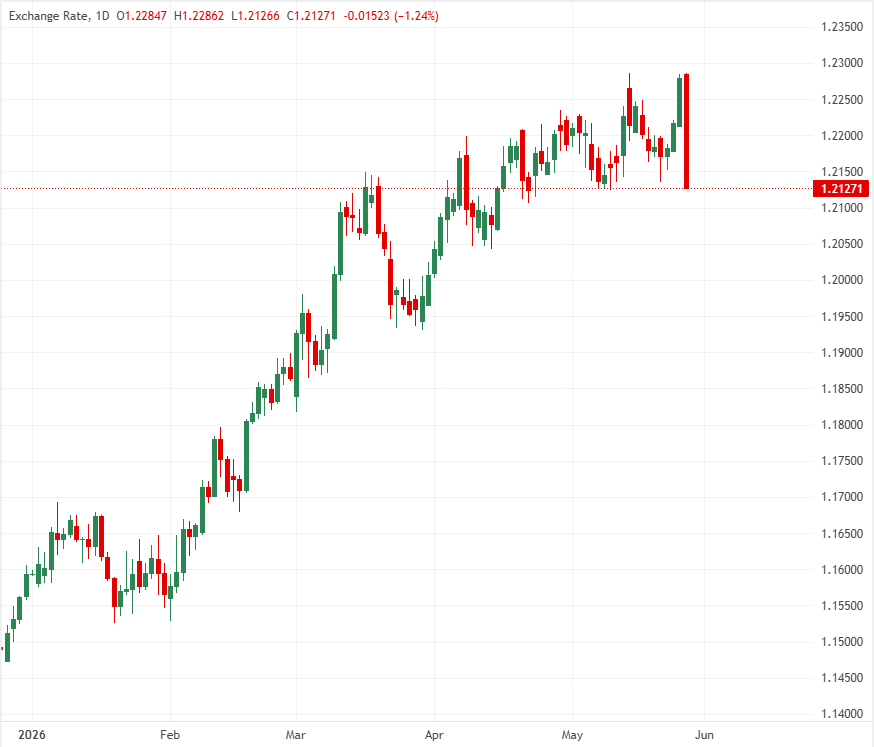
Narrowing rate differentials threaten to drag AUD/NZD lower
Analysts at Societe Generale point out that while the RBA’s monetary tightening cycle appears to be losing steam due to cooling domestic indicators, the RBNZ has surprised the markets by leaning more hawkish. This contrast is expected to squeeze the interest rate differential between Australia and New Zealand, stripping away a major pillar of support for the Australian Dollar against the Kiwi.
AUD/NZD retreated from the 13-year high and the prospect of narrowing RBA/RBNZ rate differentials is a signal that the cross is destined to cheapen. A break below 1.2130 (50dma) opens 1.20.
Cooling inflation gives RBA breathing room to pause
Taking a closer look at the Australian economy, Commerzbank notes that lower-than-expected inflation metrics justifies a pause in Australia's interest rate hikes. Although underlying trimmed-mean inflation remains a warning sign, the broader cooling trend grants policymakers the flexibility to keep rates steady.
Unlike the Reserve Bank of New Zealand, the Reserve Bank of Australia (RBA) has already raised its key interest rate three times in recent months. However, this morning’s inflation data confirms our assessment that a pause is now likely to follow.
Banks point toward a cooling or peaking outlook for the Australian Dollar
Based on the insights from both institutions, the banks anticipate a downward or capping trend for the Australian Dollar's against the Kiwi. Societe Generale explicitly projects a bearish path for the currency against its regional peer, predicting that the AUD will cheapen as its yield advantage over the NZD shrinks. Supporting this softer outlook, Commerzbank expects the RBA to halt its rate-hiking cycle entirely for the time being, a move that removes immediate upward momentum to the Australian Dollar.
(This article was created with the help of an Artificial Intelligence tool and reviewed by an editor.)
Author

FXStreet Insights Team
FXStreet
The FXStreet Insights Team is a group of journalists that handpicks selected market observations published by renowned experts. The content includes notes by commercial as well as additional insights by internal and external analysts.