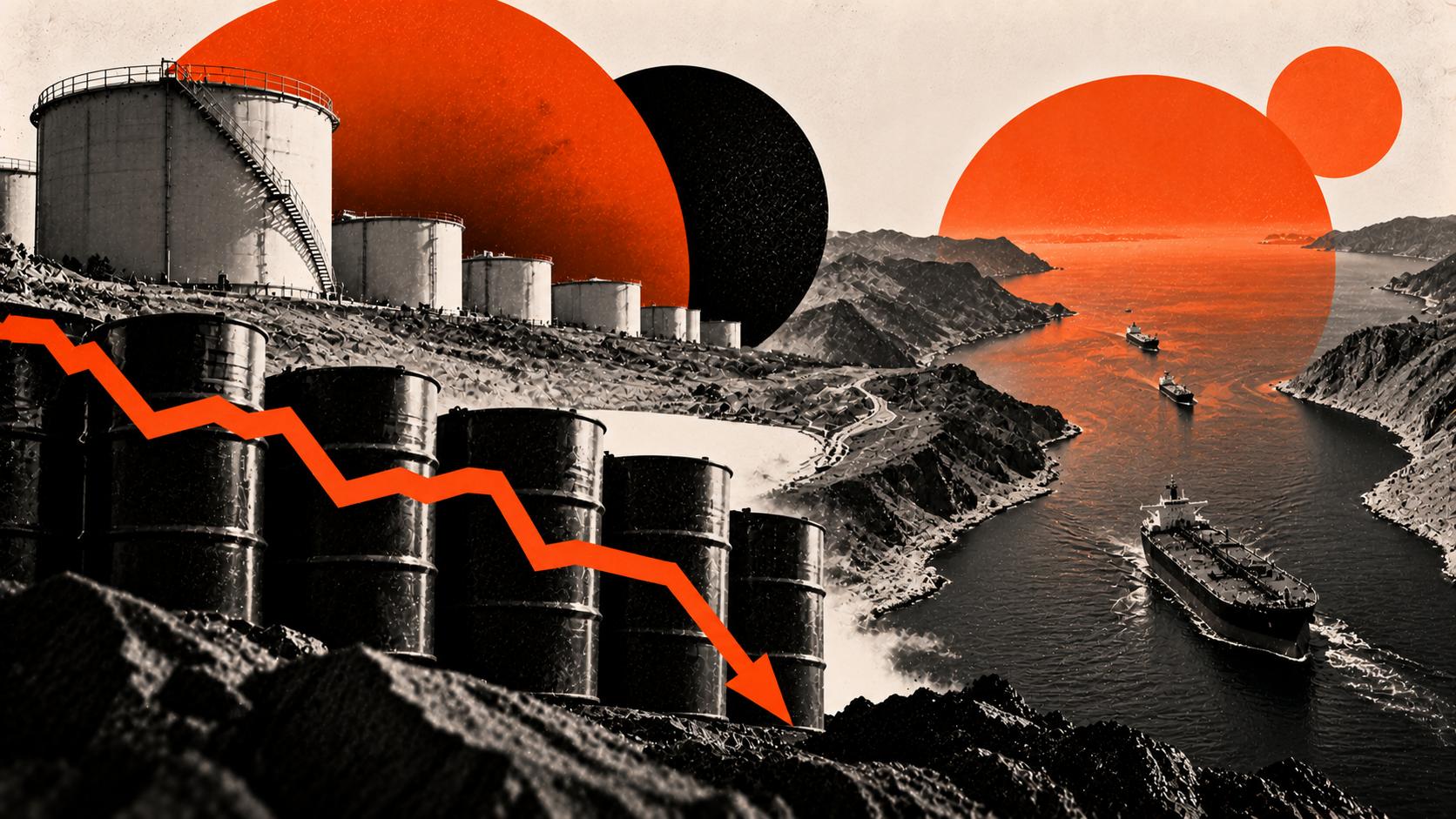
WTI Oil approaches $99 amid fears of supply disruptions from Gulf countries
- WTI Oil resumes its uptrend and appreciates nearly 1% on Wednesday, nearing $99.00.
- Increasing attacks on vessels in the Strait of Hormuz and the Houthis' threat to Saudi Arabian oilfields have boosted fears about supply disruptions.
- US-Iran negotiation attempts keep failing as the parties' positions remain far apart.

Crude prices are reversing earlier losses on Wednesday, buoyed by rising concerns about supply disruptions as attacks in the Strait of Hormuz increase and Saudi Arabian Oilfields remain under threat. The US Benchmark West Texas Intermediate (WTI) oil has risen about 1% so far on Wednesday to reach a session high a few cents below $99.00.
Iran’s Revolutionary Guards Corps (IRGC) announced on Tuesday that two tankers were set ablaze after hitting sea mines in the south of the Strait of Hormuz, while attempting to cross the waterway using a route unauthorized by Tehran,
Beyond that, the Iran-backed Houthi militias from Yemen have claimed attacks on Aramco Oil facilities in Yanbu, the Red Sea port used by Saudi Arabia to skip the beleaguered Hormuz corridor.
A US-Iran peace deal remains elusive
Meanwhile, a peace deal between Washington and Tehran remains elusive. A high-ranking Pakistani army official arrived in Tehran on Tuesday in a new attempt to mediate between rivals and prevent a new round of fighting. This news was celebrated by the market and triggered a significant pullback in crude prices during Tuesday's US Trading session
American officials, however, have cooled hopes of any swift peace agreement on Wednesday. The US Secretary of State Marco Rubio affirmed on US media that reaching a peace deal with Iran is extremely difficult and that economic pressure on the Islamic Republic will continue until Tehran continues targeting commercial vessels in the Strait of Hormuz.
The Iranian Foreign Minister, Abbas Araghchi, said on Iranian media that the Strait of Hormuz will remain closed until Washington accepts Iran’s conditions, and in this loop, the conflict heads into its eighth month with no clear end in sight.
WTI Oil FAQs
WTI Oil is a type of Crude Oil sold on international markets. The WTI stands for West Texas Intermediate, one of three major types including Brent and Dubai Crude. WTI is also referred to as “light” and “sweet” because of its relatively low gravity and sulfur content respectively. It is considered a high quality Oil that is easily refined. It is sourced in the United States and distributed via the Cushing hub, which is considered “The Pipeline Crossroads of the World”. It is a benchmark for the Oil market and WTI price is frequently quoted in the media.
Like all assets, supply and demand are the key drivers of WTI Oil price. As such, global growth can be a driver of increased demand and vice versa for weak global growth. Political instability, wars, and sanctions can disrupt supply and impact prices. The decisions of OPEC, a group of major Oil-producing countries, is another key driver of price. The value of the US Dollar influences the price of WTI Crude Oil, since Oil is predominantly traded in US Dollars, thus a weaker US Dollar can make Oil more affordable and vice versa.
The weekly Oil inventory reports published by the American Petroleum Institute (API) and the Energy Information Agency (EIA) impact the price of WTI Oil. Changes in inventories reflect fluctuating supply and demand. If the data shows a drop in inventories it can indicate increased demand, pushing up Oil price. Higher inventories can reflect increased supply, pushing down prices. API’s report is published every Tuesday and EIA’s the day after. Their results are usually similar, falling within 1% of each other 75% of the time. The EIA data is considered more reliable, since it is a government agency.
OPEC (Organization of the Petroleum Exporting Countries) is a group of 12 Oil-producing nations who collectively decide production quotas for member countries at twice-yearly meetings. Their decisions often impact WTI Oil prices. When OPEC decides to lower quotas, it can tighten supply, pushing up Oil prices. When OPEC increases production, it has the opposite effect. OPEC+ refers to an expanded group that includes ten extra non-OPEC members, the most notable of which is Russia.
Author

Guillermo Alcala
FXStreet
Graduated in Communication Sciences at the Universidad del Pais Vasco and Universiteit van Amsterdam, Guillermo has been working as financial news editor and copywriter in diverse Forex-related firms, like FXStreet and Kantox.