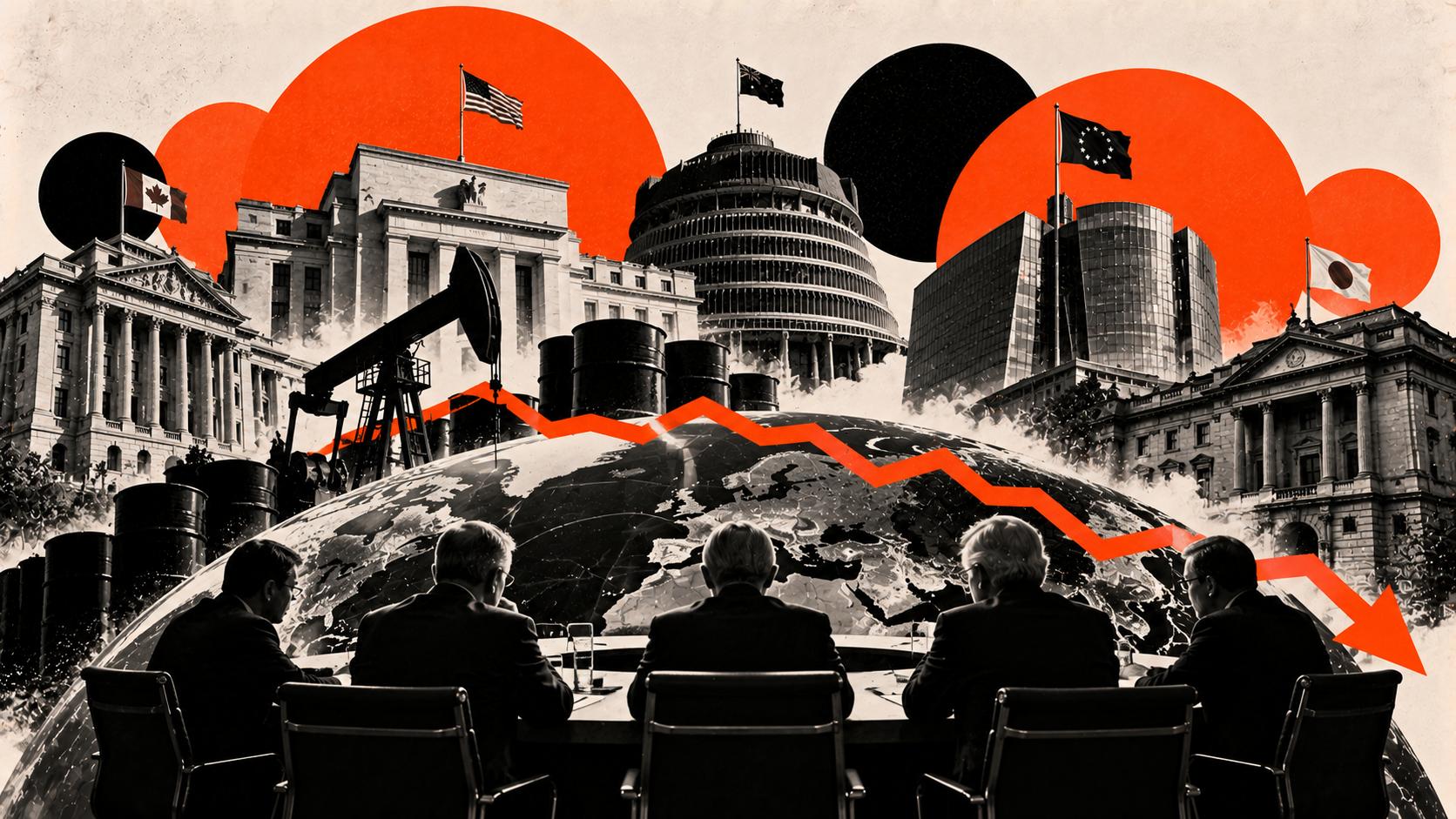
WTI falls to near $100 as Middle East talks ease supply fears
- Iran, Saudi Arabia, Pakistan, and Turkey agreed to regional security talks in Tehran to support stability.
- Middle East discussions come ahead of US midterm elections, with potential military strikes against Iran looming if negotiations stall.
- Ongoing regional conflicts with Houthis and Hezbollah keep supply risks elevated despite crude flows recovering to prewar levels.
West Texas Intermediate (WTI) oil price extends its losses for the second successive day, trading around $100.10 per barrel during Asian hours on Tuesday. Crude oil prices fell as renewed diplomatic efforts in the Middle East raised hopes of preventing a wider escalation of the US-Iran conflict.
Following high-level talks held in Tehran, Iran, Saudi Arabia, Pakistan, and Turkey agreed on Monday to continue security discussions and enhance regional cooperation, according to Islamic Republic of Iran Broadcasting (IRIB). A joint statement released after the first meeting between Iran and senior officials representing the Mecca Joint Defence Agreement stated that the four countries had agreed to maintain dialogue and consultations, particularly concerning regional peace, security, and stability.
The discussions come roughly a week before the US midterm elections, after which US President Donald Trump has repeatedly suggested that military strikes against Iran could resume following months of stalled negotiations.
Meanwhile, Saudi-led forces continue to engage Iran-backed Houthi rebels, while Hezbollah is reportedly preparing for another regional conflict in Lebanon after receiving financial support from Iran. These ongoing tensions continue to pose risks to Middle Eastern oil supplies, despite crude flows having recovered to around prewar levels.
TD Securities highlights constructive cta positioning in WTI crude
According to TD Securities, trend-following accounts remain positively aligned with WTI crude, with their CTA Position Tracker highlighting "constructive positioning" in the contract. The bank notes that net long exposure is clustered near recent price levels, with "upside triggers" close by, suggesting systematic traders are poised to add to length should the current trend extend. Scenario analysis around WTI crude further indicates CTAs are prepared to "add or trim exposure as volatility and trend signals evolve through the coming months," underscoring a dynamic, rules-based approach to risk management in the energy complex.
WTI Oil FAQs
WTI Oil is a type of Crude Oil sold on international markets. The WTI stands for West Texas Intermediate, one of three major types including Brent and Dubai Crude. WTI is also referred to as “light” and “sweet” because of its relatively low gravity and sulfur content respectively. It is considered a high quality Oil that is easily refined. It is sourced in the United States and distributed via the Cushing hub, which is considered “The Pipeline Crossroads of the World”. It is a benchmark for the Oil market and WTI price is frequently quoted in the media.
Like all assets, supply and demand are the key drivers of WTI Oil price. As such, global growth can be a driver of increased demand and vice versa for weak global growth. Political instability, wars, and sanctions can disrupt supply and impact prices. The decisions of OPEC, a group of major Oil-producing countries, is another key driver of price. The value of the US Dollar influences the price of WTI Crude Oil, since Oil is predominantly traded in US Dollars, thus a weaker US Dollar can make Oil more affordable and vice versa.
The weekly Oil inventory reports published by the American Petroleum Institute (API) and the Energy Information Agency (EIA) impact the price of WTI Oil. Changes in inventories reflect fluctuating supply and demand. If the data shows a drop in inventories it can indicate increased demand, pushing up Oil price. Higher inventories can reflect increased supply, pushing down prices. API’s report is published every Tuesday and EIA’s the day after. Their results are usually similar, falling within 1% of each other 75% of the time. The EIA data is considered more reliable, since it is a government agency.
OPEC (Organization of the Petroleum Exporting Countries) is a group of 12 Oil-producing nations who collectively decide production quotas for member countries at twice-yearly meetings. Their decisions often impact WTI Oil prices. When OPEC decides to lower quotas, it can tighten supply, pushing up Oil prices. When OPEC increases production, it has the opposite effect. OPEC+ refers to an expanded group that includes ten extra non-OPEC members, the most notable of which is Russia.
Author

Akhtar Faruqui
FXStreet
Akhtar Faruqui is a Forex Analyst based in New Delhi, India. With a keen eye for market trends and a passion for dissecting complex financial dynamics, he is dedicated to delivering accurate and insightful Forex news and analysis.