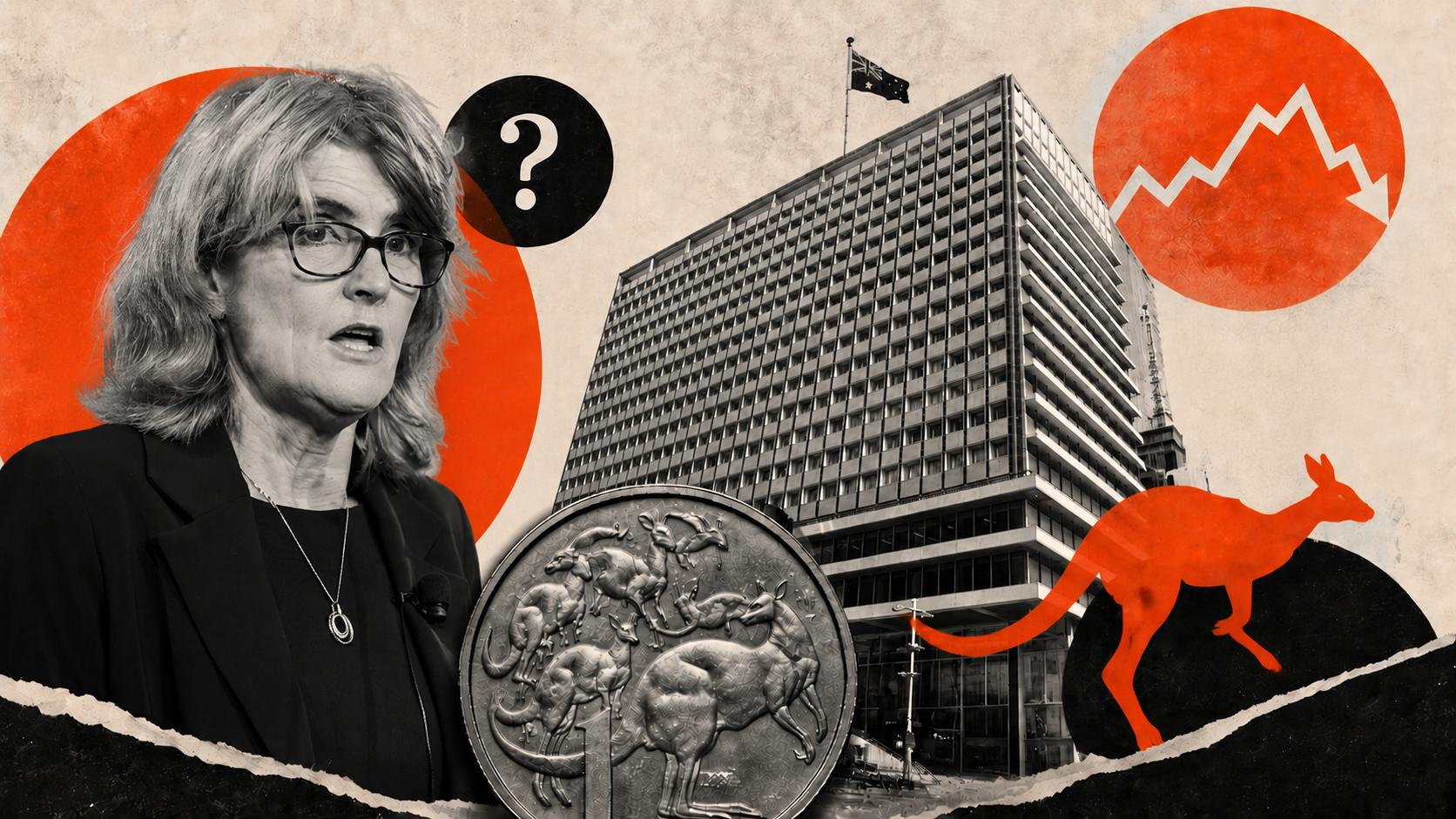
Bullock Speech: RBA Governor speaks on policy outlook after the expected interest rate hike

Reserve Bank of Australia (RBA) Governor Michele Bullock is addressing the press conference, explaining the reason behind raising the key interest rate by 25 basis points (bps) to 4.60% from 4.35% in the September policy meeting.
Key quotes from the RBA press conference
Inflation is driven by domestic capacity pressures.
Inflationary pressures to last longer than expected.
Board will raise rates again if needed.
Unemployment rate still low historically.
Need to bring excess demand down, recession is not our central case.
Will not put too much emphasis on August CPI number, need tight financial conditions.
I still think the labor market is a little bit tight.
I hope four rate hikes will be restrictive enough to slow inflation.
If inflation comes down, then it's possible no more hikes are needed.
The Middle East made things worse, but had a CPI problem before.
Bond markets are reacting in an orderly way, but we are watching closely.
The board considered pause and 25-bps hike today.
Longer conflict lasts, more likely businesses will pass on costs.
Bond markets are reacting in an order;ly way, but we are watching closely.
Risks to inflation from AI boom are building .
One upside inflation risk has materialised, two are building.
Raising rates impacts inflation through a$ channel.
An have a gradual rise in unemployment rate without job losses.
Can have a gradual rise in unemployment rate without job losses.
Number of inflationary pressures making for a very difficult situation.
Aiming to tighten in a measured way.
Looking to schedule board meetings around abs inflation data.
No wage price spiral in Australia.
Board did not take this decision lightly, had to do it to bring inflation down.
Confident we will get inflation back down.
Will do what is needed with rates.
Think we are near the top of range of neutral.
Hope a recession is not needed.
Was a case for holding rates discussed today.
Need to see quarterly core inflation numbers sitting around 0.6%.
Q3 CPI numbers will only confirm what we already know.
This section below was published at 04:30 GMT to cover the Reserve Bank of Australia's monetary policy announcements and the initial market reaction.
The Reserve Bank of Australia (RBA) announced on Tuesday that it raised the Official Cash Rate (OCR) by 25 basis points (bps) to 4.60% from 4.35% after concluding its September monetary policy meeting. The decision aligned with the market expectations.
This is the RBA first hike after keeping rates unchanged at its previous two meetings.
Summary of the RBA Monetary Policy Statement
Today's decision was unanimous.
Inflation remains elevated and some of the upside risks flagged in August are materialising.
Conflict in the Middle East has broadened and global energy prices are now much higher than had been assumed in the August forecast.
The three increases in the cash rate target since the beginning of the year have tightened financial conditions and the economy appears to be slowing.
Short-term measures of inflation expectations remain elevated.
But inflation is still too high and the board judged that, in light of recent developments, a further tightening in financial conditions is warranted to support a return of inflation to target in a reasonable period.
Recent inflation outcomes in Australia were stronger than expected at the previous meeting.
The board will continue to do what it considers necessary to bring inflation sustainably back to target, including increasing the cash rate target further if needed.
Monetary policy is well placed to respond to developments, and the board is focused on its mandate to deliver price stability and full employment.
Labour market conditions have eased broadly as expected in recent months, and labour market leading indicators are broadly stable.
Since the previous meeting, some of the upside risks to inflation are materialising.
There continue to be heightened uncertainties about the outlook for domestic economic activity and inflation.
The Middle East conflict remains unresolved, and there are scenarios where inflation is higher and activity lower than forecast.
AUD/USD reaction to the RBA interest rate decision
The Australian Dollar attracts some buyers in an immediate reaction to the RBA’s decision. At the time of writing, the AUD/USD pair is up 0.04% on the day at 0.7020.
Australian Dollar Price Today
The table below shows the percentage change of Australian Dollar (AUD) against listed major currencies today. Australian Dollar was the strongest against the New Zealand Dollar.
| USD | EUR | GBP | JPY | CAD | AUD | NZD | CHF | |
|---|---|---|---|---|---|---|---|---|
| USD | 0.13% | 0.16% | -0.03% | 0.11% | 0.45% | 0.18% | 0.17% | |
| EUR | -0.13% | 0.03% | -0.14% | -0.04% | 0.32% | 0.07% | 0.03% | |
| GBP | -0.16% | -0.03% | -0.19% | -0.04% | 0.28% | 0.05% | 0.00% | |
| JPY | 0.03% | 0.14% | 0.19% | 0.14% | 0.46% | 0.22% | 0.19% | |
| CAD | -0.11% | 0.04% | 0.04% | -0.14% | 0.32% | 0.08% | 0.05% | |
| AUD | -0.45% | -0.32% | -0.28% | -0.46% | -0.32% | -0.24% | -0.28% | |
| NZD | -0.18% | -0.07% | -0.05% | -0.22% | -0.08% | 0.24% | -0.03% | |
| CHF | -0.17% | -0.03% | -0.00% | -0.19% | -0.05% | 0.28% | 0.03% |
The heat map shows percentage changes of major currencies against each other. The base currency is picked from the left column, while the quote currency is picked from the top row. For example, if you pick the Australian Dollar from the left column and move along the horizontal line to the US Dollar, the percentage change displayed in the box will represent AUD (base)/USD (quote).
This section below was published on September 29 at 00:30 GMT as a preview of the Reserve Bank of Australia's monetary policy announcements.
- The Reserve Bank of Australia is set to raise the interest rate to 4.60% in September.
- RBA Governor Bullock’s words and the policy statement are in focus for cues on further rate hikes.
- The Australian Dollar is expected to experience heightened volatility around the RBA event risk.
The Reserve Bank of Australia (RBA) is widely expected to raise the Official Cash Rate (OCR) by 25 basis points (bps) to 4.60% from 4.35% on Tuesday, after keeping rates unchanged at its previous two meetings
The decision will be announced at 04:30 GMT, accompanied by the Monetary Policy Statement (MPS), and followed by RBA Governor Michele Bullock’s press conference at 05:30 GMT.
The Australian Dollar (AUD) braces for a big reaction to the RBA policy announcement and Bullock’s press conference, as underlying inflation remains elevated while labor market conditions are easing.
Focus on RBA Governor Bullock
With a rate hike all but certain, what Governor Michele Bullock says about the next interest rate move will be the main driver.
Australia’s July inflation came in hotter than expected. Monthly Consumer Price Index (CPI) jumped 1.0% versus expectations of 0.8%, while annual inflation remained elevated at 3.5%. More importantly, trimmed-mean inflation remained unchanged at 3.6%, reinforcing concerns that underlying price pressures remain persistent.
The RBA also highlighted risks from higher energy prices, the Middle East conflict, strong investment and persistent domestic cost pressures. Governor Bullock recently said some upside inflation risks appeared to be materialising.
Australian Gross Domestic Product (GDP) increased 0.4% in Q2. However, the economy is losing momentum, with annual GDP growth of 2.1% in the same period, down from 2.5% in the prior quarter.
Meanwhile, the Unemployment Rate rose to 4.6% in August, above forecasts for a steady 4.5% and the highest level since late 2021.
And that creates the RBA's dilemma: inflation is still too high, but growth and the labor market are cooling.
How will the Reserve Bank of Australia’s decision impact AUD/USD?
If the RBA delivers the 25 bps rate hike and Bullock signals that another increase remains possible, especially if inflation stays elevated, the AUD could receive the much-needed lift.
On the other hand, the Australian Dollar could come under intense selling pressure if Bullock signals that 4.60% could be the peak, or emphasizes weaker growth and a cooling labor market.
However, the reaction to the RBA decision could be short-lived as Wednesday’s August CPI report could prove more important than the monetary policy announcement, as it could determine whether markets price in another RBA hike after September.
Dhwani Mehta, Asian Session Lead Analyst at FXStreet, highlights key technical levels for trading AUD/USD following the policy announcement.
“AUD/USD is holding right on the 200-day Simple Moving Average (SMA), which acts as a pivotal level after the latest slide. The 14-day Relative Strength Index around 35 is edging toward oversold territory, suggesting bearish momentum persists.”
“On the topside, initial resistance is located at the 100-day SMA around 0.7068, followed by the 50-day SMA at 0.7094 and then the faster 21-day SMA at 0.7133, which together define the main recovery hurdles for any corrective bounce. On the downside, a sustained daily close below the 200-day SMA at 0.7026 would expose the recent lows and open the path for a deeper decline toward the $0.6950 psychological level, followed by the 0.6900 round level,” Dhwani adds.
RBA FAQs
The Reserve Bank of Australia (RBA) sets interest rates and manages monetary policy for Australia. Decisions are made by a board of governors at 11 meetings a year and ad hoc emergency meetings as required. The RBA’s primary mandate is to maintain price stability, which means an inflation rate of 2-3%, but also “..to contribute to the stability of the currency, full employment, and the economic prosperity and welfare of the Australian people.” Its main tool for achieving this is by raising or lowering interest rates. Relatively high interest rates will strengthen the Australian Dollar (AUD) and vice versa. Other RBA tools include quantitative easing and tightening.
While inflation had always traditionally been thought of as a negative factor for currencies since it lowers the value of money in general, the opposite has actually been the case in modern times with the relaxation of cross-border capital controls. Moderately higher inflation now tends to lead central banks to put up their interest rates, which in turn has the effect of attracting more capital inflows from global investors seeking a lucrative place to keep their money. This increases demand for the local currency, which in the case of Australia is the Aussie Dollar.
Macroeconomic data gauges the health of an economy and can have an impact on the value of its currency. Investors prefer to invest their capital in economies that are safe and growing rather than precarious and shrinking. Greater capital inflows increase the aggregate demand and value of the domestic currency. Classic indicators, such as GDP, Manufacturing and Services PMIs, employment, and consumer sentiment surveys can influence AUD. A strong economy may encourage the Reserve Bank of Australia to put up interest rates, also supporting AUD.
Quantitative Easing (QE) is a tool used in extreme situations when lowering interest rates is not enough to restore the flow of credit in the economy. QE is the process by which the Reserve Bank of Australia (RBA) prints Australian Dollars (AUD) for the purpose of buying assets – usually government or corporate bonds – from financial institutions, thereby providing them with much-needed liquidity. QE usually results in a weaker AUD.
Quantitative tightening (QT) is the reverse of QE. It is undertaken after QE when an economic recovery is underway and inflation starts rising. Whilst in QE the Reserve Bank of Australia (RBA) purchases government and corporate bonds from financial institutions to provide them with liquidity, in QT the RBA stops buying more assets, and stops reinvesting the principal maturing on the bonds it already holds. It would be positive (or bullish) for the Australian Dollar.
Economic Indicator
RBA Press Conference
Following the Reserve Bank of Australia’s (RBA) economic policy decision, the Governor delivers a press conference explaining the monetary policy decision. The usual format is a roughly one-hour presser starting with prepared remarks and then opening to questions from the press. Hawkish comments tend to boost the Australian Dollar (AUD), while on the opposite, a dovish message tends to weaken it.
Read more.Next release: Tue Sep 29, 2026 05:30
Frequency: Irregular
Consensus: -
Previous: -
Source: Reserve Bank of Australia
Author

FXStreet Team
FXStreet
Composed of a group of economic journalists and FX experts, the FXStreet content team produces and oversees all content published on FXStreet. It provides a purely journalistic approach to the Forex market.