ZEC Price Forecast: ZEC eyes $900 breakout as Grayscale launches first US-listed Zcash ETF
- Zcash consolidates above $800, aligning with the broader crypto market’s positive outlook.
- Grayscale has launched ZCSH, the first Zcash spot ETF in the US, trading on NYSE Arca.
- Zcash retains a bullish near-term bias, but stretched momentum indicators highlight potential correction risks.

Zcash (ZEC) retains a strong bullish outlook on Tuesday, trading at $842. Since early last week, the privacy-focused token’s value has risen more than 72%, underscoring a sudden shift in market sentiment from risk-averse to risk-on. If the short-term support holds, consolidation above $800 could raise the odds of a breakout above $900 and later toward $1,000.
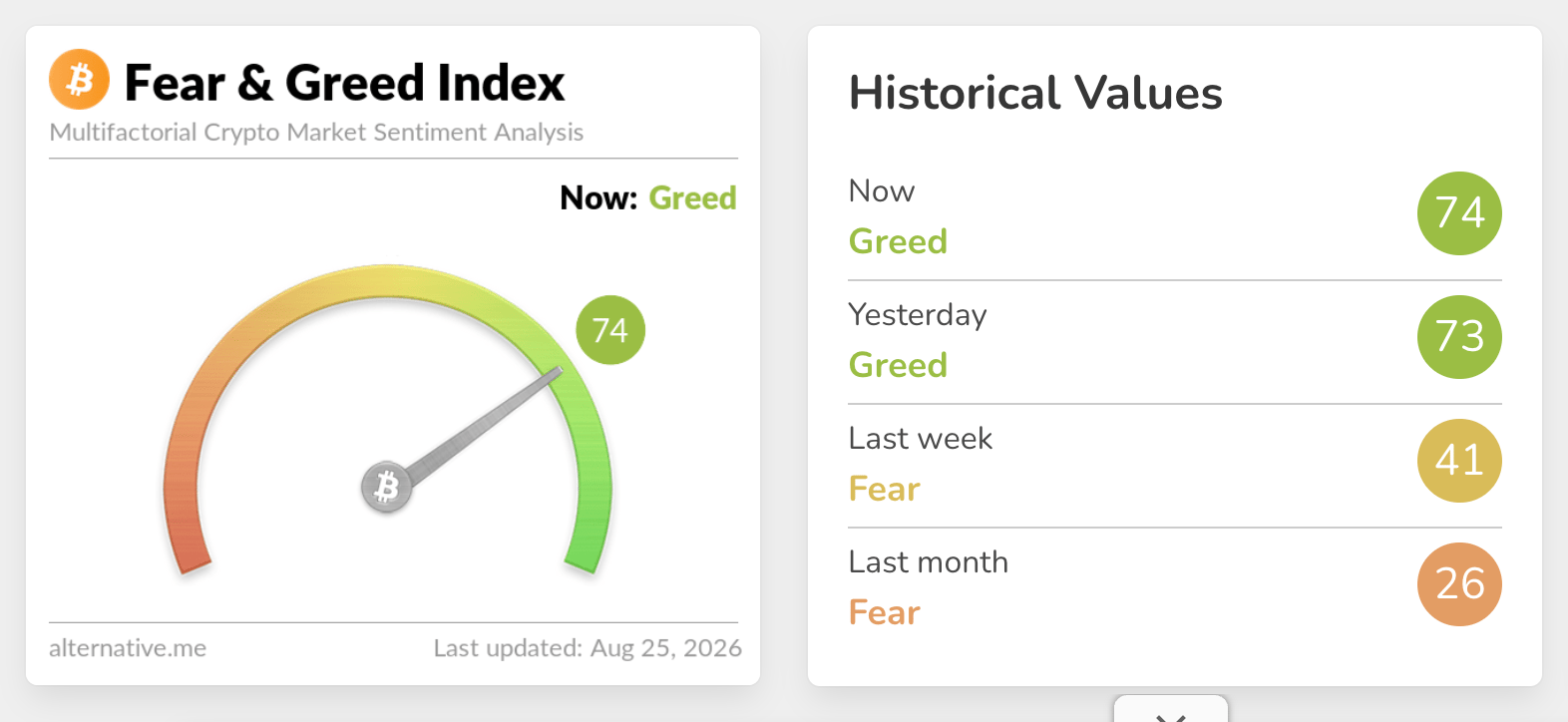
The Fear & Greed Index ticked higher to 74 on Tuesday, well into the Greed territory, signaling strong bullish sentiment in the crypto market. This marks a slight uptick from 73 the previous day and a significant surge from last week’s reading of 41.
Grayscale launches Zcash ETF
Grayscale, a leading fund manager, launched the first Zcash Exchange-Traded Fund (ETF) in the United States (US) on Tuesday, providing direct exposure to the privacy coin via the New York Stock Exchange (NYSE) Arca.
The product, trading under the symbol ZCSH, was converted from the Grayscale Zcash Trust, which had grown to $260 million in assets under management from 2017.
Grayscale states on the dedicated product website that “the Zcash ETF is solely and passively invested in ZEC, the native token of the Zcash Network. Its investment objective is to reflect the value of the ZEC held by the Fund, less expenses and other liabilities.”
The company added that for up to 12 months after the registration statement takes effect, management fee revenues will be allocated to advancing the Zcash ecosystem and enhancing product marketing initiatives.
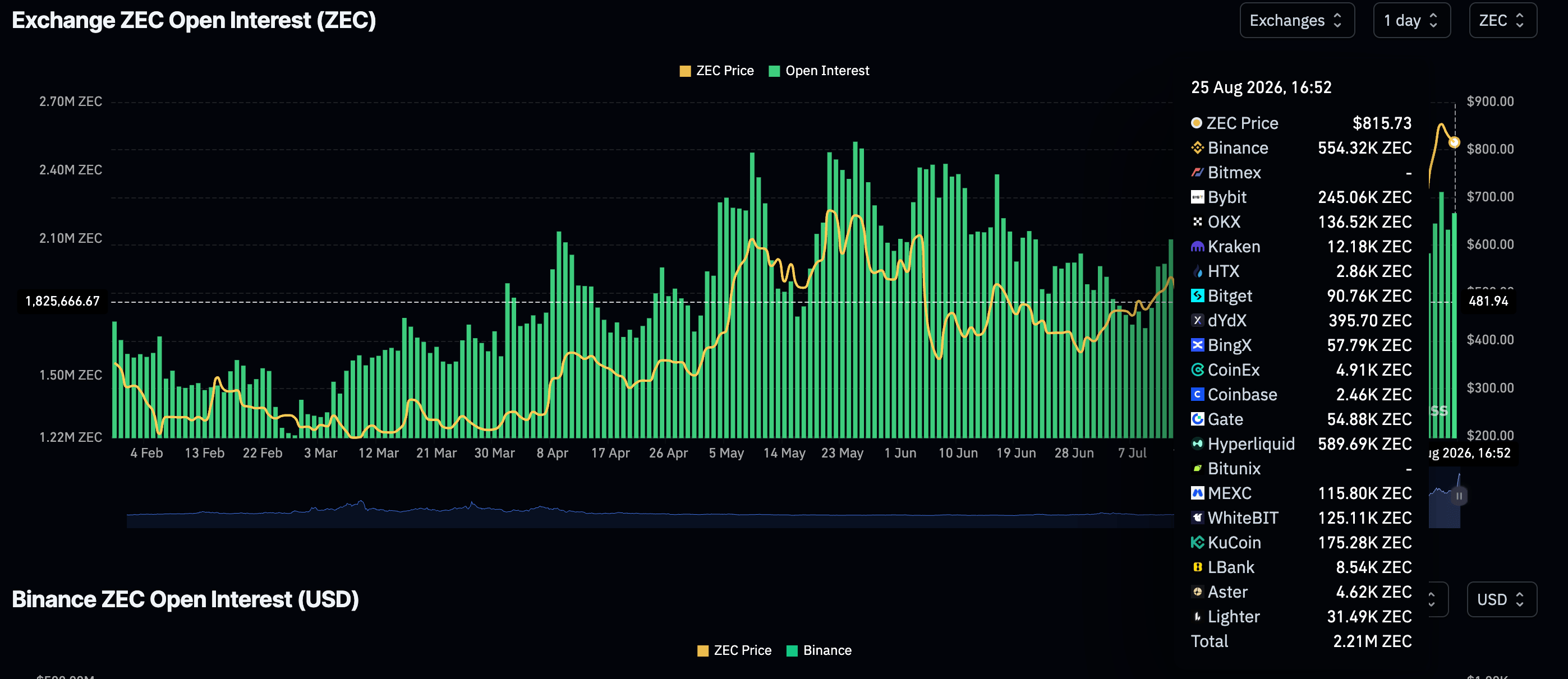
Meanwhile, interest in Zcash remains relatively high as perpetual Open Interest (OI) rises to 2.21 million ZEC on Tuesday, up from 2.14 million ZEC the day before. Looking back, OI has gradually increased from 1.61 million ZEC recorded on August 2, underpinning improving risk-on sentiment.
Zcash bulls defend higher support as rally consolidates
Zcash trades at $842, extending a strong bullish bias as price holds well above the 50-day, 100-day and 200-day Exponential Moving Averages (EMAs) clustered between roughly $555 and $448. The Relative Strength Index (RSI) above 83 signals overbought conditions, while the Moving Average Convergence Divergence (MACD) remains firmly positive, suggesting robust but potentially stretched upside momentum.
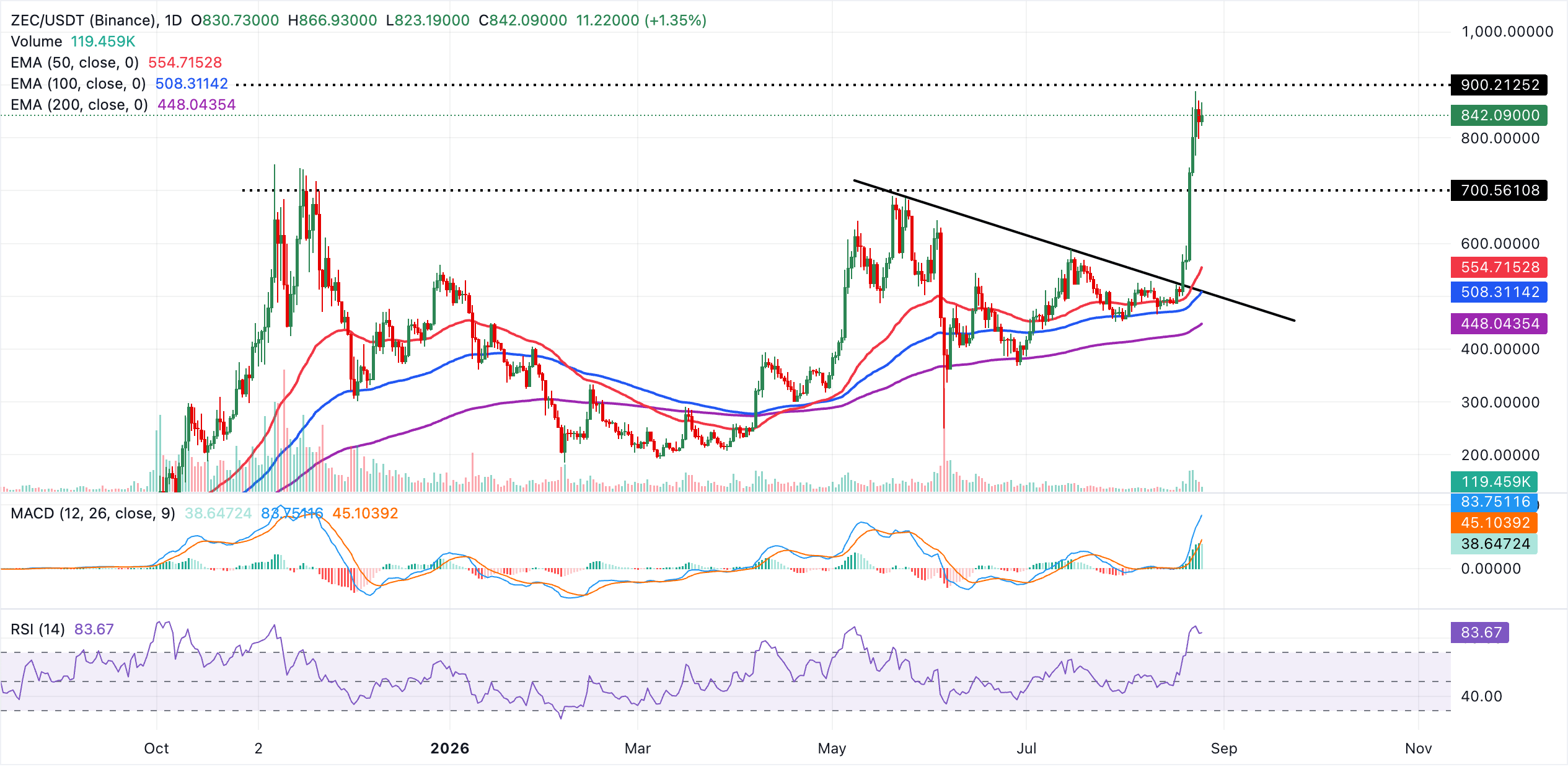
Initial support lies at the 50-day EMA near $555, with the 100-day EMA around $508 and the 200-day EMA near $448 reinforcing a deeper demand zone if a corrective pullback unfolds. As long as ZEC holds above these EMAs, the broader technical structure remains constructive for a potential breakout past $900, even if short-term gains are vulnerable to consolidation from overbought territory.
(The technical analysis of this story was written with the help of an AI tool. Know more.)
Crypto ETF FAQs
An Exchange-Traded Fund (ETF) is an investment vehicle or an index that tracks the price of an underlying asset. ETFs can not only track a single asset, but a group of assets and sectors. For example, a Bitcoin ETF tracks Bitcoin’s price. ETF is a tool used by investors to gain exposure to a certain asset.
Yes. The first Bitcoin futures ETF in the US was approved by the US Securities & Exchange Commission in October 2021. A total of seven Bitcoin futures ETFs have been approved, with more than 20 still waiting for the regulator’s permission. The SEC says that the cryptocurrency industry is new and subject to manipulation, which is why it has been delaying crypto-related futures ETFs for the last few years.
Yes. The SEC approved in January 2024 the listing and trading of several Bitcoin spot Exchange-Traded Funds, opening the door to institutional capital and mainstream investors to trade the main crypto currency. The decision was hailed by the industry as a game changer.
The main advantage of crypto ETFs is the possibility of gaining exposure to a cryptocurrency without ownership, reducing the risk and cost of holding the asset. Other pros are a lower learning curve and higher security for investors since ETFs take charge of securing the underlying asset holdings. As for the main drawbacks, the main one is that as an investor you can’t have direct ownership of the asset, or, as they say in crypto, “not your keys, not your coins.” Other disadvantages are higher costs associated with holding crypto since ETFs charge fees for active management. Finally, even though investing in ETFs reduces the risk of holding an asset, price swings in the underlying cryptocurrency are likely to be reflected in the investment vehicle too.
Author

John Isige
FXStreet
John Isige is a seasoned cryptocurrency journalist and markets analyst committed to delivering high-quality, actionable insights tailored to traders, investors, and crypto enthusiasts. He enjoys deep dives into emerging Web3 tren