XRP extends gains, but ETF outflows weigh on sentiment
- XRP rebounds above $1.42 amid a generally bearish trend, reinforced by the descending moving averages.
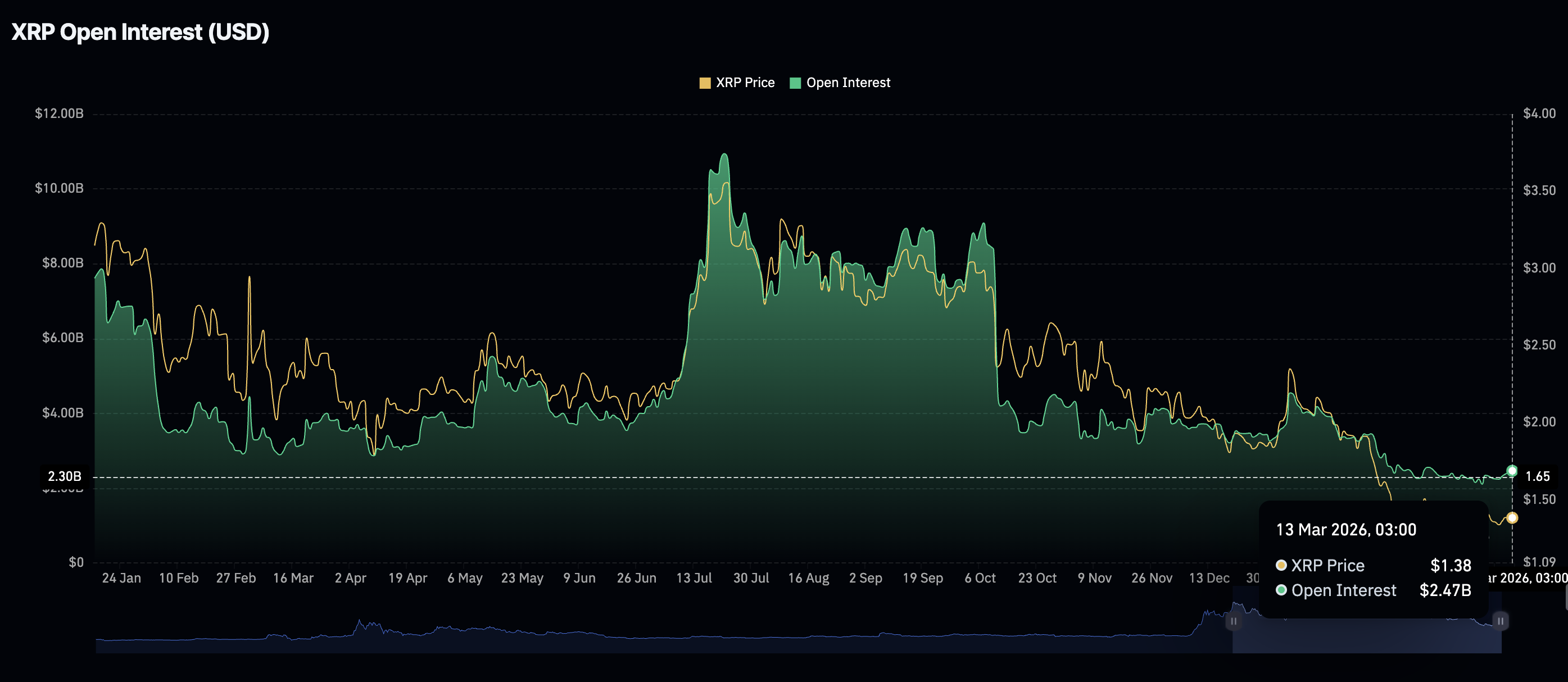
- Retail interest in XRP expands slightly, with futures Open Interest rising to $2.47 billion on Friday.
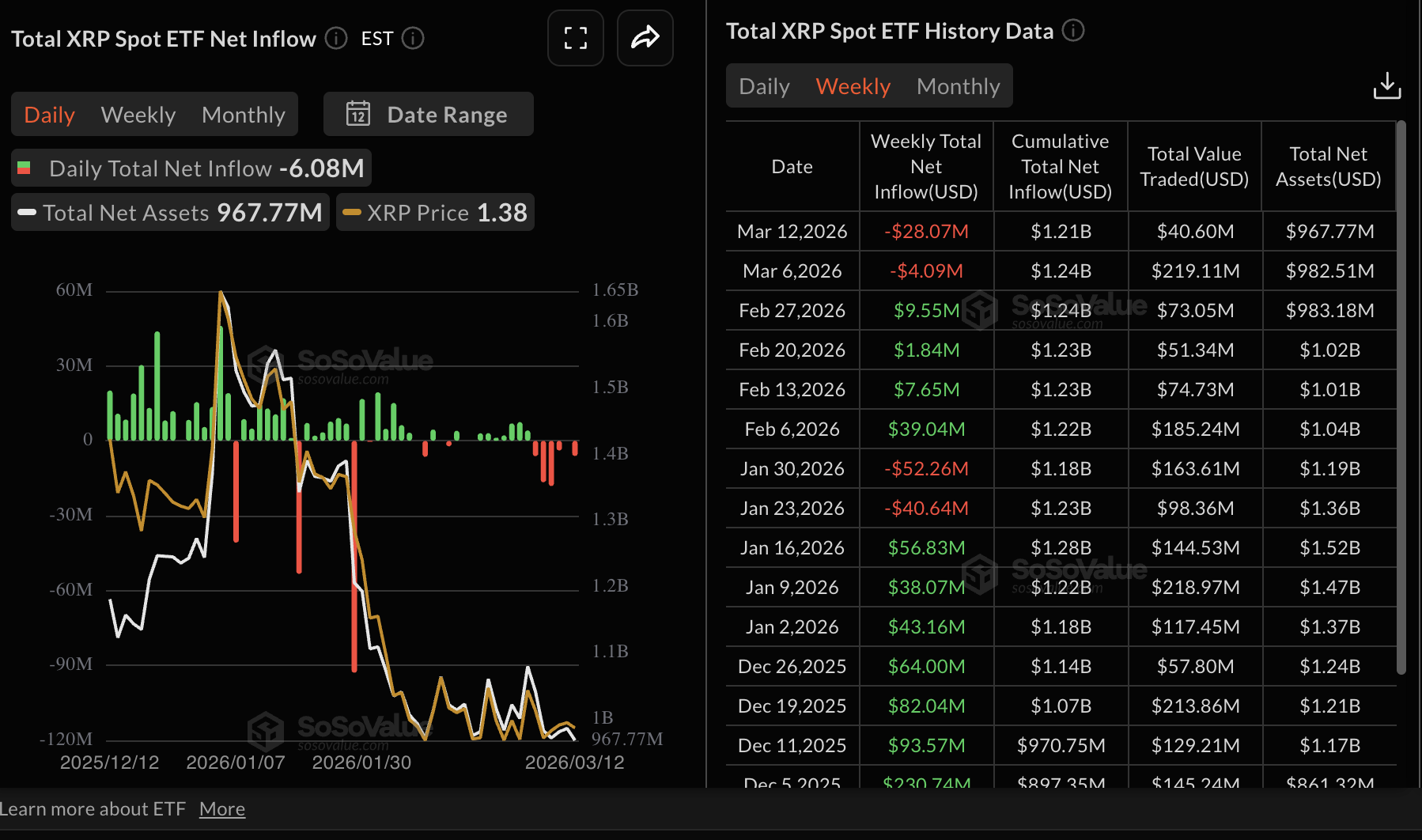
- Demand for US-listed spot ETFs lags, with weekly outflows totaling $28 million through Thursday.
Ripple (XRP) is gaining momentum, trading above $1.42 at the time of writing on Friday. The remittance token’s upswing from its daily open of $1.38 mirrors broader increases in crypto prices, with Bitcoin (ETH) holding above $72,200 and Ethereum (ETH) above $2,100.
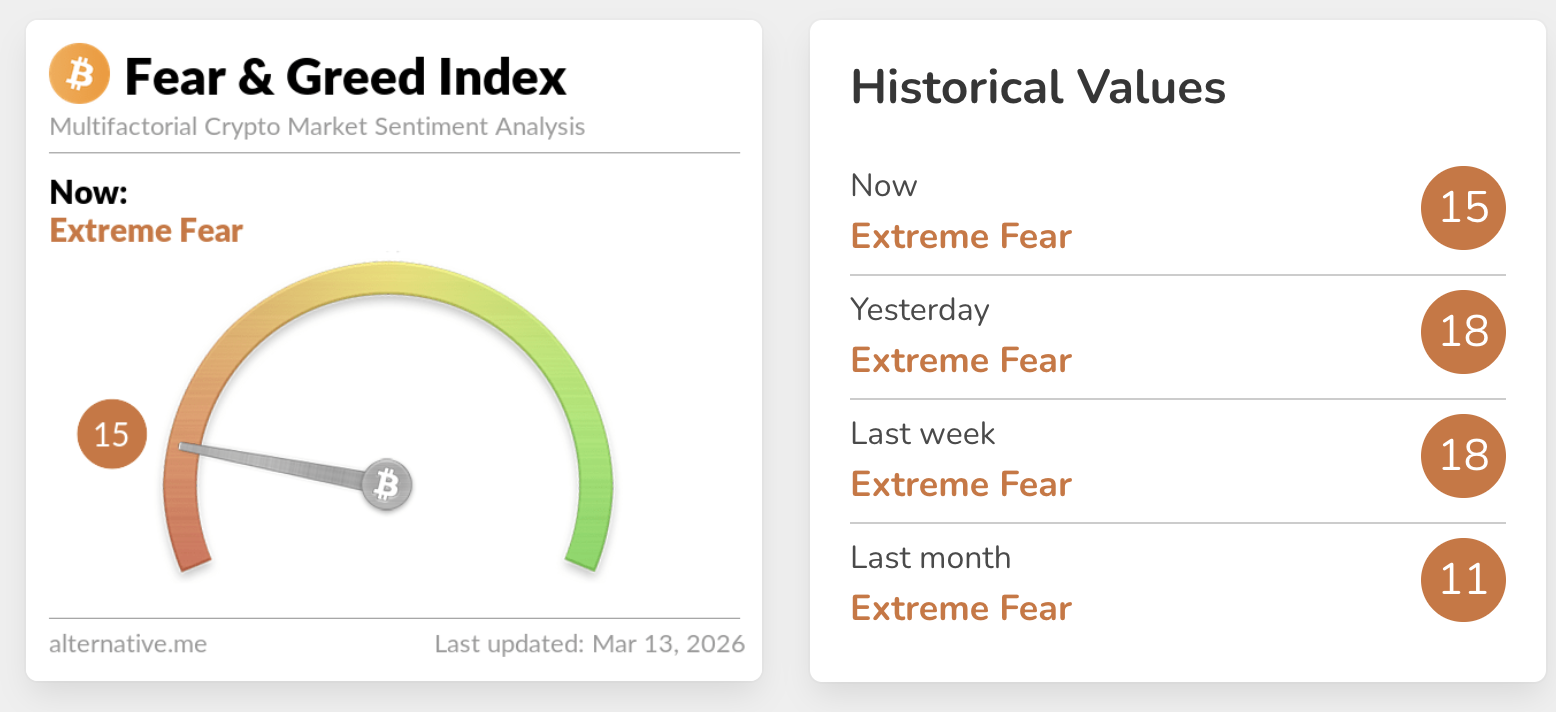
Despite the increase, the Crypto Fear & Greed Index is at 15, down from 18 the previous day, which indicates extreme fear. This outlook implies that crypto prices are rising while sentiment lags, potentially capping gains.
XRP steadies as retail demand returns
The XRP derivatives market shows subtle signs of growing retail demand, as reflected in futures Open Interest (OI), which reached $2.47 billion on Friday, up from $2.43 billion the previous day.
On Monday, the OI, which reflects the notional value of outstanding futures contracts, averaged $2.25, coinciding with XRP trading at $1.33, the weekly low. Therefore, a steady increase in the OI would help support the recovery and increase the chances of XRP swinging above the pivotal $1.54 threshold.
Institutional demand for XRP has taken a back foot this week, as evidenced by spot Exchange-Traded Funds (ETFs), which have recorded outflows totaling $28 million through Thursday. Depending on Friday's activity, XRP could confirm two consecutive weeks of steady outflows.
Meanwhile, cumulative outflows stand at $1.21 billion and net assets under management at $968 million. Net assets have declined from a record high of $1.65 billion, reached on January 1.
Technical outlook: Assessing XRP’s recovery potential
XRP hovers above $1.42, reflecting a neutral to bullish shift in the short-term. Buyers appear intent on attempting to close above a key resistance at around $1.52, supported by the Moving Average Convergence Divergence (MACD) holding above its signal line on the daily chart. The expanding green histogram bars could prompt traders to increase their risk exposure, raising the odds of a steady recovery.
Moreover, the Relative Strength Index (RSI) at 51 on the same chart has advanced from oversold levels toward a more balanced stance, which suggests short-covering rather than a decisive bullish momentum.
A daily close above the supply cluster at around $1.52 is required, as highlighted by the 50-day Exponential Moving Average (EMA). The SuperTrend lies at $1.54, reinforcing the seller congestion zone. Breaking above this area will be critical for sustaining an extended swing to the 100-day EMA at $1.72 and then the 200-day EMA at $1.97.
-1773406082086-1773406082088.png)
On the downside, initial support lies at $1.38, followed by weekly lows around $1.33, where failure would expose the $1.30 area as the next bearish target. A drop through $1.34 would reassert the broader downtrend and keep sellers in control.
Ripple FAQs
Ripple is a payments company that specializes in cross-border remittance. The company does this by leveraging blockchain technology. RippleNet is a network used for payments transfer created by Ripple Labs Inc. and is open to financial institutions worldwide. The company also leverages the XRP token.
XRP is the native token of the decentralized blockchain XRPLedger. The token is used by Ripple Labs to facilitate transactions on the XRPLedger, helping financial institutions transfer value in a borderless manner. XRP therefore facilitates trustless and instant payments on the XRPLedger chain, helping financial firms save on the cost of transacting worldwide.
XRPLedger is based on a distributed ledger technology and the blockchain using XRP to power transactions. The ledger is different from other blockchains as it has a built-in inflammatory protocol that helps fight spam and distributed denial-of-service (DDOS) attacks. The XRPL is maintained by a peer-to-peer network known as the global XRP Ledger community.
XRP uses the interledger standard. This is a blockchain protocol that aids payments across different networks. For instance, XRP’s blockchain can connect the ledgers of two or more banks. This effectively removes intermediaries and the need for centralization in the system. XRP acts as the native token of the XRPLedger blockchain engineered by Jed McCaleb, Arthur Britto and David Schwartz.
(The technical analysis of this story was written with the help of an AI tool.)
Author

John Isige
FXStreet
John Isige is a seasoned cryptocurrency journalist and markets analyst committed to delivering high-quality, actionable insights tailored to traders, investors, and crypto enthusiasts. He enjoys deep dives into emerging Web3 tren