Crypto Today: Bitcoin, Ethereum, XRP recovery takes a breather amid capital inflows
- Bitcoin corrects lower toward $80,000 after testing highs at $81,269, supported by $731 million in ETF inflows.
- Ethereum bulls push to regain momentum, with $2,500 providing immediate support.
- XRP faces resistance at $1.45 against a backdrop of Thursday’s sharp increase from $1.34.

Cryptocurrency prices are generally taking a breather at the time of writing on Friday, with Bitcoin (BTC) edging lower toward $80,000. This correction follows the sharp move to highs at $81,269 the previous day, underpinning renewed investor appetite.
Meanwhile, Ethereum (ETH) holds steady above $2,500 after bulls defended support at $2,400. Although it remains relatively bullish, Ripple (XRP) faces short-term resistance at $1.45. If reclaimed as support, a fresh tailwind could boost XRP’s bullish outlook for a breakout above $1.50.
BTC, ETH and XRP attract ETF inflows
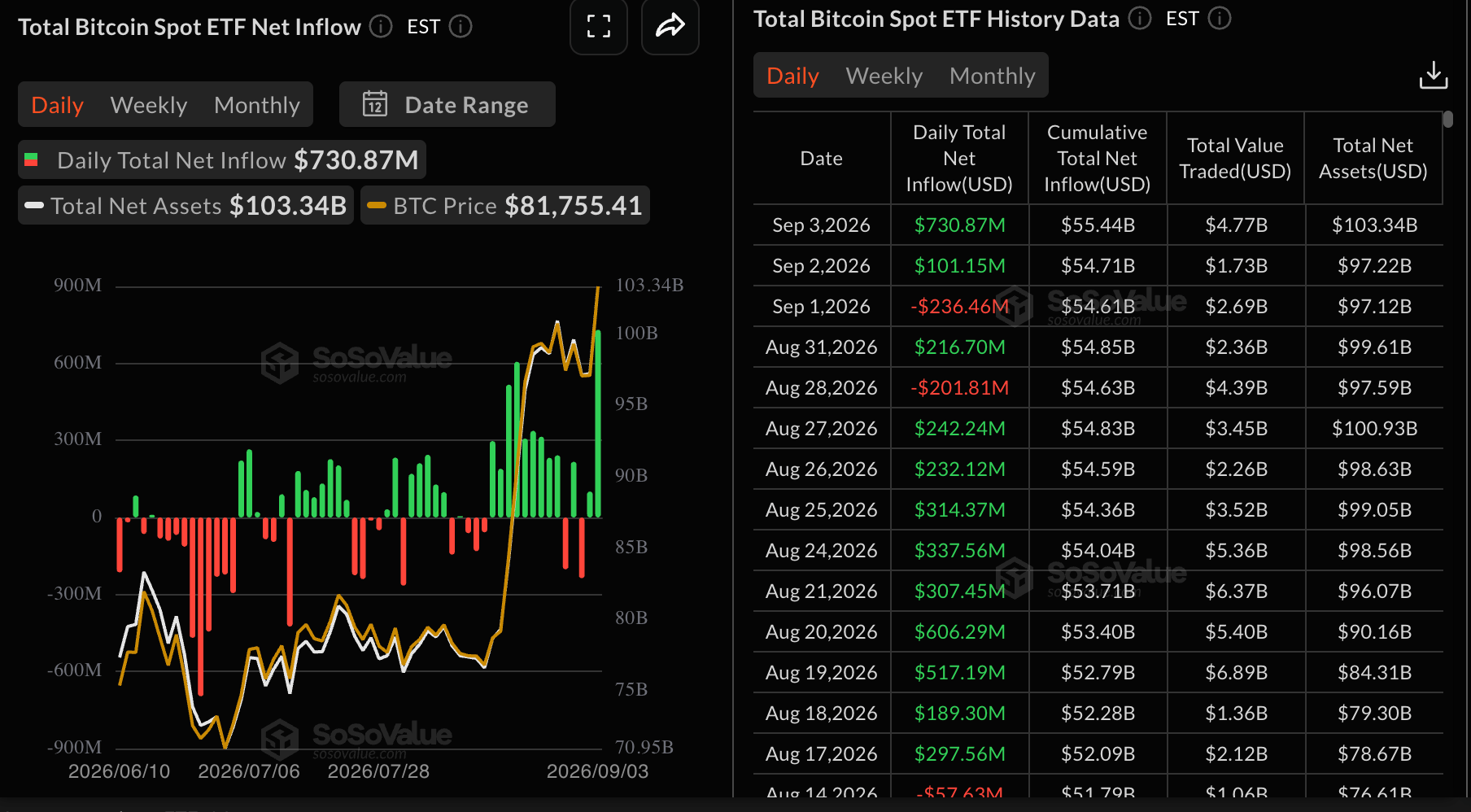
The Crypto Fear & Greed Index remains in the Greed territory at 74 on Friday, increasing from 65 the previous day. This uptick aligns with growing appetite for risk assets, as seen with Bitcoin spot Exchange-Traded Funds (ETFs), which climbed to $731 million on Thursday, from $101 million the day before.
Cumulative inflows now stand at $55.44 billion, with net assets at $103.34 billion, according to SoSoValue data. Steady, rising capital inflows boost Bitcoin’s short to medium-term bullish outlook, as selling pressure is absorbed.
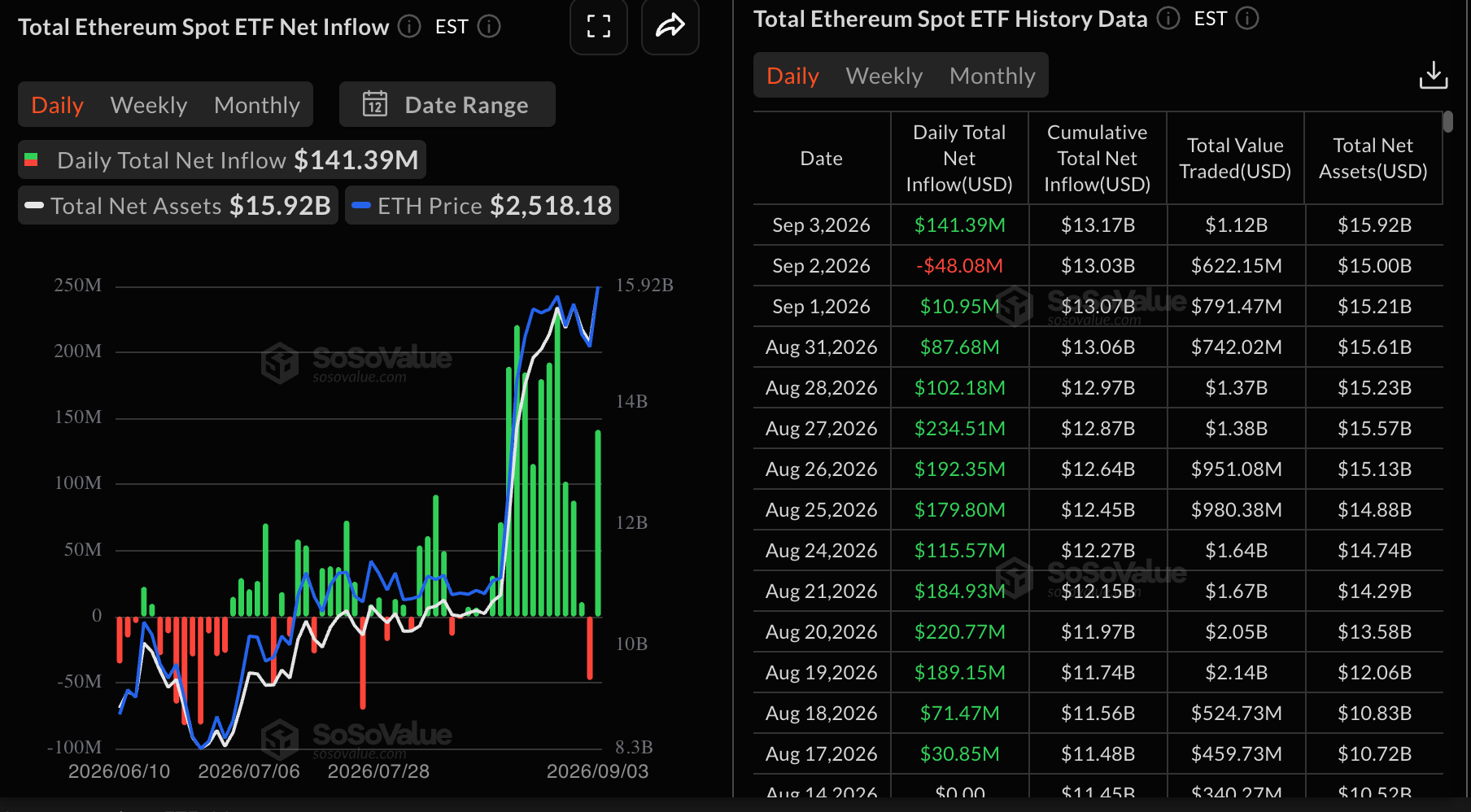
Interest in Ethereum spot ETFs returned on Thursday, with inflows of $141 million, following $48 million in outflows the previous day; cumulative inflows average $13.17 billion, with net assets under management at $15.92 billion.
As for XRP, spot ETFs recorded $6 million in inflows on Thursday, breaking a single day of outflows the day before. According to SoSoValue, outflows on Wednesday amounted to $7 million. Cumulative inflows now stand at $1.68 billion, with net assets under management at $1.55 billion.
Technical analysis: Bitcoin uptrend cools as support holds
Bitcoin maintains a bullish near-term bias as price holds well above the 50-day, 100-day and 200-day Exponential Moving Averages (EMAs), which fan out below and suggest a firmly supported uptrend. Momentum remains elevated, with the Relative Strength Index (RSI) hovering around 71 in overbought territory on the daily chart and the Moving Average Convergence Divergence (MACD) staying in positive territory, hinting that upside pressure persists even if the risk of a corrective pause increases.
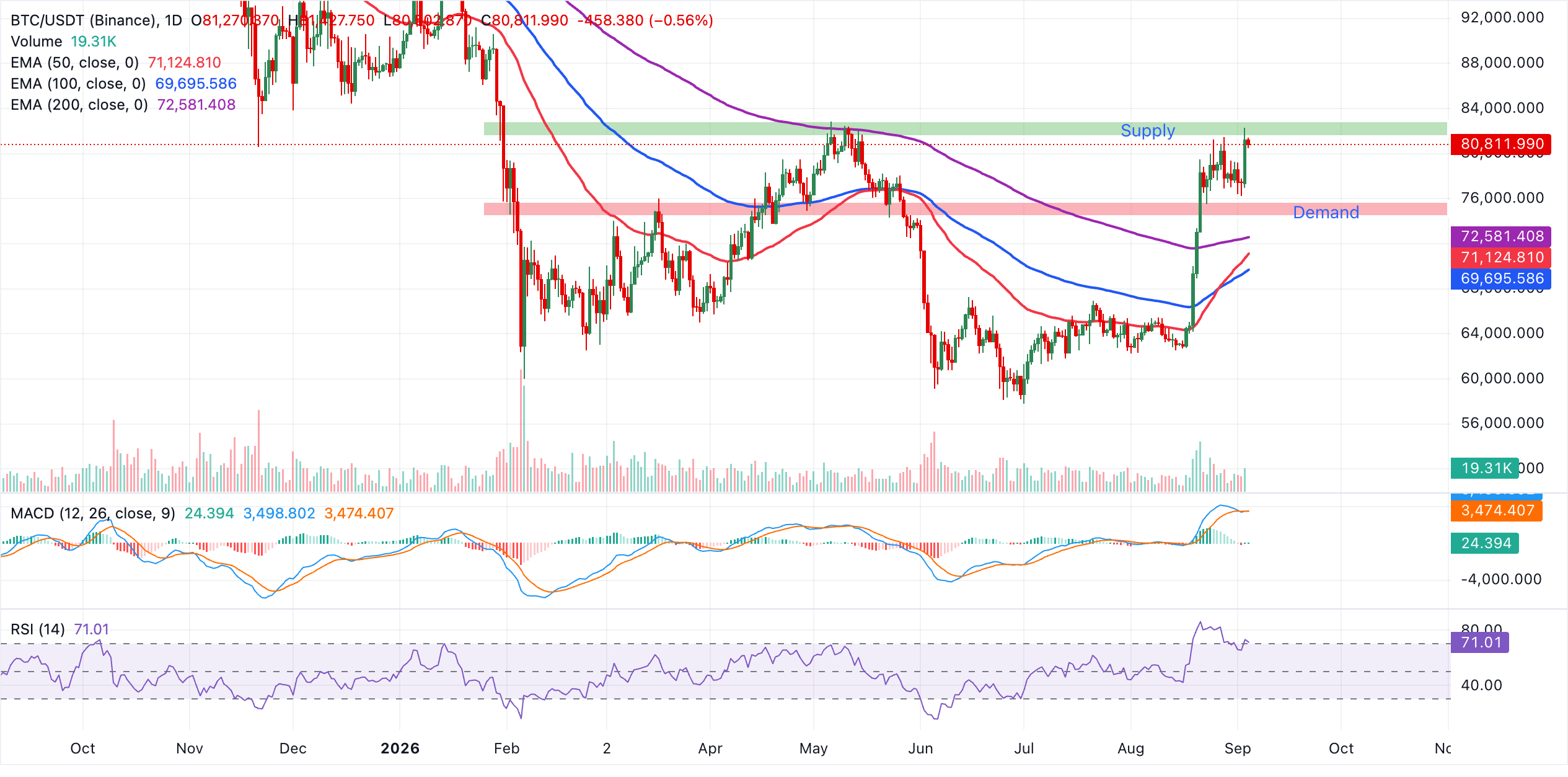
On the downside, initial support comes below the current pivot area at $80,000, with the 50-day EMA near $71,125 and the 100-day EMA around $69,696 further below, acting as deeper dynamic floors. A more substantial cushion emerges at the 200-day EMA near $72,581, where any extended pullback would be expected to attract dip-buying interest as long as the broader bullish structure remains intact.
Altcoins technical analysis: Ethereum and XRP retain strong bullish outlook
Ethereum trades at $2,513, maintaining a bullish near-term bias as price holds well above the key EMAs, suggesting a firmly supported uptrend despite a recent loss of MACD momentum. The MACD line is slipping back below the signal and under the zero line, suggesting caution among investors.
Moreover, RSI at about 68 stays in bullish territory, hinting that upside pressure remains dominant, though conditions are edging toward overbought.
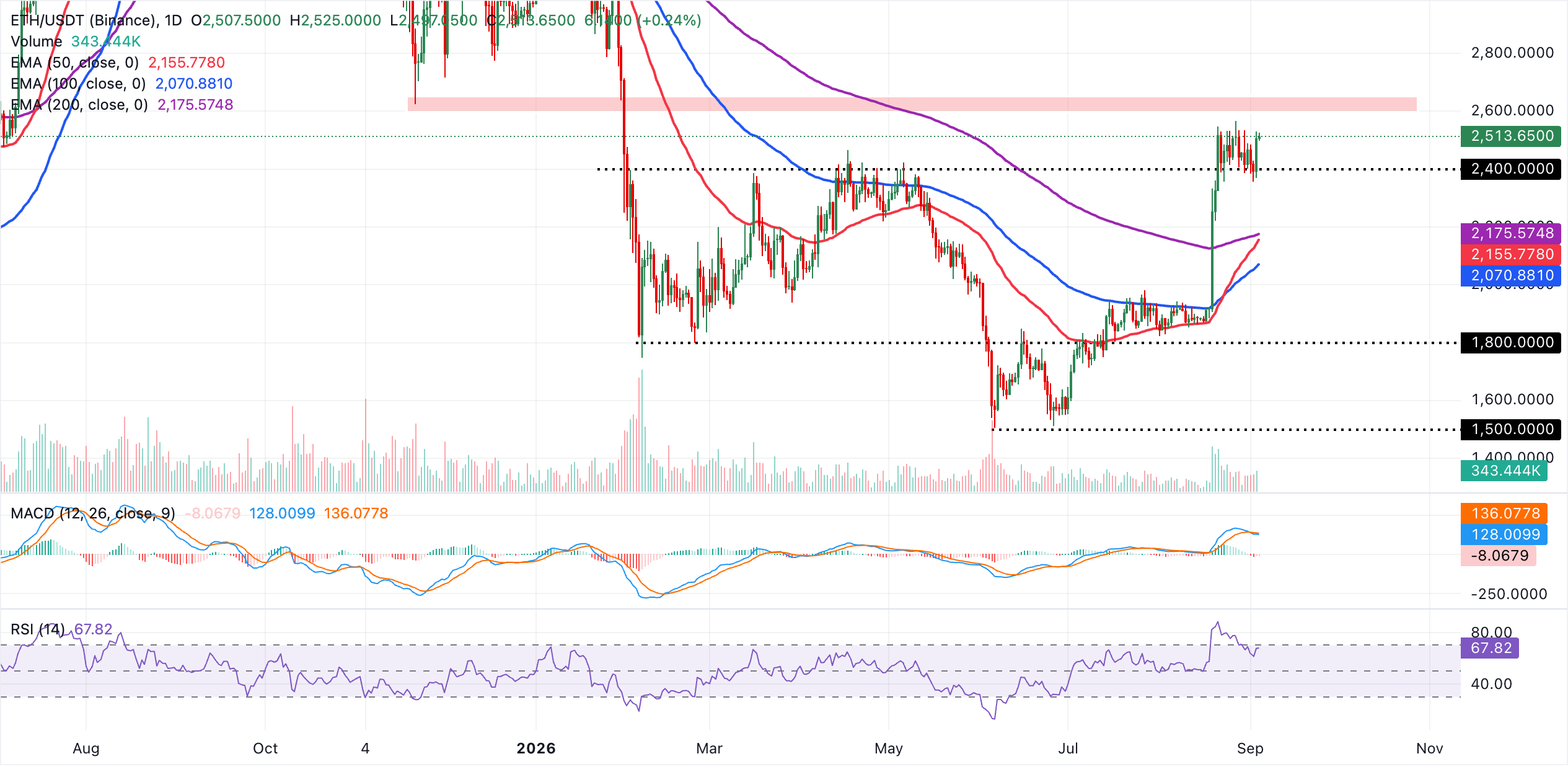
On the downside, immediate support is reinforced by the 50-day EMA near $2,155.76 and the 200-day EMA around $2,175.57, creating a broad demand zone that could attract dip buyers if ETH retreats from current levels. A deeper pullback would expose the 100-day EMA at $2,071 as the next notable floor, where failure would signal a more pronounced corrective phase within the broader uptrend.
XRP, on the other hand, trades at $1.44 and maintains a constructive bullish bias as price holds well above the major expoEMAs, with the 200-day EMA providing a rising trend backbone below the market. The shorter-term 50-day and 100-day EMAs fan out beneath spot, suggesting a supportive structure after the recent surge, while the RSI hovers in the mid-60s, hinting that bullish momentum remains firm even as the MACD has slipped marginally back toward the zero line, pointing to some loss of upside thrust rather than a full reversal.
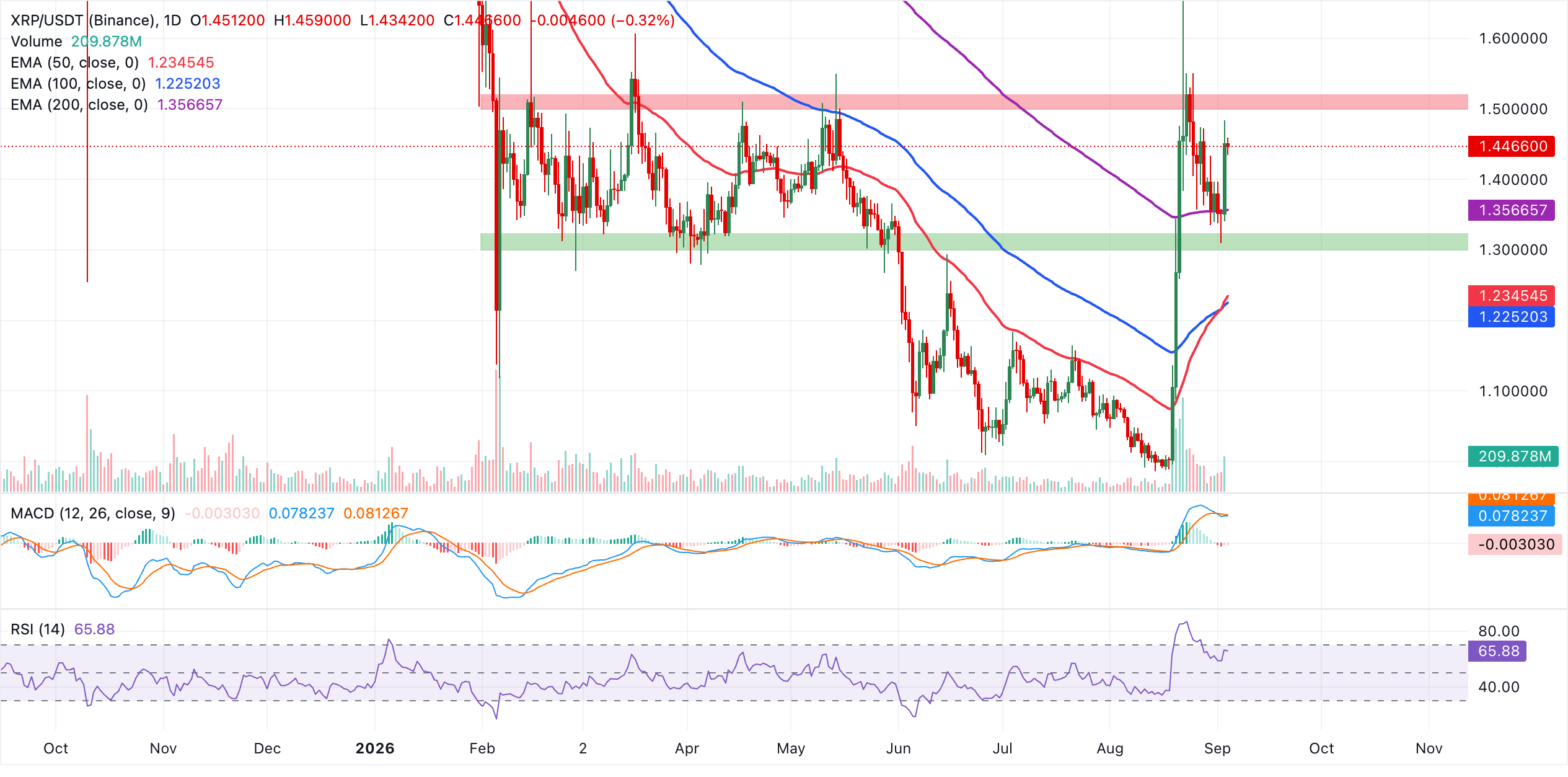
On the downside, immediate support sits near the current session’s open around $1.44. Failure to hold above this pivotal level would expose the 200-day EMA around $1.36 as the next significant demand zone. A deeper pullback would bring the clustered 50-day EMA at $1.23 and 100-day EMA at $1.23 into view as a broader support band, where buyers would be expected to defend the prevailing uptrend as long as price stays comfortably above this medium-term base.
(The technical analysis of this story was written with the help of an AI tool. Know more.)
Crypto ETF FAQs
An Exchange-Traded Fund (ETF) is an investment vehicle or an index that tracks the price of an underlying asset. ETFs can not only track a single asset, but a group of assets and sectors. For example, a Bitcoin ETF tracks Bitcoin’s price. ETF is a tool used by investors to gain exposure to a certain asset.
Yes. The first Bitcoin futures ETF in the US was approved by the US Securities & Exchange Commission in October 2021. A total of seven Bitcoin futures ETFs have been approved, with more than 20 still waiting for the regulator’s permission. The SEC says that the cryptocurrency industry is new and subject to manipulation, which is why it has been delaying crypto-related futures ETFs for the last few years.
Yes. The SEC approved in January 2024 the listing and trading of several Bitcoin spot Exchange-Traded Funds, opening the door to institutional capital and mainstream investors to trade the main crypto currency. The decision was hailed by the industry as a game changer.
The main advantage of crypto ETFs is the possibility of gaining exposure to a cryptocurrency without ownership, reducing the risk and cost of holding the asset. Other pros are a lower learning curve and higher security for investors since ETFs take charge of securing the underlying asset holdings. As for the main drawbacks, the main one is that as an investor you can’t have direct ownership of the asset, or, as they say in crypto, “not your keys, not your coins.” Other disadvantages are higher costs associated with holding crypto since ETFs charge fees for active management. Finally, even though investing in ETFs reduces the risk of holding an asset, price swings in the underlying cryptocurrency are likely to be reflected in the investment vehicle too.
Author

John Isige
FXStreet
John Isige is a seasoned cryptocurrency journalist and markets analyst committed to delivering high-quality, actionable insights tailored to traders, investors, and crypto enthusiasts. He enjoys deep dives into emerging Web3 tren