Crypto and the Iran war: How geopolitics became the market’s biggest variable
For years, Bitcoin’s biggest selling point was that it didn’t care about the news. Stock markets gyrate on jobs data and currencies buckle under political pressure. Oil too reacts to every missile fired in the Middle East. But Bitcoin? It marched to its own drum.That story is getting harder to tell. On February 28, U.S. and Israeli forces launched strikes on Iran and crypto markets were shaken just like every other risk asset. And six days into the hostilities, digital assets have been exposed to being too entangled with global macro forces.
The week in numbers
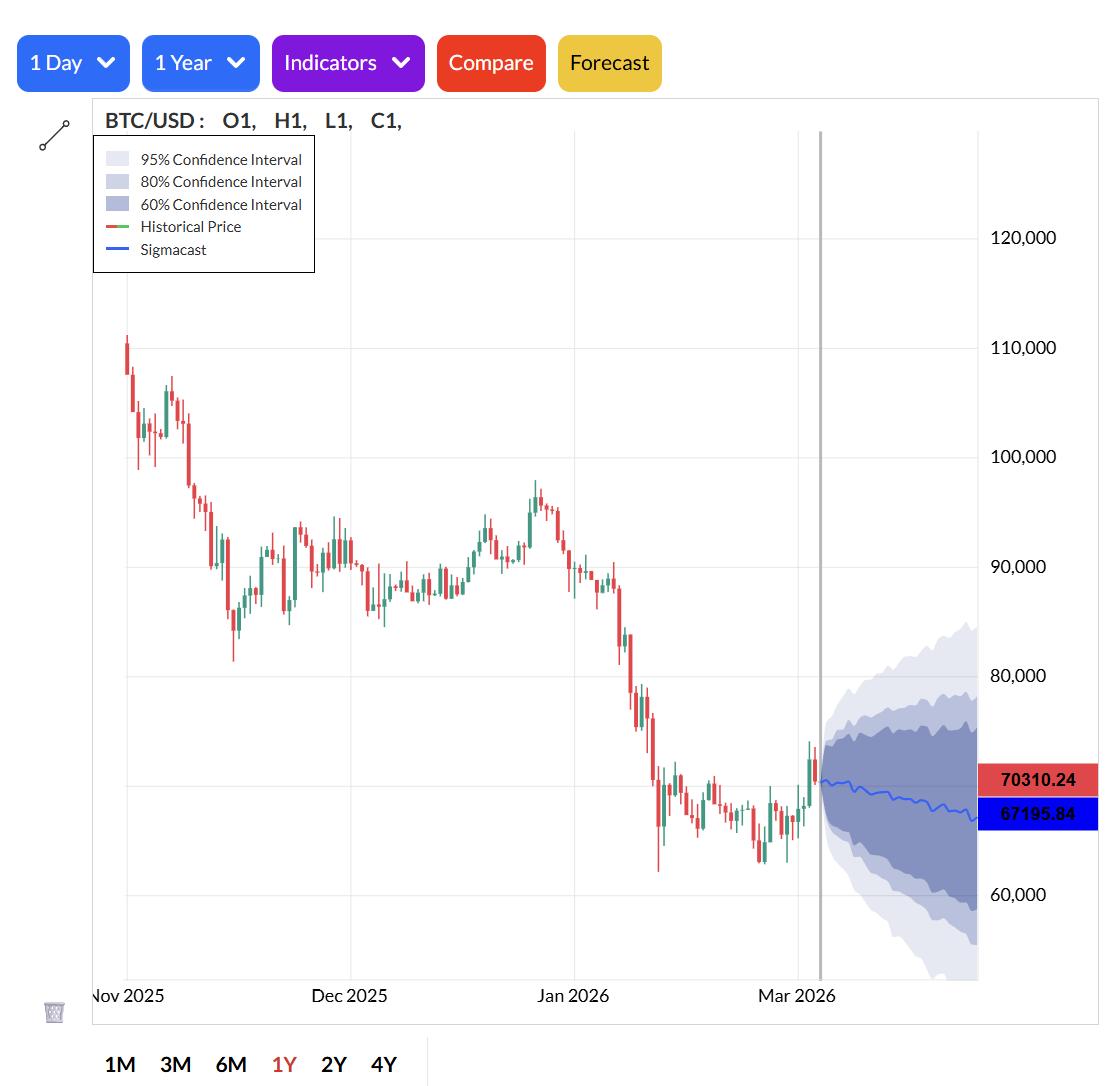
Bitcoin (BTC) was trading just under $68,000 heading into the weekend of February 28. Then news broke of the strikes and a selloff ensued. By the time markets opened on Monday, March 2, Bitcoin had dropped below $64,000, according to Investing.com data. That’s a 6% plunge in less than 48 hours.
But the situation reversed just as quickly. On March 4, the New York Times broke news that Iran had reached out through back channels to negotiate. Traders interpreted this as the worst-case scenario was off the table and rushed back into the market. By the end of the day, Bitcoin had clawed its way back to $73,777, its highest level in a month, according to CoinDesk. And by Friday, the token had retreated again to just below $70,000, as investors turned cautious ahead of the US jobs report.
The rest of the crypto market moved in lockstep. Ethereum, Solana, and other major tokens all fell sharply in the initial shock and recovered alongside Bitcoin. According to MEXC data, over $300 million in leveraged positions were liquidated in the first 24 hours after the strikes.
The chain reaction linking Oil to Bitcoin
When the U.S. and Israel struck Iran, oil markets immediately priced in supply risk. And the key reason is that Iran sits next to the Strait of Hormuz. This is a narrow waterway through which one fifth of the world’s oil supply passes. So, any threat to that shipping lane sends the market into panic mode, and that translates to higher global oil prices. Yahoo Finance data shows that Brent crude climbed toward $85 per barrel merely days after the strikes.
But where is the relevance for crypto? For starters, higher oil prices feed directly into inflation. That is, gasoline, transport, and manufacturing costs all go up, and consumer prices follow. Kyle Rodda, a market analyst at Capital.com, noted that the oil spike “aligns with existing market concerns that inflation in the United States could remain persistent,” as quoted by Yahoo Finance. That matters because inflation gives the US Federal Reserve, or the Fed, a reason to keep interest rates high, or at least hold off from cutting them.
And higher interest rates are bad for Bitcoin. When rates stay elevated, the U.S. dollar tends to strengthen. This is because investors earn more by holding dollar-denominated assets. A stronger dollar, in turn, creates headwinds for Bitcoin and other risk assets.
The logic works like this: BTC is priced in dollars and when the currency gets more expensive, speculative assets like crypto tend to feel the squeeze. According to Bloomberg data, U.S. Treasury yields climbed to a three-week high in the days after the strikes, which reflects exactly these inflation fears, and confirms the logic played out in real time.
The fear gauge tells the story
CBOE’s Volatility Index, or the VIX, is another metric that is worth paying attention to. Wall Street refers to the index as the “fear gauge”, which is to say that if you look at it keenly, it will tell you whether confidence in the market has disappeared or is returning. When the reading declines, it means the market is growing less fearful.
In the immediate aftermath of the US-led hostilities, the VIX spiked to 26.81, on March 3, but fell back to 20.57 when the negotiation reports surfaced, on March 4. The news was a relief and the market interpreted it as indicating that the odds of an all-out regional war had receded. That 6.24-point drop wasn’t dramatic but it was enough to flip sentiment. And it allowed Bitcoin to climb from $64,000 to $73,777.
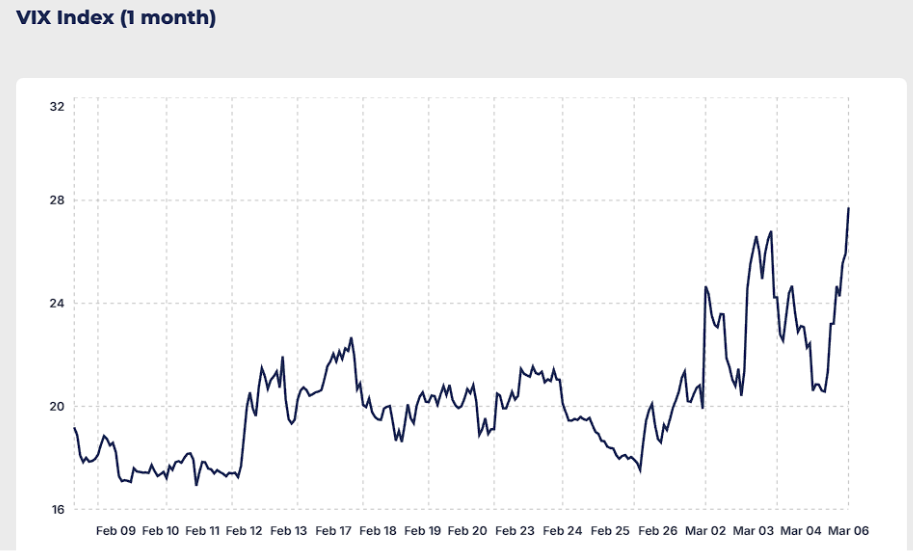
According to Tasylive’s Josh Fabian, crypto, particularly Bitcoin, has developed a consistent inverse relationship with the VIX in recent years. That is, Bitcoin’s price tends to go down when the market becomes more fearful, and the opposite is true. “Bitcoin is acting as an early warning signal for shifts in risk appetite, often weakening before volatility spikes,” Fabian wrote. And the Iran week has provided lots of evidence to prove this theory.
So, has Bitcoin lost its "uncorrelated" tag?
This is the million-dollar question that traders and long-term investors are grappling with. Since inception, Bitcoin and other altcoins were billed as being independent of traditional financial systems. The digital assets were supposed to be a hedge against institutional failure; the kind of asset that goes up when everything else falls apart. That narrative, however, is looking increasingly thin.
The reality is that institutional investors now own a huge share of Bitcoin. For instance, spot Bitcoin ETFs launched in the U.S. in January 2024 and have attracted hundreds of billions in inflows. And when large institutions get nervous, about oil, inflation, or war, they don’t just sell their stocks and bonds. They sell their Bitcoin too, because it’s all part of the same risk portfolio. CryptoSlate put this point across best in a recent report. They stated that Bitcoin’s first response to the strikes “was shaped by macroeconomic pressures, not its digital gold narrative.”
Another analysis shows that Bitcoin’s correlation with macro sentiment indicators has strengthened meaningfully since 2022. That is, it has amplified its sensitivity to macroeconomic and geopolitical shocks. In short, the more mainstream Bitcoin becomes, the more it behaves like a mainstream risk asset.
What happens next?
The path forward depends heavily on how the Iran situation develops. MEXC’s scenario analysis lays out the range of outcomes fairly clearly.
If a ceasefire or diplomatic deal is reached within the next few weeks, oil would likely retreat, inflation fears would cool, the Fed’s rate path would remain on track, and Bitcoin could push toward $80,000 or higher. But if the conflict drags on for months, oil above $100 per barrel becomes plausible, rate cut expectations get pushed further into the future, and Bitcoin faces a retest of the $55,000-$60,000 range.
The worst case, which will happen if there is a full regional escalation involving the Strait of Hormuz, would be a severe short-term shock. However, history suggests central banks would eventually respond with stimulus, which could ultimately benefit crypto.
For now, markets are watching the diplomatic signals closely. US Treasury yields at three-week highs, a cautious VIX at near 21, and Bitcoin hovering around $70,000 all paint the picture of a market that has stepped back from panic. But the market isn’t yet convinced that the danger has passed. As Bloomberg put it, Bitcoin’s recovery from the strike shock “looks tepid”, and that caution is deliberate.
Author

Sigmanomics
Sigmanomics
Sigmanomics is a financial intelligence platform that delivers expert insights, data-driven analysis, and real-time trading signals across global markets.