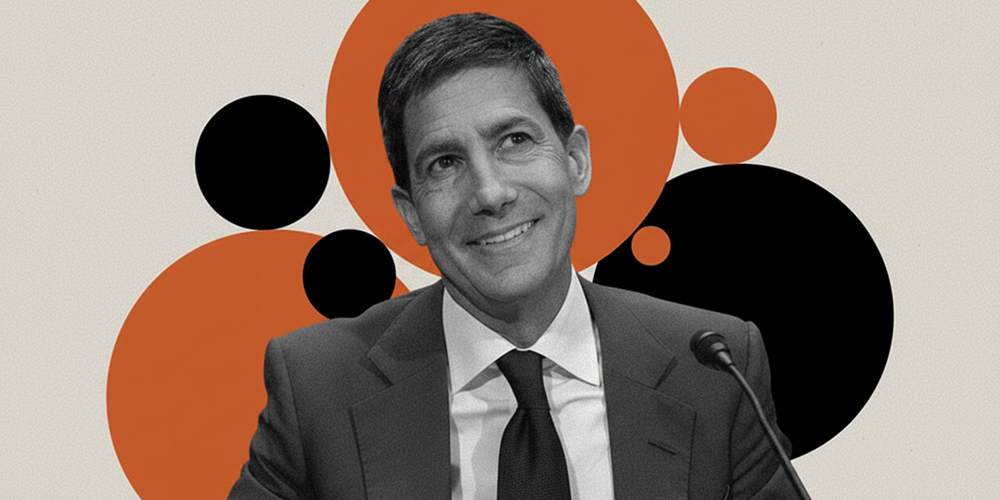
Will the senate confirm a marxist to oversee the US currency system?

Precious metals markets pulled back a bit this week as the U.S. dollar strengthened versus foreign currencies.
In other markets, the rising dollar index put downward pressure on crude oil and gasoline futures this week. Consumers who have been experiencing pain at the pump should get a bit of a reprieve in the days ahead.
But it could be short lived. The same government policies that helped drive gas prices higher this year are still in place: Massive fiscal and monetary stimulus coupled with disincentives for domestic energy production.
Instead of addressing these underlying causes of higher fuel costs, President Joe Biden is calling for an investigation into alleged price fixing. Demonizing businesses and market participants is a convenient way for politicians to deflect blame. It’s also a potential precursor to price controls, shortages, and threats of nationalization.
In response to political demagoguery over rising fuel costs, the American Petroleum Institute reports that gas prices are high because demand is outstripping supply. It urges the Biden administration to lift restrictions on American oil and gas development.
Instead, the administration is threatening massive new regulations on not just the energy industry, but also on the banking system and anyone who has a bank account. For starters, the IRS seeks the power to track activity in all bank accounts holding than $10,000.
And if President Biden’s Marxist pick to be the next Comptroller of the Currency has her way, the entire banking system could be nationalized.
Nominee Saule Omarova faced grilling by Senate Republicans this week. They focused in on her recent calls for the government to bankrupt the energy industry and for all private bank accounts to be taken over by the Federal Reserve.
Here’s what Louisiana Senator John Kennedy had to say:
Sen. Kennedy (LA): (You’re) calling for the federal government to set wages, food, gas prices.
In 2020, you wrote a paper called, "The People's Ledger", where you said, "We need to abolish bank accounts and make everybody set up an account at the Fed where the federal government will have access to your data."
In 2020, you wrote another paper called, "The Climate Case for a National Investment Authority", where you said, "What we need to do with the oil and gas industry, is have the federal government bankrupt them, so we can tackle climate change."
In 2019, you joined a Facebook group, a Marxist Facebook group. I don't mean any disrespect. I don't know whether to call you professor or comrade.
Omarova’s path to confirmation depends on whether any moderate Democrats stand up in opposition. The fact that it’s even possible now for a trained Marxist to be put in charge of regulating the banking system should make wealth holders nervous.
As the government’s need for revenue grows amid record budget deficits, so do the risks to investors. Whether it’s taxes, inflation, or outright asset confiscation, savers who hold large amounts of wealth in the banking system stand to get sheared like sheep.
Now more than ever, it’s crucial to have a Plan B for your personal finances. That means having alternative sources of wealth that can’t be monitored or touched by bankers or bureaucrats.
Physical precious metals held outside the banking system provide a measure of wealth diversification and stability. Come what may – whether it’s hyperinflation or hyper-authoritarianism – gold and silver bullion will continue to serve as solid safe havens for investors.
Precious metals are ultimately forms of sound money. In a financial crisis that shuts down the banking system, they can function as currency for barter and trade.
Even if some of these worst-case scenarios never come to pass, inflation will surely be a persistent force going forward. It will steadily erode the purchasing power of conventional savings and fixed-income instruments.
Many people will unfortunately suffer from inflation losses. Especially vulnerable are retirees who no longer have bargaining power in the labor market.
But other people will manage to keep and even grow their purchasing power, regardless of how high inflation rates climb. At the foundation of any inflation-protection strategy is, of course, physical precious metals.
Though other types of assets may also perform well during inflationary times, the highest quality asset – the one investors will flee to during a crisis – is real money itself.
To receive free commentary and analysis on the gold and silver markets, click here to be added to the Money Metals news service.
Author

Mike Gleason
Money Metals Exchange
Mike Gleason is a Director with Money Metals Exchange, a national precious metals dealer with over 500,000 customers.