Why this could be the most important Jackson Hole in years

Jackson Hole 2026 arrives at an unusually difficult moment for monetary policy.
Investors are looking for guidance across several policy and market pressure points:
- JPY intervention and the yen carry trade.
- Whether sticky PCE requires another rate hike.
- Treasury buybacks and long-end borrowing costs.
- Mortgage rates, credit and household demand.
- AI, data centres and their role in US growth.
- Fed independence under Kevin Warsh.
Not all of these subjects are part of the symposium’s formal programme. The official theme is “Financial Innovation: Implications for Payments and Policy”, covering areas such as payments, stablecoins, financial intermediation and monetary-policy implementation. But the issues above are the market backdrop against which Warsh will speak.
Perhaps most importantly, Friday is a test of the Warsh regime. Markets want to know whether he still sees the policy rate as the main tool for controlling inflation, or whether tightening already coming through bond yields, credit conditions and currencies reduces the need for another conventional hike.
Intervention changed the level, not yet the trend
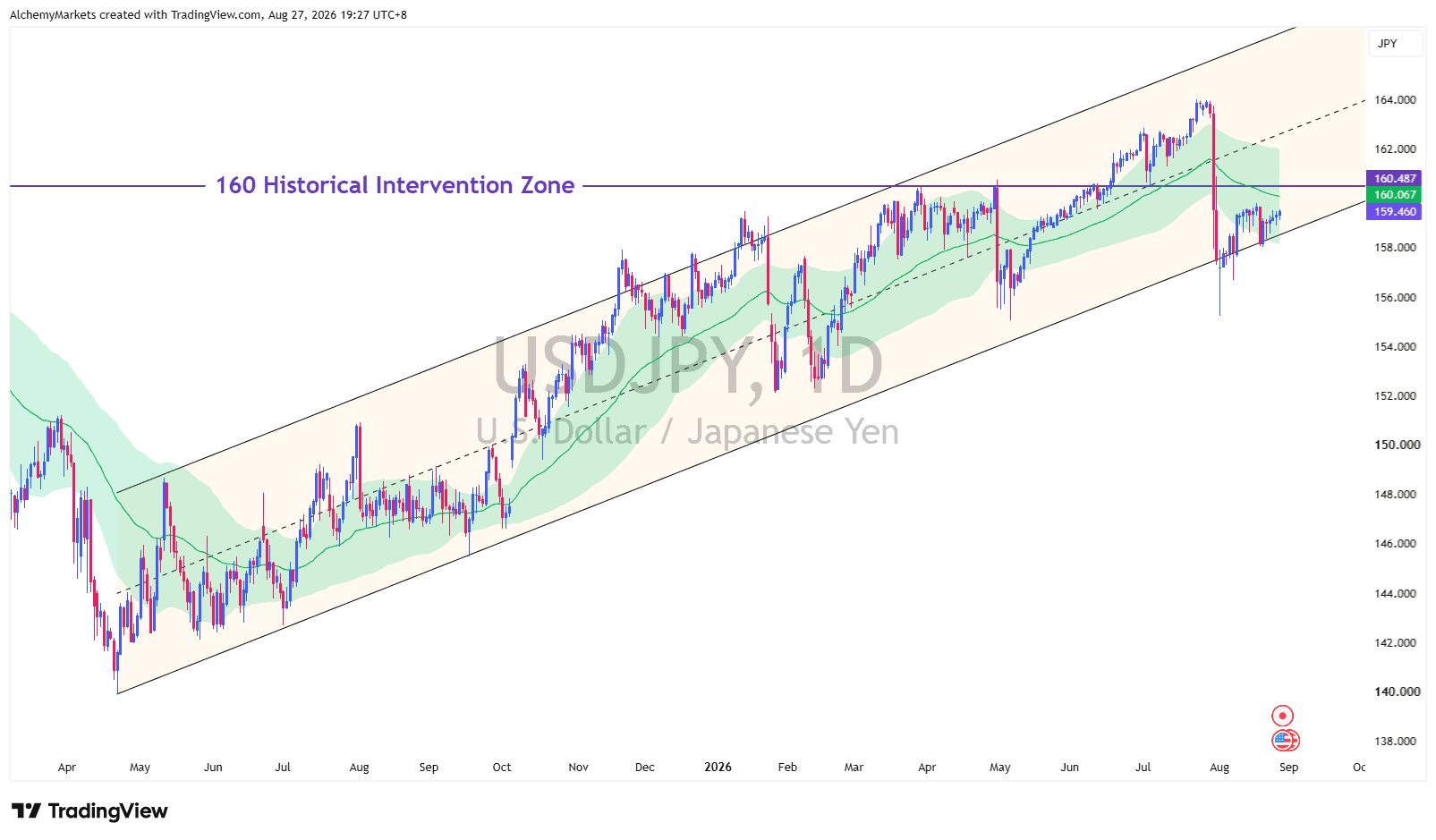
Japan’s intervention matters because it shows that policymakers are already willing to act when market prices become politically or financially uncomfortable. The US Treasury also participated in the late-July operation, reportedly selling euros to buy yen rather than selling dollars directly.
But intervention alone has not removed the carry trade. The larger question is whether Japanese yields keep rising while US front-end yields stop doing so. If that spread compresses, the yen can strengthen for fundamental reasons rather than because authorities are repeatedly defending a level.
The Fed is not the only force tightening financial conditions
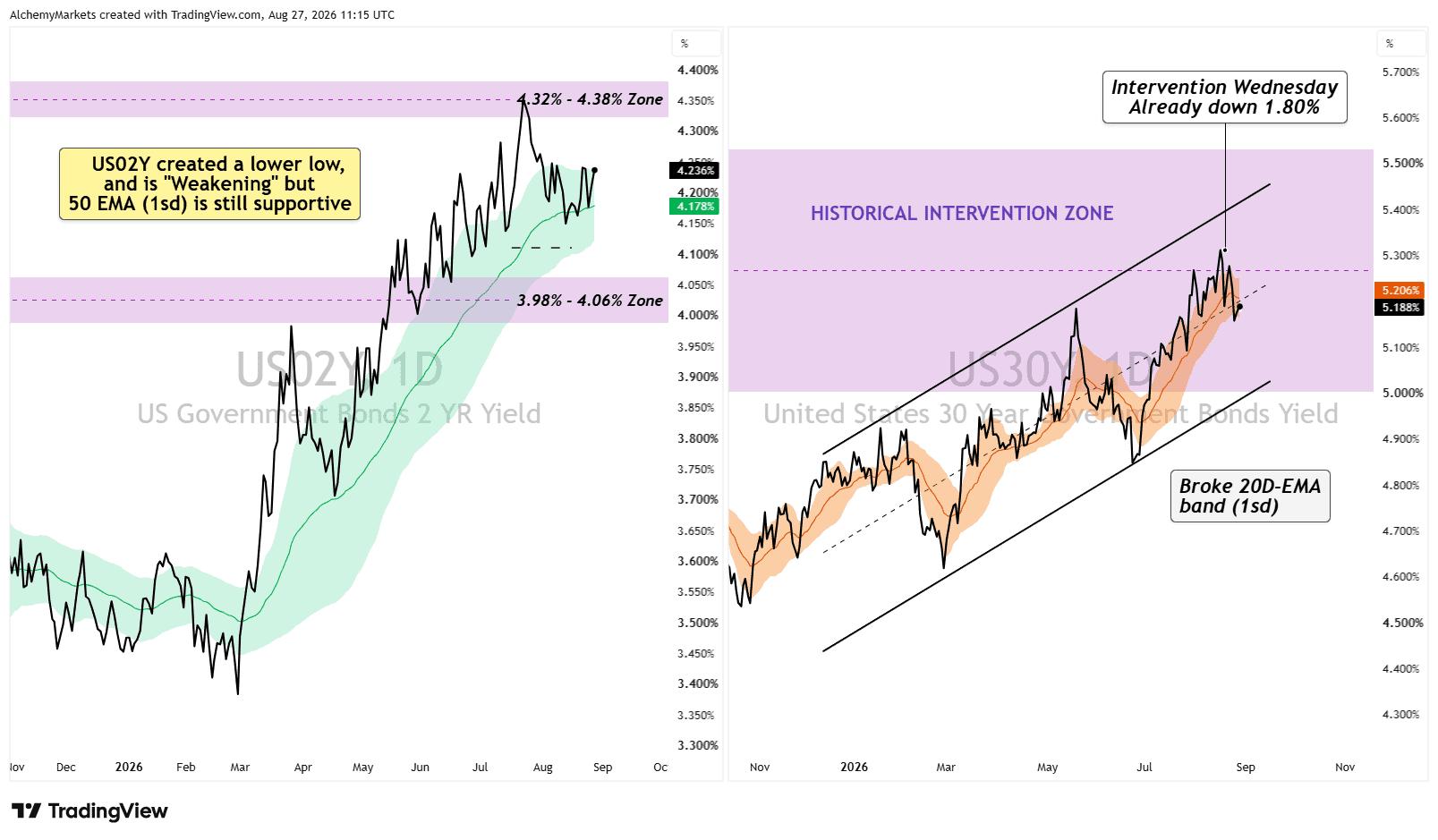
This is the central Jackson Hole tension. The 2-year yield is the cleaner read on expected Fed policy. The 30-year increasingly reflects a separate mix of inflation risk, Treasury supply, fiscal credibility and term premium.
Treasury has doubled the maximum size of its long-end liquidity-support buybacks from $2 billion to at least $4 billion per operation from September. Officially, those purchases are designed to support market liquidity rather than target a specific yield. Even so, they raise a difficult question for Warsh: if long-term borrowing costs are already doing significant tightening, should the Fed add another rate hike on top?
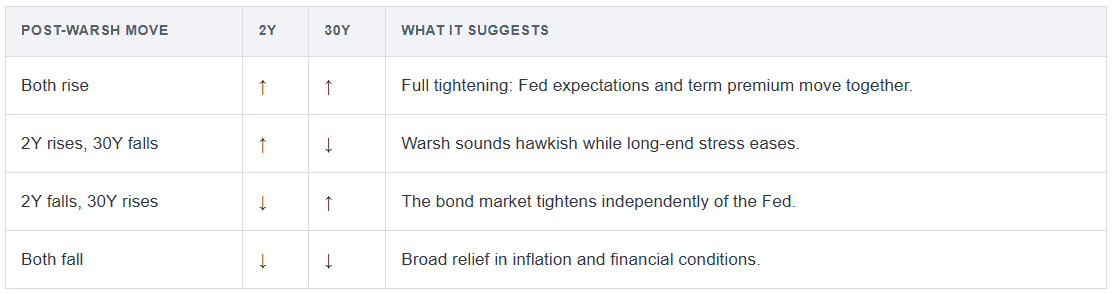
PCE and Nvidia show why the decision is difficult

July PCE remains too high, but the report was not a clean demand-overheating story. Real personal consumption was almost unchanged. Households are therefore giving the Fed a different message from the headline inflation rate.
Nvidia is giving Warsh the opposite signal. Revenue rose 106% year-on-year and Data Centre sales reached $89 billion, reinforcing his earlier observation that AI and data-centre investment are among the strongest parts of the US economy.
That creates a two-speed problem. AI investment can increase productive capacity later, but today it also consumes chips, memory, power, labour and financing. The Fed has to decide how much near-term inflation from that buildout should be restrained when the broader consumer economy is already losing momentum.
A rate hike can weaken demand. It cannot create more memory chips, reopen a shipping lane or make electricity infrastructure appear faster. The real policy question is whether those supply pressures are staying contained or spreading into broader inflation expectations.
DXY will tell us whether markets believe Warsh
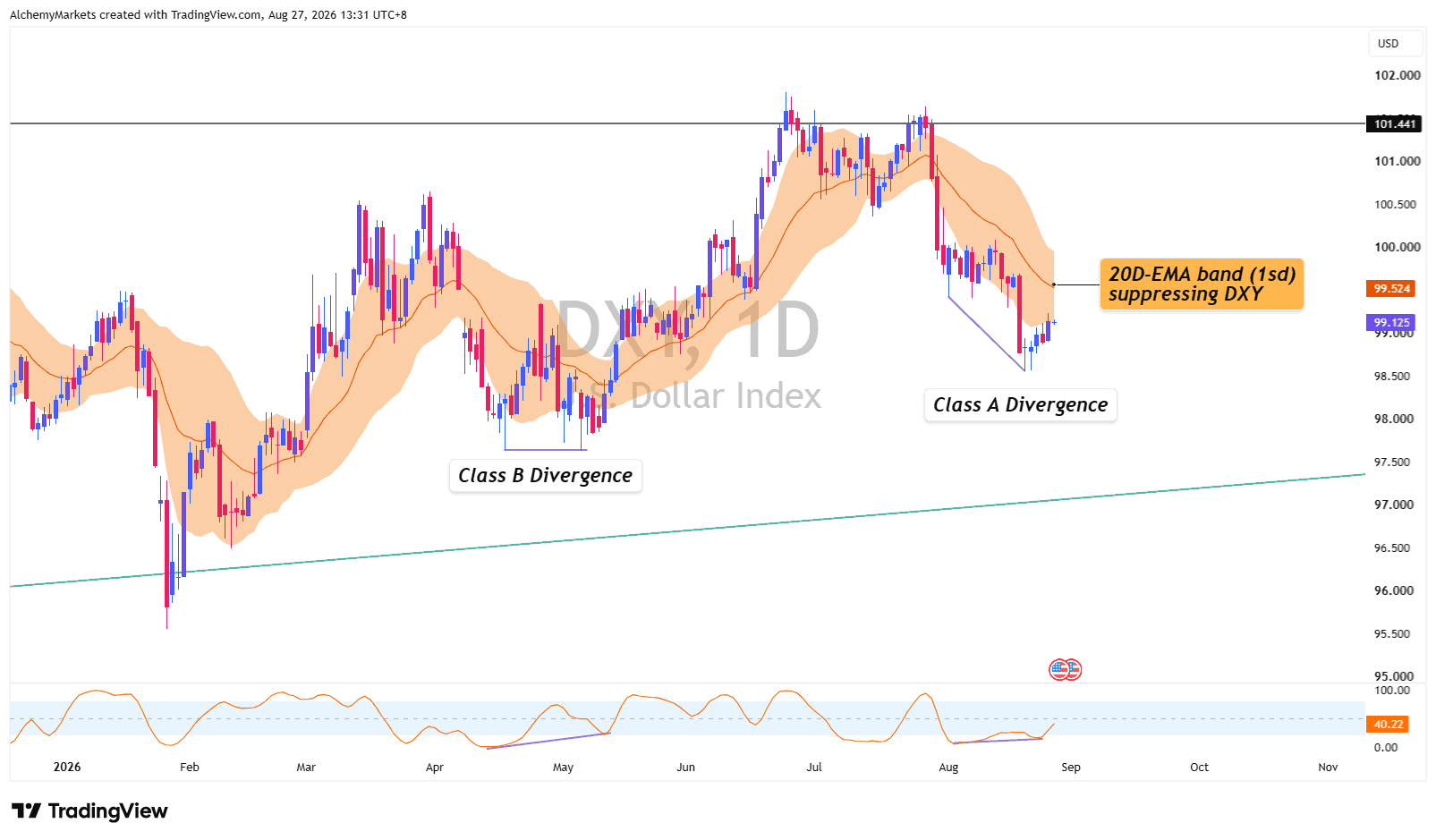
The dollar is useful because it forces the speech to pass a market test. Tough language without a higher US 2-year yield and a DXY break through its daily trend band would be weaker evidence than the headlines suggest.
My base case is that Warsh avoids pre-committing to September. Instead, he is more likely to define how he weighs persistent inflation against tightening already coming through long-term yields, credit and global markets.
That is why this Jackson Hole stands out. Bloomberg’s Tom Keene described only a handful of gatherings in roughly 25 years as carrying comparable tension, recalling 2007 in particular.
The comparison is useful: the most consequential Jackson Holes tend to happen when markets are not merely waiting for a rate decision, but when they are trying to understand whether the policy regime itself is changing.
For Warsh, the bigger test is therefore not one sentence about September. It is whether investors leave Wyoming with a clearer answer to what an independent Warsh-led Federal Reserve actually looks like.
Author

Zorrays Junaid
Alchemy Markets
Zorrays Junaid has extensive combined experience in the financial markets as a portfolio manager and trading coach. More recently, he is an Analyst with Alchemy Markets, and has contributed to DailyFX and Elliott Wave Forecast in the past.