Weekly data: Oil and Gold – Price review for the week ahead

This preview of weekly data examines USOIL and XAUUSD, with economic data expected later this week as the primary market drivers of the near-term outlook.
Highlights of the week: US inflation and PPI, Chinese industrial production, UK GDP
Tuesday
US Inflation rate at 12:30 GMT, where the expectations are for a decline of around 0.3%, reaching 3.9% for June. If this is broadly accurate, then it might influence a more dovish stance by the Federal Reserve at their next meeting in July and therefore create minor losses for the Dollar at least in the short term.
Wednesday
Chinese GDP growth rate at 02:00 AM GMT. Market participants are expecting the figure to come out at 4.4%, 5% of the previous reading for the quarter. If this is confirmed, then we might see some short-term losses on the yuan against its pairs.
Chinese industrial production at 02:00 AM GMT. Industrial production from China for June is expected to increase from 4.5% to 4.7%. If this is broadly accurate, we might see some support in the production-related instruments like crude oil, silver, and copper.
US Producer Price Index (PPI) at 12:30 GMT. Market participants are expecting the figure to come out at 0.2% for June, compared to 1.1% in the previous month. If this is confirmed, then it could potentially hint at lower inflation figures in the coming months.
Bank of Canada Interest rate decision at 13:45 GMT is expected to remain stable at 2.25%. In the event of a surprise hike in interest rates, it would support the loonie in the short term. Conversely, a rate cut might create some turmoil for the currency.
Thursday
British GDP growth at 06:00 AM GMT. The market consensus is that the figure will increase from -0.1% to 0.1% month over month. This might not have a major effect on the pound since it is for May; however, it would provide some hints on the overall economic performance of the British economy.
USOIL, daily
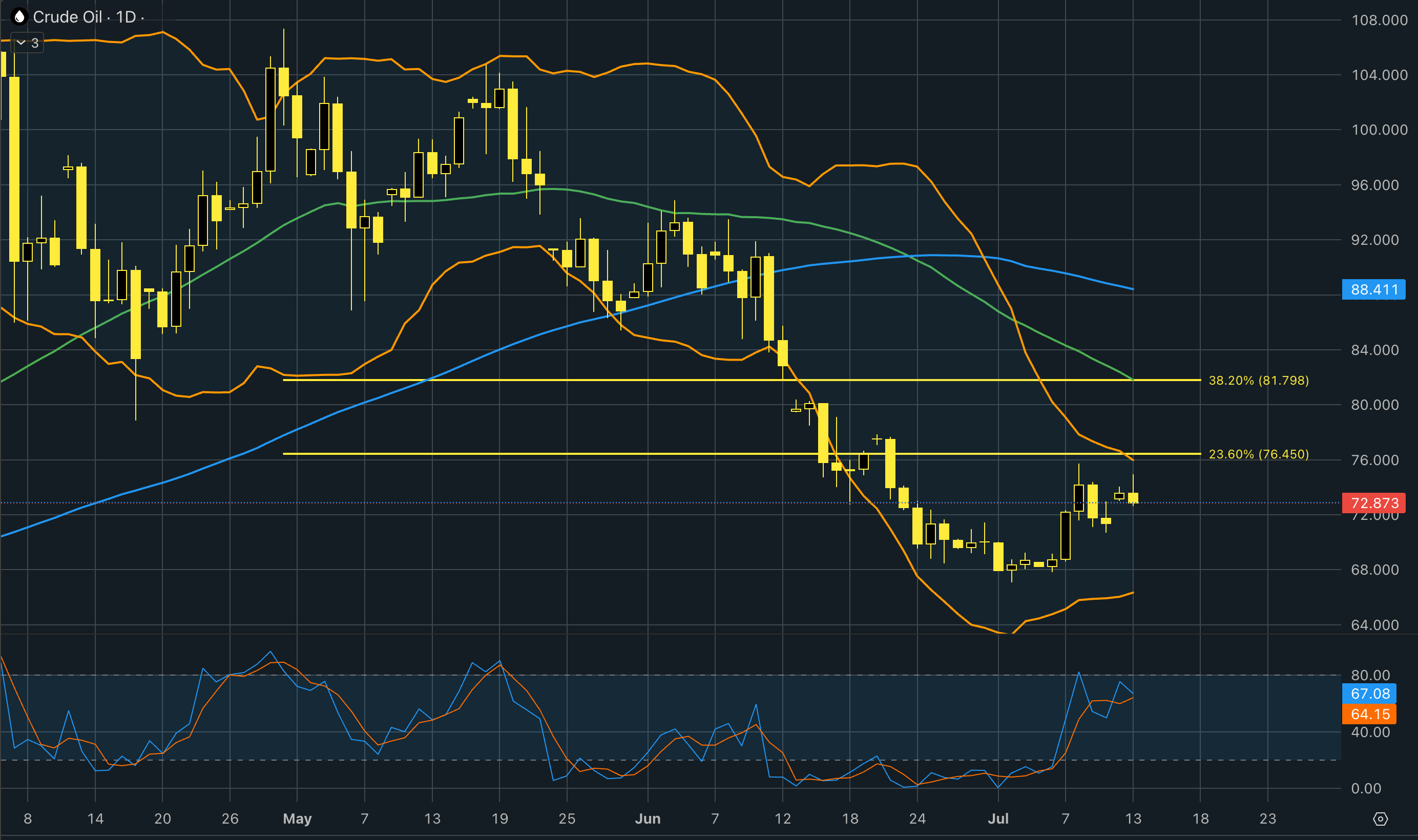
Oil prices rose after the US carried out another wave of strikes against Iran, increasing concerns over potential disruptions to global energy supplies. West Texas Intermediate climbed toward $75 a barrel as tensions escalated, with Iran threatening to close the Strait of Hormuz and launching retaliatory drone and missile attacks against US allies in the Middle East. The renewed conflict has reintroduced a geopolitical risk premium into oil prices, reversing some of the losses seen earlier in the year. Shipping through the Strait of Hormuz has slowed significantly, although key shipping lanes remain open. Oil prices are expected to remain supported while military strikes continue and uncertainty over the waterway persists. Concerns have also grown after an offshore drilling platform in Kuwait was damaged, raising fears that a broader attack on energy infrastructure could push oil prices even higher.
From a technical perspective, crude oil remains under bearish pressure despite a modest rebound from recent lows. Price continues to trade below both the 50-day and 100-day SMAs, confirming that the broader trend remains negative. The recovery has stalled below the 23.6% Fibonacci retracement at $76.45, which now acts as the first key resistance, while the 38.2% Fibonacci level near $81.80 represents a stronger upside barrier. The Stochastic oscillator has recovered from oversold territory but has yet to enter overbought levels, suggesting there is still room for further upside if momentum improves. Meanwhile, the Bollinger Bands have started to contract, indicating that volatility is easing following the recent sharp decline. Overall, the technical outlook remains cautiously bearish unless crude oil breaks above the $76.45 resistance, with the broader downtrend remaining intact while prices trade below the key moving averages.
Gold-Dollar, daily
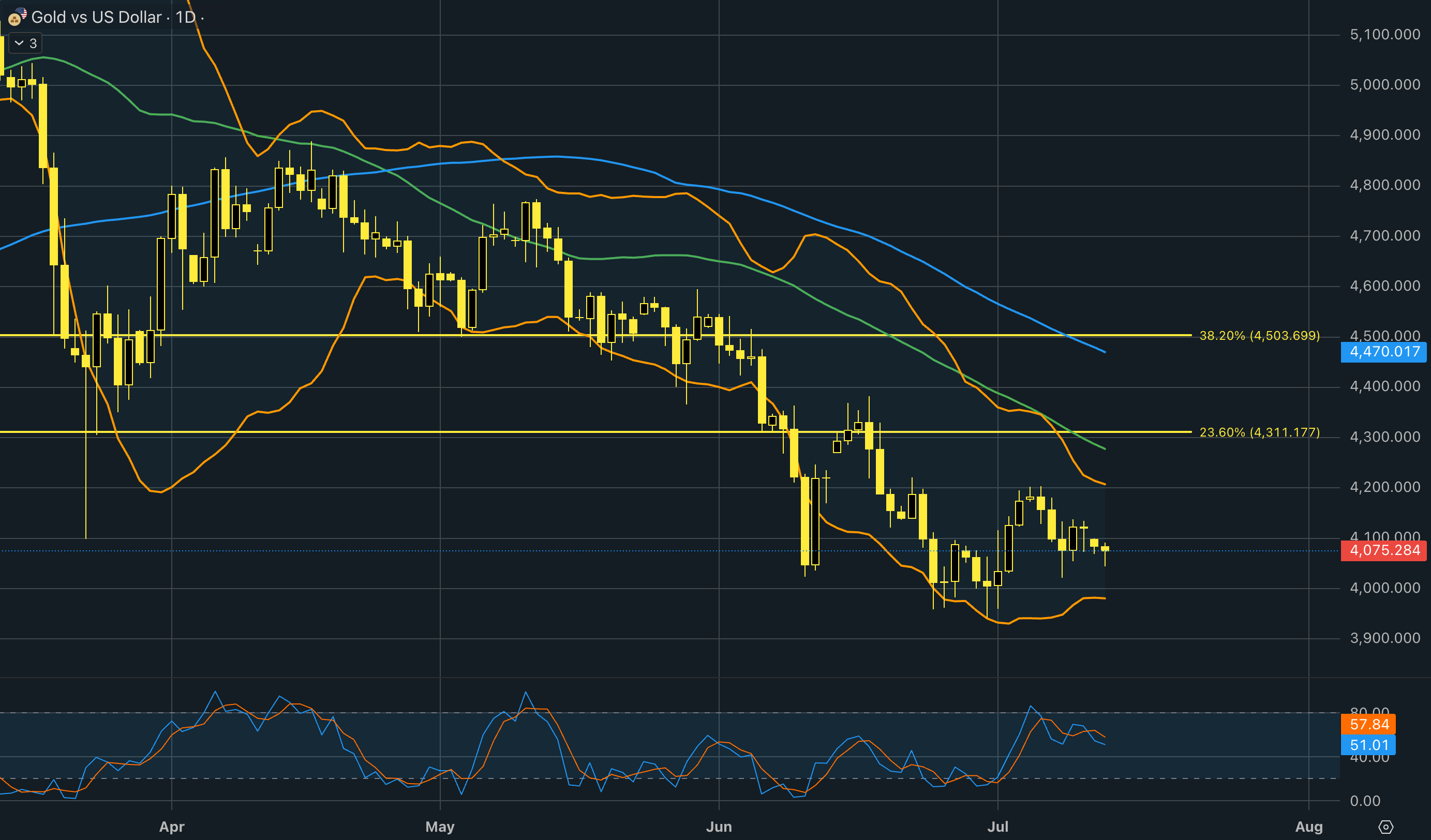
Gold prices fell after renewed US-Iran strikes over the weekend heightened geopolitical tensions and drove oil prices higher, reinforcing expectations that the Federal Reserve may keep interest rates elevated for longer to contain inflation. Higher interest rates reduce the appeal of non-yielding assets such as gold, while a stronger US dollar and rising Treasury yields add further pressure. Investors are now awaiting the latest US inflation data and comments from Fed Chair Kevin Warsh for fresh clues on the outlook for interest rates and the precious metal.
From a technical point of view, gold remains in a broader downtrend, with the price trading below both the 50- and 100-day SMAs, reinforcing the bearish outlook. The recent rebound has lost momentum, with prices struggling to hold above the $4,100 level and remaining below the 23.6% Fibonacci retracement at $4,311, which continues to act as the first key resistance. The Stochastic oscillator has turned lower after exiting overbought territory, suggesting bullish momentum is fading and increasing the risk of renewed selling pressure. Meanwhile, the Bollinger Bands have started to narrow, indicating that volatility is easing following the recent sharp decline. Overall, the technical outlook remains bearish unless gold breaks above the $4,311 resistance, with stronger resistance located near the 38.2% Fibonacci retracement at $4,504.
Author

Antreas Themistokleous
Exness
Antreas has been trading CFDs since 2018 using a combination of fundamental and technical analysis.