Sentiment and positioning are getting more bullish USD
USD consensus is shifting
I am noting a short-term vibe shift in my inbox today as strategists capitulate to the higher USD trade.
In contrast to where things were a week or two ago, with the market still clinging to USD shorts for no reason even as Fed pricing moved into the hike zone, now USD shorts have cut, and the assumption is mostly that the USD will grind higher from here. This is not a reason to exit my EURUSD short, but it’s making me antsy.
For now, the continued widening in interest rate differentials in favor of the USD, plus the Friday speech from Waller mean I want to stay long dollars. I think there is a decent chance Waller will sound hawkish as he is a pragmatic and flexible member of the FOMC and he is no longer campaigning for a job that he could only get if he sounded dovish. Also, Fed rhetoric almost necessarily follows bond market pricing.
People sometimes chuckle at the chart that shows how Fed Funds follows 2-year yields most of the time. They imply that the Fed is just watching the market and doing whatever it says. In reality, it’s more that bonds trade every day, but the FOMC doesn’t meet every day. Yields react to every data point while the Fed has substantial inertia. Bond traders can try on a position and get out if it doesn’t work while the Fed has high switching costs.
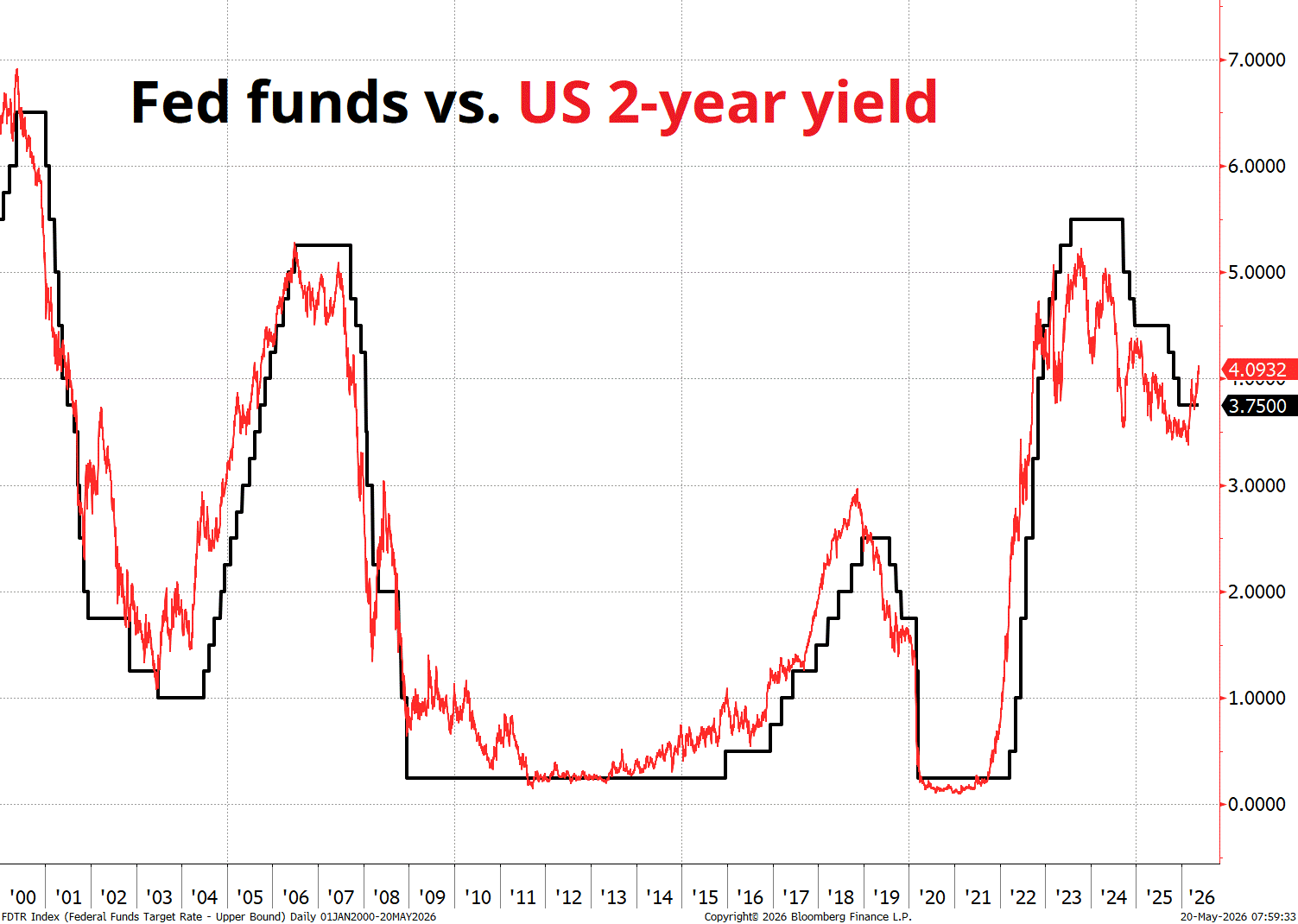
Given this lead/lag relationship and the constraints faced by the Fed but not the bond market, it stands to reason that the difference between the current 2-year yield and the Fed Funds rate should predict future changes in Fed policy. This is not a genius insight. But it is true.
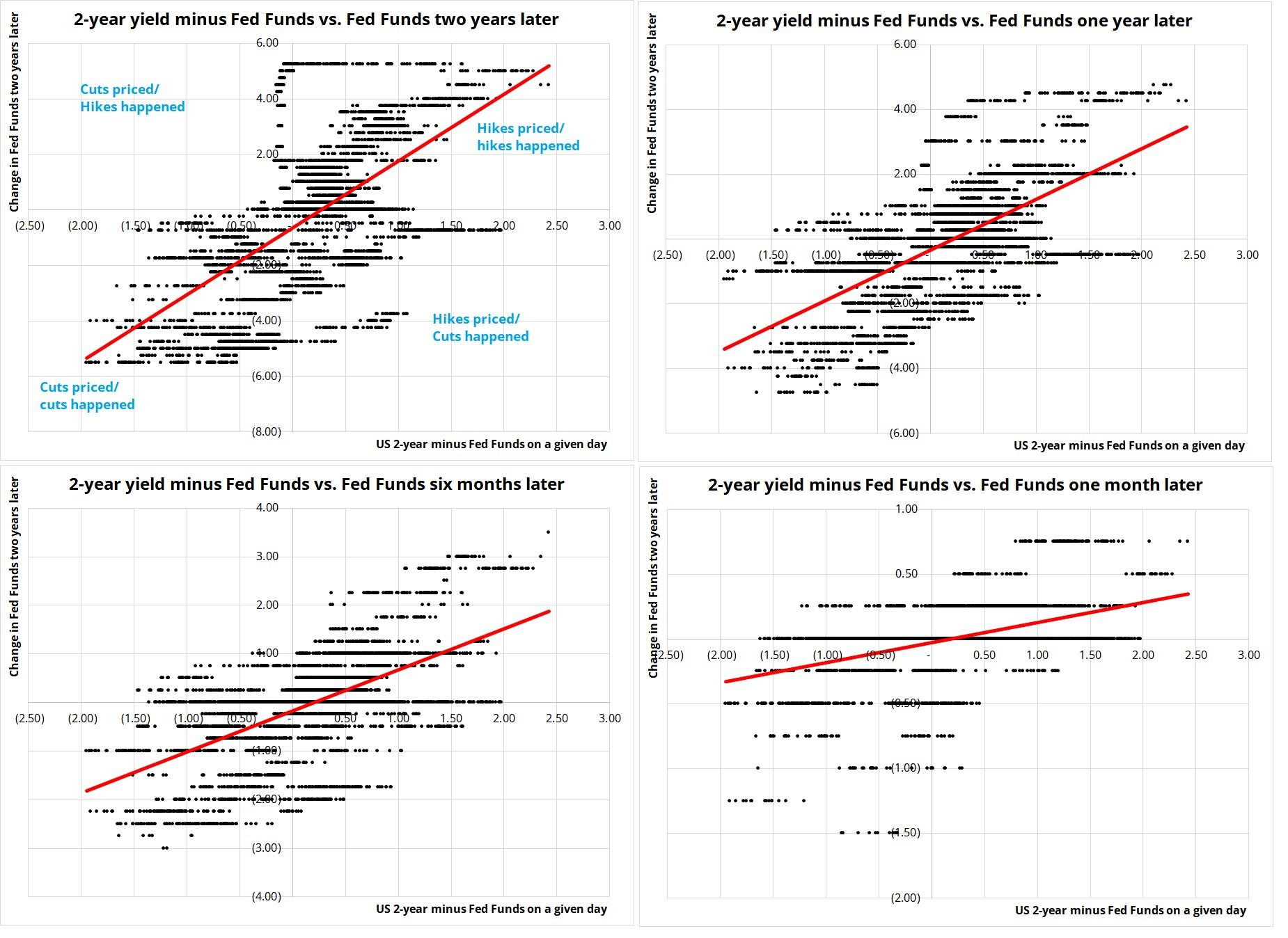
Here I plot the current difference between the 2-year yield and Fed Funds and look at where Fed Funds are two years, one year, six months, and one month later. You can see that the market is pretty good at predicting / driving the Fed. There’s quite a lot of reflexivity. Note that the top left quadrant (cuts priced, hikes happened) is basically a zero. The Fed almost never refuses the opportunity to cut rates. But they really hate hiking.
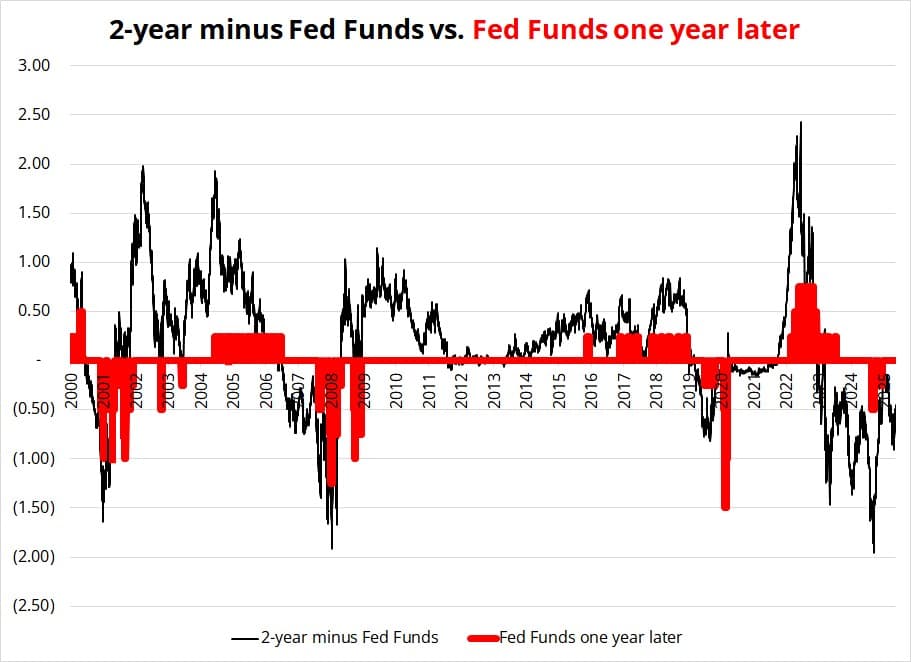
In case you are curious, I have included the full data series on the next page. You can see a few of the crazy moments where rate hikes were priced in, but the Fed actually cut. May 2008 is particularly mind blowing. At that time, the world was spinning towards a Global Financial Crisis and yet the market expected the Fed to hike 100 bps in the coming year due to rising inflation triggered by the Peak Oil panic and the “commodities as an asset class” inflation boom.
I realize that it’s not revolutionary to say that 2-year yields predict Fed Funds two years out, but I do think the lead/lag process is useful to think about. That process might catalyze with a hawkish Waller on Friday.
NVDA
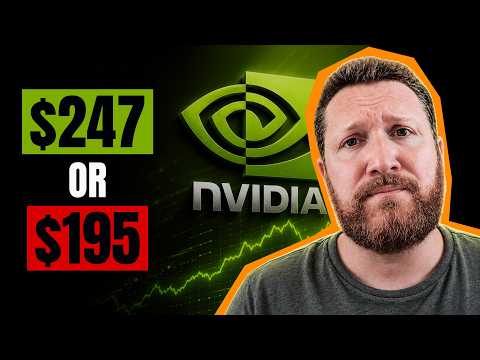
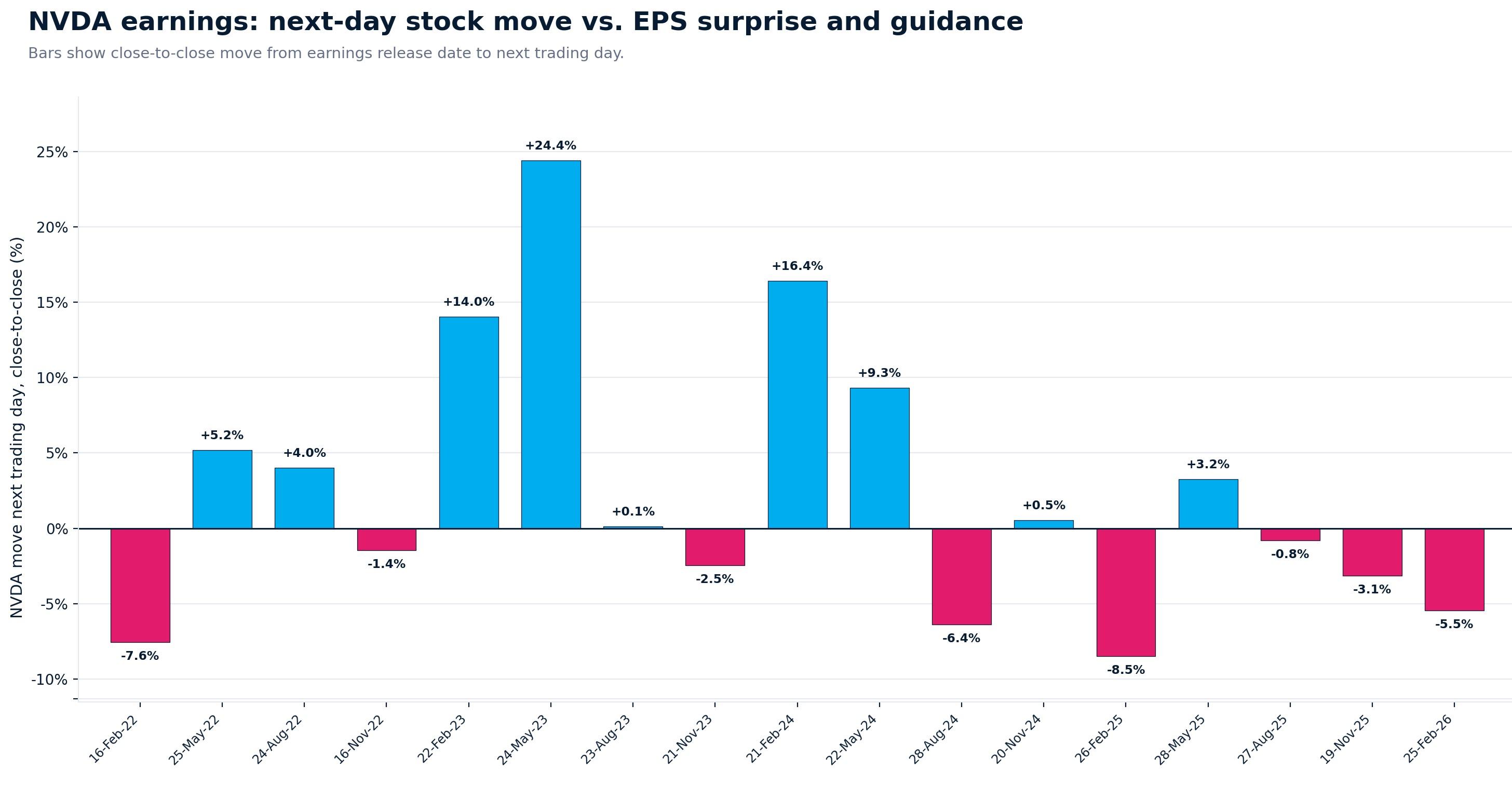
We get NVDA earnings tonight after the close. You can see in the next chart that the price action post-earnings has been somewhat uninspired. Every one of these earnings releases was a beat, except August and November 2022. Guidance moved upward in every case except May, August, and November 2022 and May 2025. The options market is pricing a 5.8% move today, which is substantially lower than prior earnings releases which were 6.4% 6.2% 7.4% 8.0% 8.5% 10.1% and 8.7% (most recent to less recent).
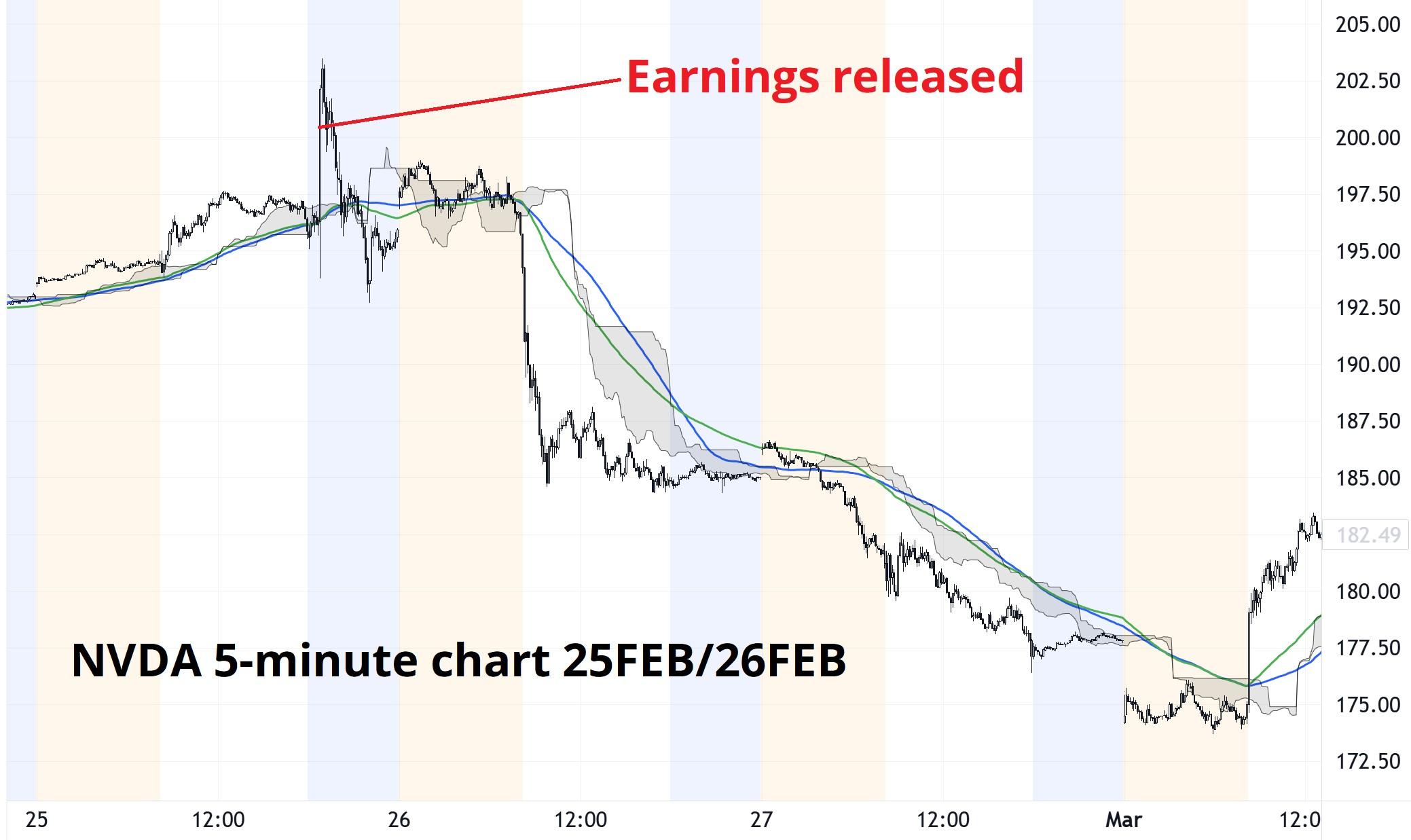
Earnings almost always come out right at 16:20 N.Y. time, but last quarter they came out at 16:31:17 NY.
And for reference, here is the price action last time:
Final thoughts
1. The TNA trade was a winner. The take profit hit yesterday morning, and I am out of my bearish equity view. I am back to neutral as this post-gamma mania dip was all I was really looking for. Caught a 10% move in four trading days. I said it was a tactical view and I am ready with an open mind again. Onward.
2. Good in the weeds article via DH.
3. Bird update: All is well; waiting for baby birds to emerge now.

On the 0.273% chance that today is your birthday… Happy birthday! Otherwise, forget it.
Author

Brent Donnelly
Spectra Markets
Brent Donnelly is the President of Spectra Markets. He has been trading currencies since 1995 and writing about macro since 2004. Brent is the author of “Alpha Trader” (2021) and “The Art of Currency Trading” (Wiley, 2019).