Gold moves higher as weak employment data eases rate hike concerns

Gold (XAU/USD) is maintaining its recent recovery as markets reassess the outlook for US interest rates. Softer US employment data has reduced expectations for a September Federal Reserve rate hike. Markets are now focused on the upcoming US inflation report for further clues on the policy outlook. At the same time, uncertainty in the Middle East and concerns over Gulf supply routes continue to support safe-haven demand. These factors could continue to shape gold’s next directional move.
Gold extends recovery as softer jobs data weighs on rate expectations
Gold maintained its upward momentum as changing interest rate expectations supported the market. Focus has turned to the upcoming US Consumer Price Index report for further direction on Federal Reserve policy. Higher-than-expected inflation could strengthen expectations for tighter policy, while softer inflation could ease expectations for another rate increase.
The latest US employment report has already changed the interest rate outlook. Nonfarm payrolls unexpectedly fell by 23,000 in July, compared with expectations for an increase of 85,000. The unemployment rate declined to 4.1%, but the labor force also contracted. Markets responded by reducing expectations for a September Fed rate hike. Current market pricing places the probability near 44%, leaving upcoming inflation data as an important factor for the next policy decision. Lower expectations for higher rates can support gold because the metal does not provide interest income.
Middle East developments remain another major influence. Iran continues discussions with Oman over arrangements for maritime traffic through the Strait of Hormuz, but uncertainty over reopening the waterway remains. Oil prices have moved higher as concerns around Gulf supply routes continue. Higher energy prices could keep inflation concerns elevated and complicate the Fed outlook. At the same time, persistent geopolitical risks could maintain safe-haven demand for gold if regional tensions increase further.
Gold gains momentum after breaking key descending resistance
The gold chart below shows price trading beneath a descending resistance trendline for several months. This trendline repeatedly capped recovery moves and maintained pressure on price. Gold later found support and began to stabilize, allowing price to gradually move higher. The recovery then extended toward the descending resistance trendline, bringing this key level back into focus.
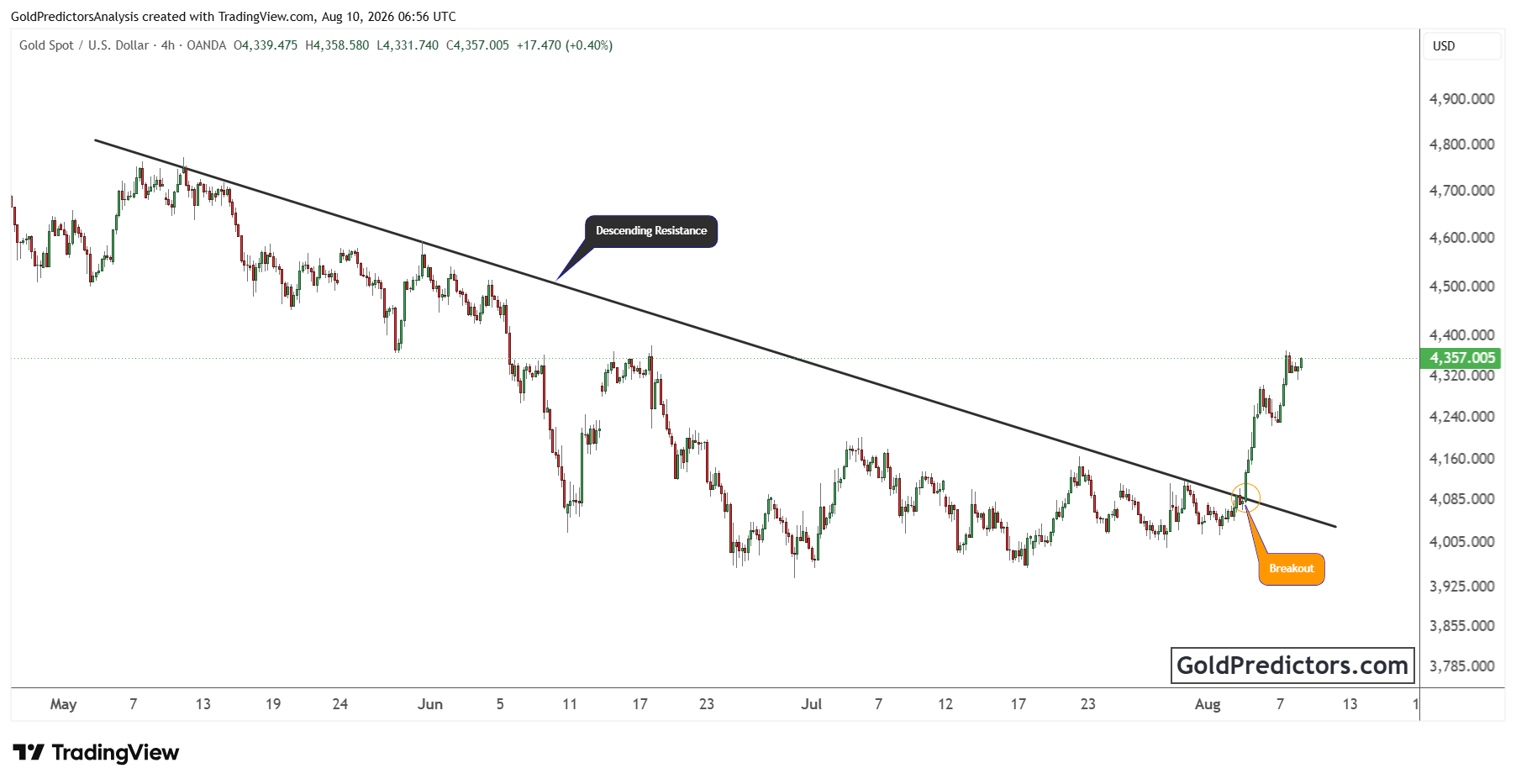
Gold has now moved above the descending resistance trendline after remaining below it for several months. Price gained momentum after clearing this level and extended its advance toward the $4,300 region. This move marks an important shift in the near-term structure, as this resistance had repeatedly limited recovery moves.
The next development will depend on whether gold can continue to hold above descending resistance. Price remains comfortably above the broken trendline following the recent advance, keeping the current structure intact. Continued strength above this former resistance could support further gains and another advance toward the recent high. As long as gold remains above the broken trendline, the current recovery would remain in place and support the broader positive structure.
Gold outlook: US inflation data and Middle East risks shape next move
Gold remains supported by a combination of softer US employment data and persistent geopolitical uncertainty. Reduced expectations for a September Fed rate hike have shifted attention toward the upcoming inflation report for the next policy signal. Middle East uncertainty and concerns over Gulf supply routes also continue to support safe-haven demand. At the same time, gold remains above the broken descending resistance trendline after its recent advance. Continued strength above this level could support further gains. Upcoming inflation data and geopolitical developments will remain important drivers for Gold.
Unlock exclusive gold and silver trading signals and updates that most investors don’t see. Join our free newsletter now!
Author

Muhammad Umair, PhD
Gold Predictors
Muhammad Umair is a financial markets analyst and investor who focuses on the forex and precious metals markets.















