US Service PMI Better Than Forecast: The dollar, equities and bond yields rise
- Service sector contracts the most since financial crisis but index tops forecast.
- Employment and new orders post lowest scores, largest declines in series’ history.
- April ends the ISM index's longest positive streak .
- Dollar get modest boost against majors except yen.
- US equities, bond yields gain on economic restart hopes.

The US services sector slipped into contraction for the first time since the financial crisis as shutdown orders have crippled economic activity across the country and have resulted in a fifth of the labor force being laid off in the last six weeks.
The non-manufacturing purchasing managers’ (PMI) index dropped to 41.8 in April from 52.5 in March in the first month of contraction for the dominant services sector since 49.7 in December 2009.
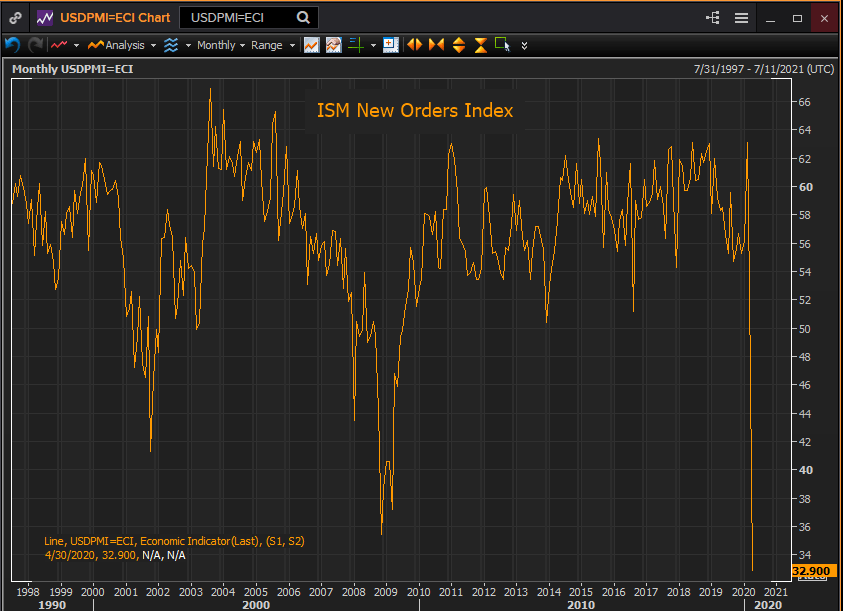
It was the lowest PMI reading from the Institute for Supply Management (ISM) since March 2009. This the largest one month decline in the 23 year history of the series ended the longest string of positive months at 112. A steeper decrease to 36.8 had been forecast.
As with the manufacturing index on Friday, the statistical method ISM uses, giving positive credit to slow deliveries, probably overstated the general index. Normally delivery delays are due to demand constraints but now they are likely from supply disruptions due to business closures.
Numbers over 50 are evidence of growth; scores below 50 indicate retraction though not necessarily recession.
Market reaction
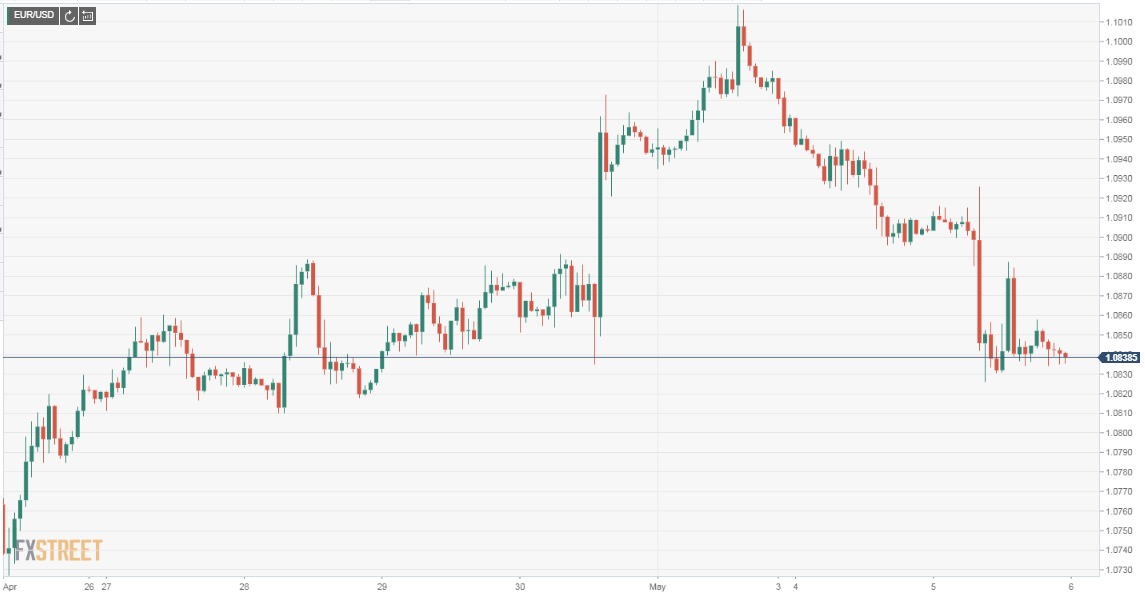
Despite an index score predicting the deepest economic contraction in a decade the dollar managed to eke out small gains in five of six major pairs after the ISM release to the New York close. The service PMI performed five points better than expected, similar to the manufacturing index on Friday which registered at 41.5 on a 36.9 forecast.
The dollar rose about 50 points against the Australian dollar and the Swiss franc closing at 0.6416 and 0.9728, 30 versus the sterling and the euro finishing at 1.2442 and 1.0840 and less than 10 against the Canadian dollar to 1.4045. The USD/JPY shed 20 points to 106.48. Each pair remained on the big figure where it began the day.
The Dow Jones Industrial Average (DJIA) rose 133.33 points, 0.56%, to 23,883.09 and the S&P 500 (SPX) gained 25.7 points, 0.90%, to 2,868.44 as markets speculated that the several states lifting their restrictions might have success reopening their economies.
Treasury yields climbed modestly. The 10-year Treasury added five points to 0.662%, its highest since April 14 and the 2-year rose four points to 0.19%
Service business activity and new orders
Business activity, new orders and employment contributed to the plunge in overall index with readings of 26 and 32.9 and 30 respectively, all the lowest since data began in July 1997.

Reuters
Only two of the 18 different service industries tracked by ISM grew in April, finance which has been administering Washington’s emergency business loan program and the government itself.
Reuters
Service employment
The shutdown of large sectors of the economy has struck service businesses particularly hard. Restaurants, bars, hotels, travel and all kinds of personal contact and group establishments from massage parlors to theaters have been ordered closed.

Reuters
Many of the more than 30 million unemployment claims filed in the past six week come from these relatively low paying fields. Another three million people are expected to file for jobless benefits this week which will make 20% of the US labor force furloughed in seven weeks.
Some of those fired workers will be rehired, perhaps in the next few weeks as several states retstart their economies. Others will have to wait months for their jobs until business recovers and still others will have to find new work in a market flooded with the unemployed.
US GDP
The US economy, which had been expanding 2.7% in January and February before the pandemic, contracted 4.8% in the first quarter. Retail sales, durable goods and personal spending fell by the largest amounts on record in March.
The Atlanta Fed’s GDPNow model estimates the economy will contract 17.6% in the second quarter, down from earlier estimates of 16.1`% and 12.1%.
Author

Joseph Trevisani
FXStreet
Joseph Trevisani began his thirty-year career in the financial markets at Credit Suisse in New York and Singapore where he worked for 12 years as an interbank currency trader and trading desk manager.

















