US mortgage rates just hit a three-year high four weeks before the midterms
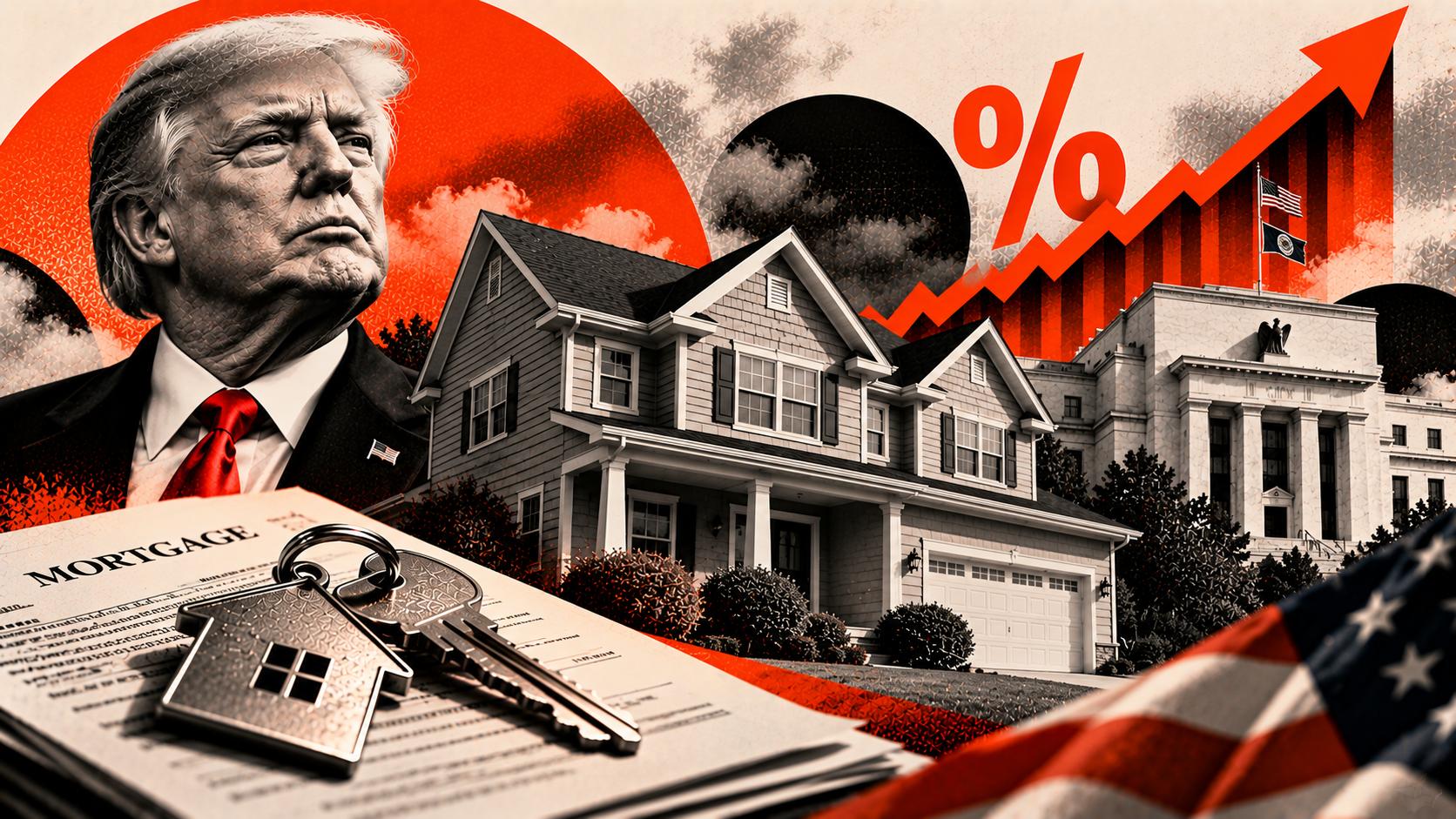
Mortgage rates rose to their highest level in nearly three years in the United States (US), adding to the challenges facing the housing market and complicating US President Donald Trump's economic agenda less than four weeks before the November 3 midterm elections. According to data released Wednesday by the Mortgage Bankers Association (MBA), the average rate on 30-year fixed-rate mortgages climbed to 7.49% in the week ending October 2, an increase of 19 basis points from the previous week.
The reading, the highest since November 2023, marks a setback for the Trump administration, which had promised to lower housing costs and make homeownership more accessible. The increase comes as inflation remains elevated, the war in Iran continues to disrupt energy markets and US bond yields reach multi-year highs.
For American households, this combination means higher monthly mortgage payments, reduced borrowing capacity and an increasingly uncertain path to homeownership. For Republicans, it threatens to turn a major economic promise into an electoral vulnerability as the cost of living dominates voters' concerns.
Why are US mortgage rates reaching 7.49%?
The latest increase in mortgage rates is primarily driven by pressure in the US Treasury bond market. Contrary to a common misconception, mortgage rates are not directly determined by the Federal Reserve's (Fed) benchmark interest rate. Instead, they largely follow long-term bond yields, particularly the yield on the 10-year US Treasury note.
That yield rose above 5.3% on Monday, reaching its highest level in 24 years, according to Reuters. The increase reflects investor concerns about persistent inflation, the resilience of US economic growth and the federal government's growing financing needs.
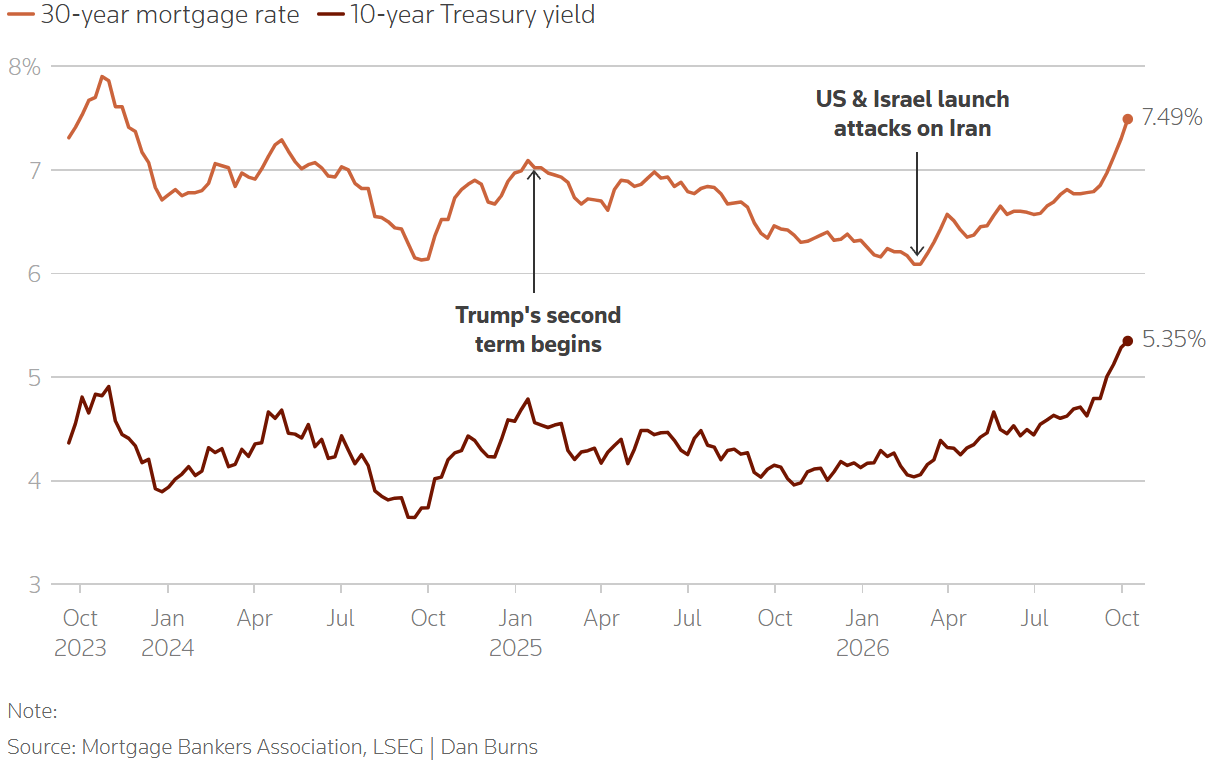
The war involving the United States, Israel and Iran, which began in late February, plays a decisive role in this development. Disruptions to Middle Eastern energy exports trigger a sharp increase in Oil prices, pushing up transportation, production and consumer costs. Annual US inflation, measured by the Personal Consumption Expenditures (PCE) Price Index, reached 3.4% YoY in August, compared with 2.8% in February, according to the Bureau of Economic Analysis (BEA). It remains well above the Fed's 2% target.
This environment prompts bond investors to demand higher yields to compensate for persistently elevated inflation risk. Mortgage lenders then pass these higher funding costs on to borrowers.
Rising government debt adds another source of pressure. US federal debt recently crossed the historic $40 trillion threshold, while persistent budget deficits fuel concerns about the supply of government debt.
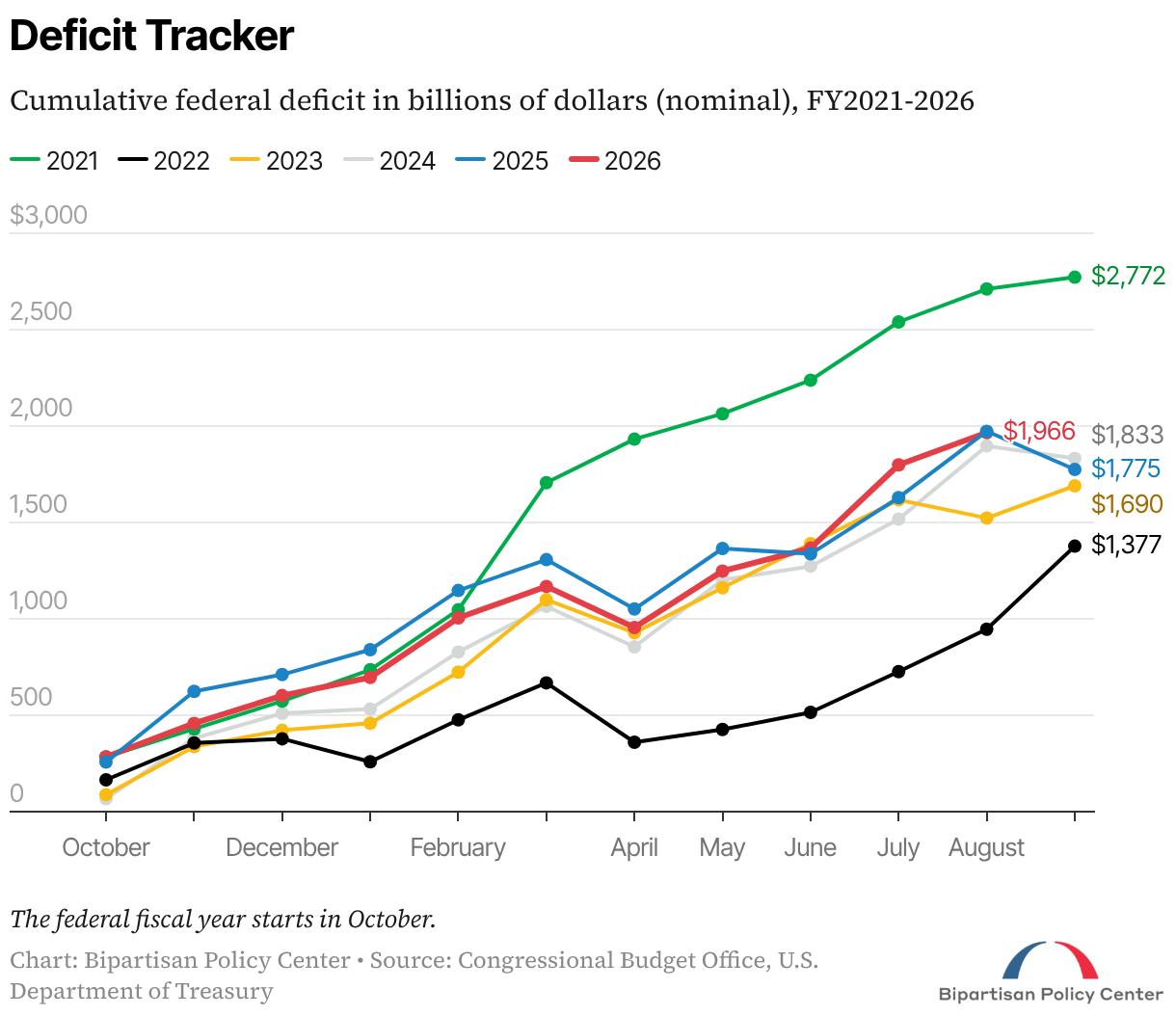
National Association of Realtors (NAR) Chief Economist Lawrence Yun highlighted this structural constraint in comments reported by The Hill: "The huge rising federal budget deficit is gobbling up more of private savings and thereby leaving less capital for the mortgage market."
This combination of inflationary pressures, geopolitical risks and fiscal imbalances helps explain why mortgage rates have increased by approximately 1.4 percentage points since the start of the war in Iran, according to Reuters.
The US housing market faces another shock
Rising borrowing costs hit a housing market already weakened by several years of increasing home prices and elevated interest rates. According to the MBA, mortgage applications fell by 4.2% over the week, reaching their lowest level since February 2025. Total application volume has nearly halved since January, while refinancing activity experiences a particularly sharp decline.
MBA Chief Economist Joel Kan summarized the immediate consequences in comments reported by Reuters: "Very few homeowners have an incentive to refinance at these rates, and the jump in borrowing costs has caused many potential borrowers to step back from the purchase market."
Homeowners who secured mortgages during the pandemic, when rates were close to 3%, are particularly reluctant to sell their properties and purchase another home at a significantly higher rate. This phenomenon, known as the mortgage lock-in effect, limits residential mobility and contributes to a reduction in the number of homes available for sale. Meanwhile, first-time buyers must contend with home prices that remain historically elevated.
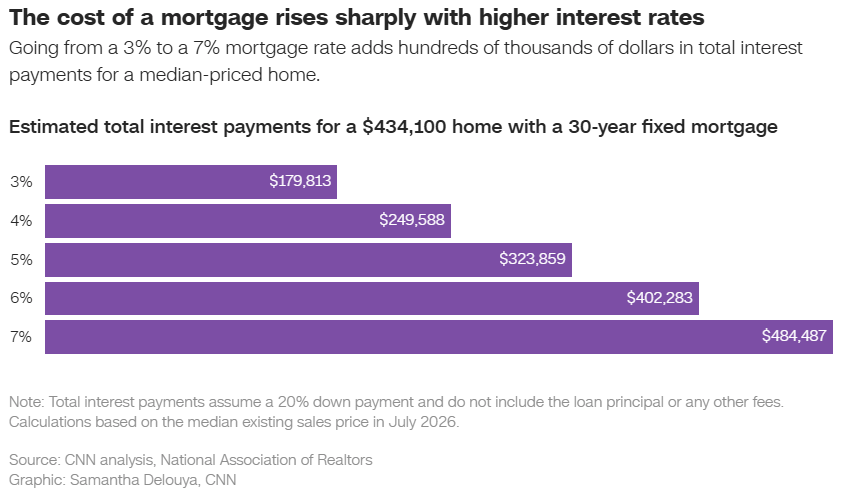
KB Home Executive Chairman Jeffrey Mezger explained in comments reported by the Financial Times: "Higher mortgage interest rates have further pressured affordability and, together with geopolitical uncertainty and broader economic headwinds, have caused many prospective buyers to be more cautious on purchasing a home."
Weaker demand could therefore continue to weigh on residential construction, homebuilder activity and housing-related sectors of the economy.
Trump confronts his promise of 3% mortgage rates
The renewed rise in mortgage rates presents a particular political challenge for Donald Trump, who made lowering housing costs a central part of his 2024 presidential campaign. Speaking at the Economic Club of New York in September 2024, Trump notably declared: "Reducing mortgage rates is a big factor. We're going to get them back down to, we think, 3%, maybe even lower than that."
The contrast with the current situation is striking. When Trump returned to the White House in January 2025, the average 30-year mortgage rate stood at 6.96%, according to Freddie Mac. It gradually declined to 5.98% in late February 2026 before climbing sharply following the outbreak of the war in Iran.
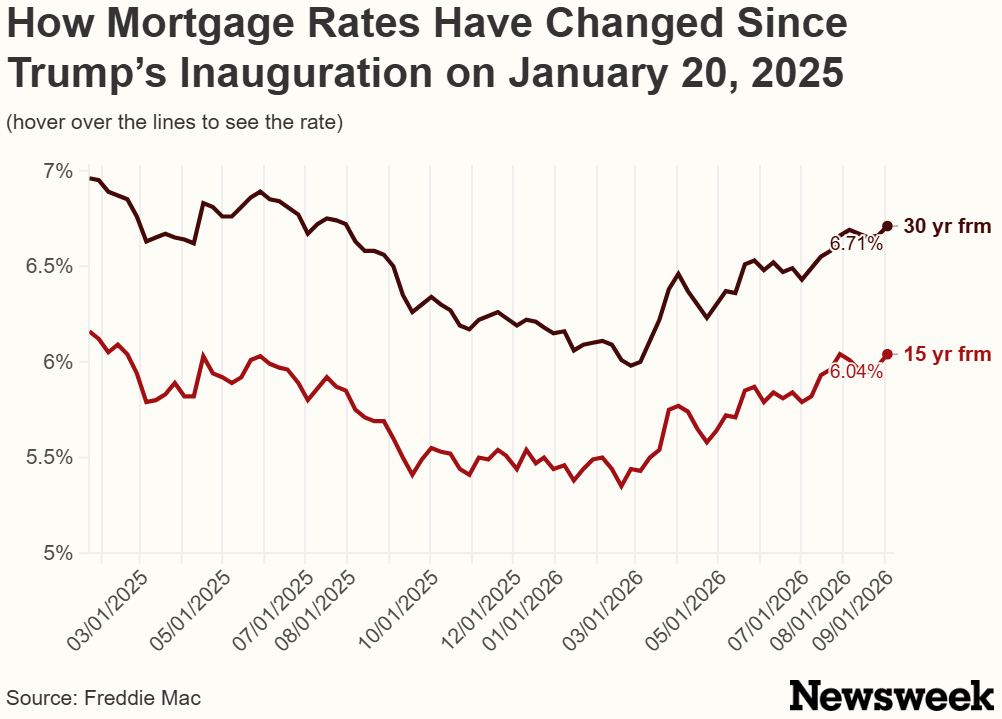
At 7.49%, the rate published Wednesday by the MBA now exceeds the level recorded when Trump returned to office and stands far above his campaign target.
The administration has nevertheless introduced several initiatives aimed at improving housing affordability. In January, Trump notably called on mortgage financing agencies Fannie Mae and Freddie Mac to support the purchase of $200 billion in mortgage-backed securities in an effort to lower financing costs. The president has also backed measures designed to restrict purchases of single-family homes by large institutional investors and reduce regulatory barriers to construction.
Yet the political challenge remains: voters generally judge economic policies by the prices and monthly payments they actually face, rather than by measures announced in Washington.
The war in Iran and the Fed complicate the economic outlook
US monetary policy adds another challenge for Donald Trump. In September, the Fed raised its benchmark interest rate by 25 basis points for the first time since 2023 to contain inflationary pressures. Policymakers also signal that another increase could be necessary before the end of the year, although markets do not currently expect a change at the meeting scheduled for late October.
This stance contrasts with Trump's repeated calls for rapid interest rate cuts. On Wednesday, when asked about rising mortgage rates, the president described Fed Chair Kevin Warsh as "great" but criticized the other members of the Board of Governors, saying they "would like to see the country do badly, in my opinion, because I think interest rates should come down", according to Reuters.
US Treasury Secretary Scott Bessent, meanwhile, attributes the rise in inflation and mortgage rates to the energy shock caused by the war in Iran. He stated in comments reported by Reuters: "So once we get on the other side of this Iran conflict, (the) energy market is going to be well supplied, and we will move down towards the Fed's target and mortgage rates and the 10-year will come back down."
However, this explanation highlights a contradiction in the administration's economic strategy. While Trump wants to reduce borrowing costs, the war in Iran contributes to keeping energy prices and inflation expectations elevated, limiting the central bank's room for maneuver.
A decline in Oil prices could ease these pressures, but a geopolitical de-escalation would not guarantee an immediate drop in mortgage rates. Concerns about government debt and budget deficits would continue to influence bond yields.
Zonda and NewHomeSource Chief Economist Ali Wolf believes households should prepare for persistently high rates. In comments reported by The Hill, she projected a range of 6.5% to 8% over the next 12 months. This outlook suggests that the housing market's difficulties could persist well beyond the November elections.
Four weeks before the midterms, housing becomes a major electoral risk
The increase in mortgage rates comes at a particularly delicate moment for the Republican Party, which is seeking to retain its majorities in the House of Representatives and the Senate in the November 3 midterm elections.
According to a Reuters/Ipsos poll completed Monday, the cost of living is the top concern among American voters. Donald Trump's approval rating, meanwhile, has fallen to a record low of 32%, intensifying concerns about his party's electoral prospects.
Housing is especially important to younger voters. According to a CNBC survey published in July, housing affordability ranks as the leading political concern among Americans aged 18 to 34, ahead of food costs and the protection of democracy.
The challenges are also evident in several states that could play a decisive role in determining control of Congress, including Pennsylvania, Michigan and Texas. According to NAR data cited by Bloomberg, nearly 49% of US metropolitan areas now require an annual household income of at least $100,000 to afford a median-priced home with a 10% down payment. That share stood at just 6% in 2019.
For Democrats, elevated mortgage rates provide another argument for challenging Trump's economic record. Republicans, meanwhile, seek to remind voters that the housing crisis and inflation began before the president returned to the White House, under Joe Biden's administration.
Both arguments reflect different realities: rising home prices and the affordability crisis predate Trump's second term, but the recent surge in mortgage rates takes place under his administration, against a backdrop of war in Iran and renewed inflationary pressures.
With less than four weeks until the vote, however, this distinction may matter less to voters than the reality of their monthly expenses.
The president has no direct authority to set mortgage rates, but his decisions on fiscal, trade and geopolitical policy influence the economic conditions that determine their direction. For Donald Trump, the challenge now is to convince Americans that his administration can still lower the cost of living, even as mortgage rates reach 7.49%, inflation remains above the Fed's target and energy prices continue to weigh on households.
Without a rapid improvement in these indicators, the housing affordability crisis could become one of the clearest symbols of the gap between Trump's economic promises and voters' everyday experiences, just as Republicans fight to maintain control of Congress.
Author

Ghiles Guezout
FXStreet
Ghiles Guezout is a Market Analyst with a strong background in stock market investments, trading, and cryptocurrencies. He combines fundamental and technical analysis skills to identify market opportunities.