The US Dollar's four-week winning streak meets Bessent's warning to the Fed
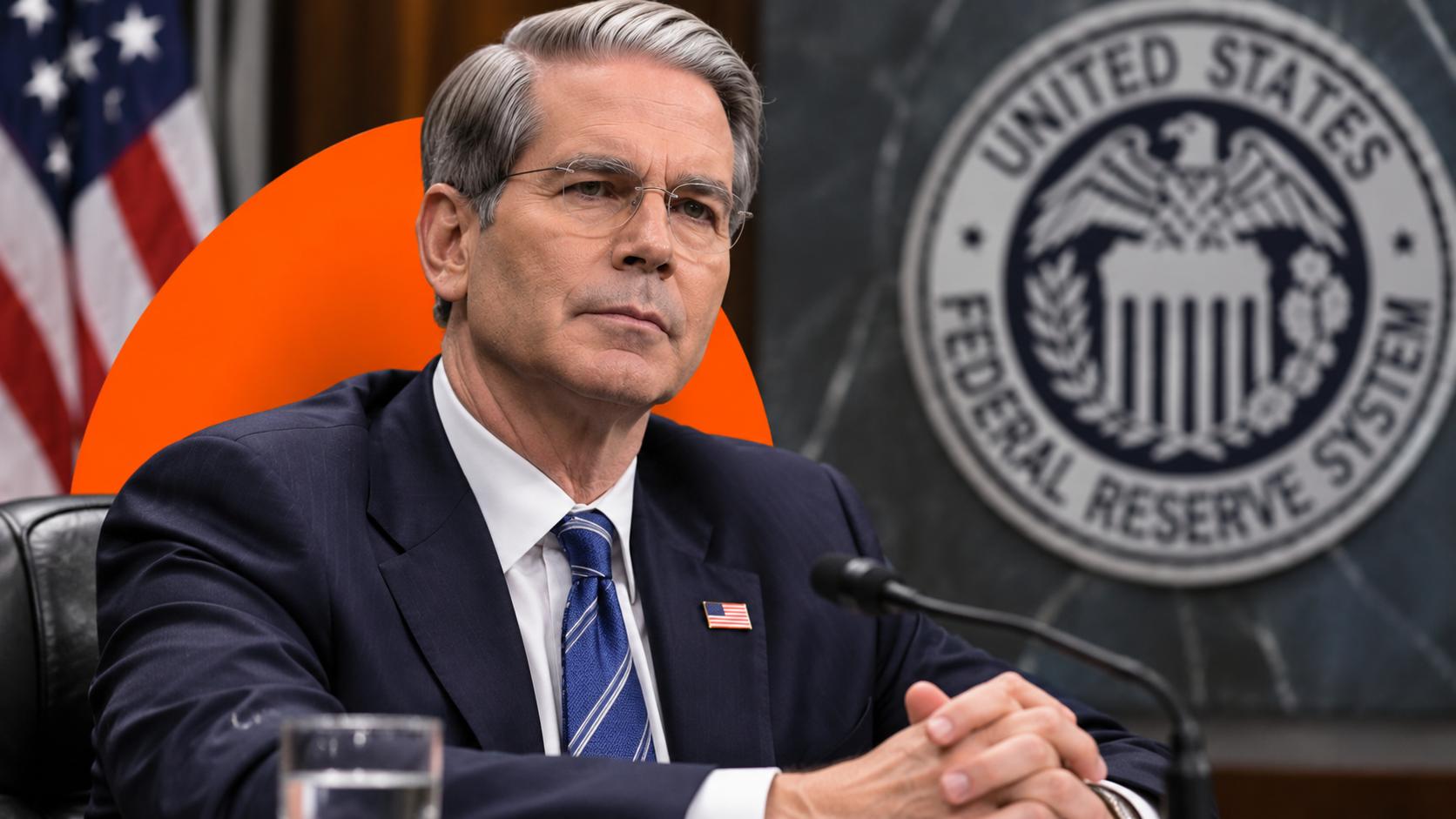

The US Dollar Index has risen for four weeks, and Treasury Secretary Scott Bessent has warned the Federal Reserve against raising interest rates too far. Rate bets drove only one of those weeks, so his warning threatens less of the rally than it seems.
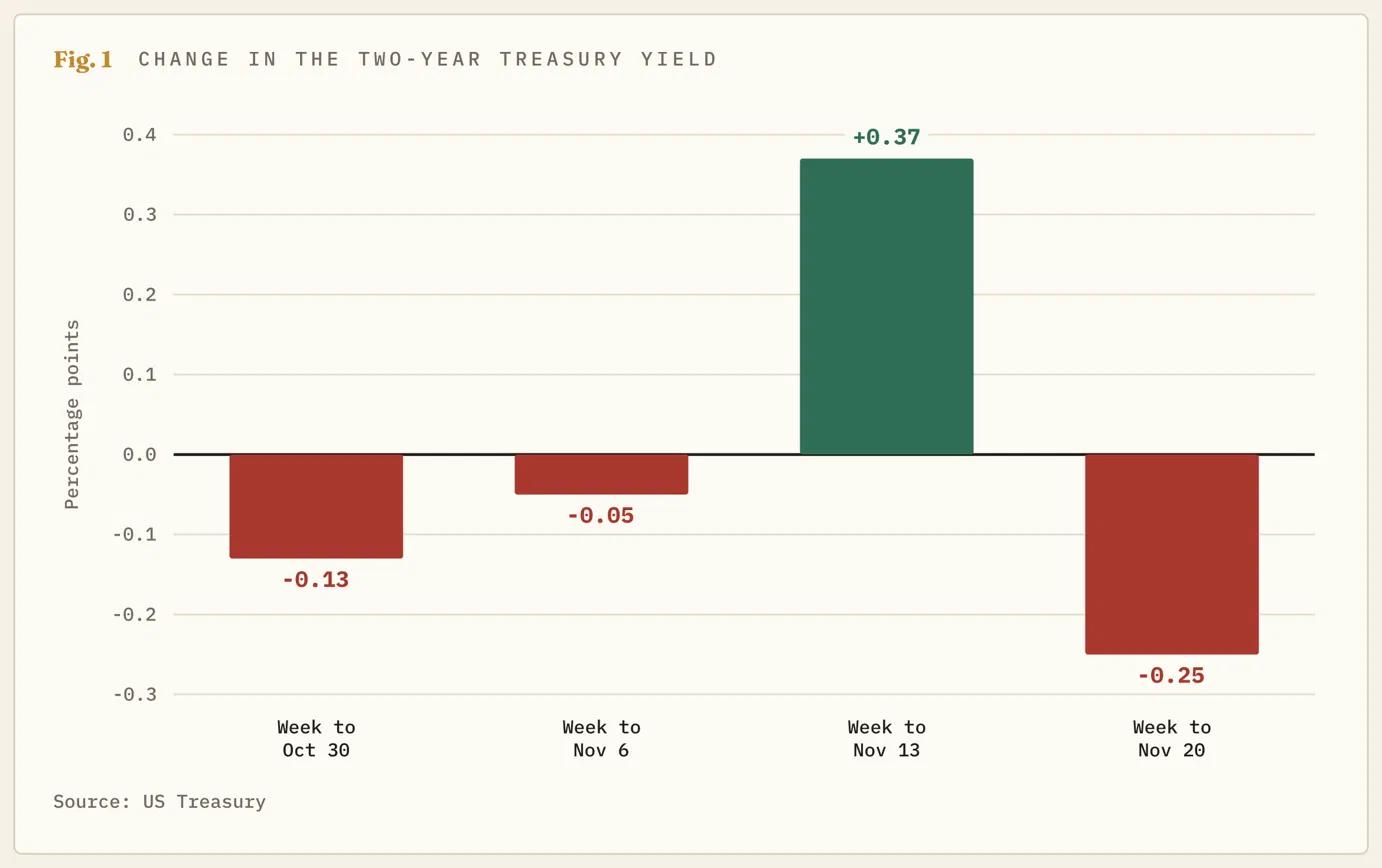
Four weekly gains in a row have taken the US Dollar Index (DXY), which measures the Dollar against six other major currencies, to its highest level since late March 2025. The standard explanation is that traders keep betting on more interest rate increases from the Federal Reserve (Fed). Treasury Secretary Scott Bessent went after that bet on Sunday, warning the Fed against raising rates too far. The two-year Treasury yield, which moves with what traders expect the Fed to do, ended those four weeks lower than it started.
Four weeks, one of them about the Fed
The streak began quietly. In the week to October 30, the index rose 0.07%, and in the week to November 6 it added 0.4%. The two-year yield fell by 0.13 and 0.05 percentage points in both weeks. Traders betting on a more aggressive Fed would have pushed that yield up, so those two gains came from elsewhere, and the first was small enough to need no source.
The week to November 13 is the one the standard explanation describes. October's inflation report came in above forecast on November 10, and traders began to pay for the half-point December increase that Fed Governor Christopher Waller had argued should be considered. The two-year yield jumped 0.37 of a point, and the index gained 1.1%, which is more than half of the four-week rise of about 2%.
In the week to November 20, the yield gave back 0.25 of a point and the Dollar rose 0.4% anyway. That was the week the S&P 500 lost 8.6%, and the Nasdaq Composite lost 10%, its worst since March 2020, as investors selling shares moved into Treasuries and Dollars for safety. So the latest win came from fear, and fear lowers rate expectations at the same moment it lifts the Dollar.
Bessent warned about a hike that was already gone
Bessent has made the argument three times in ten days, speaking against a half-point increase in television interviews on November 13 and November 20. Then, on Sunday, he said many people believe the Fed may be making a policy mistake if it raises too far. He pointed to how much more costly and difficult borrowing has become in recent months. His target was the larger move, since a quarter-point in December is largely expected.
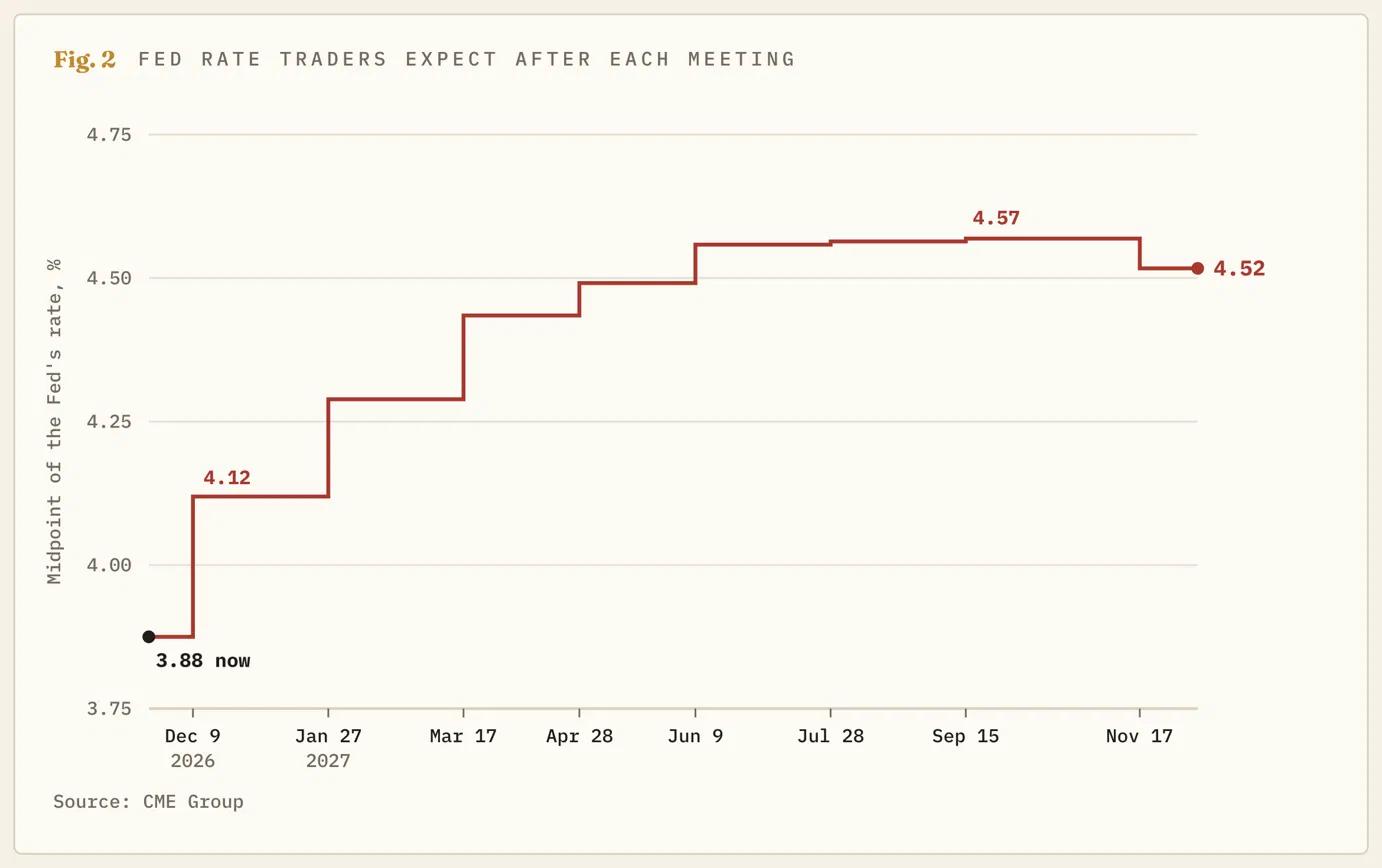
By the time he gave that third interview, the stock market had done the job for him. On November 14, traders put an 11.5% chance of a half-point increase at the December 9 meeting. During the selling on November 20, that chance went to zero, while the odds of no increase at all rose from nothing to about 11%. The hike he warned against had been gone for two days by the time he warned against it.
For the Dollar, a warning only matters if it changes where traders think rates are going, because the gap between US rates and everyone else's is what pays people to hold it. On that test, the result ran the wrong way for Bessent, since the chance of a quarter-point increase on December 9 climbed back to 97.76% as stocks rebounded on Monday. Traders became more certain of a hike after the Treasury Secretary warned against overdoing them, and the index is little changed from its November 20 close.
The Fed still plans to hike
The best argument against that reading is that rate expectations still hold the Dollar at its high, even if they didn't supply every weekly gain. A Treasury Secretary leaning on the Fed in public could erode those expectations over months, and traders expect a good deal more than December. From the Fed's current rate of 3.75%-4.00%, they see about a two-in-three chance of a second quarter-point increase by the January 27 meeting and between two and three increases in total by June. That path is what Bessent's argument would have to move.
So far, the people who set the rate haven't given him anything. Fed Chair Kevin Warsh said after the October 28 meeting that financial conditions were tighter and that he wasn't willing to call them tight. Fed Governor Lisa Cook said on November 20 that September's increase may not be enough to bring inflation down, and Governor Waller has argued for a half-point hike. Bessent and Chair Warsh describe the same financial conditions but use different adjectives.
The economy isn't making the case for him either. S&P Global's November survey of services firms came in at 54.7 on Monday, below a forecast of 55.8, indicating slower growth but still well above the 50 mark that separates expansion from contraction. For that argument to bite, the Fed would have to raise in December and then signal a pause, and nothing its officials have said this month points that way.
What a fifth week needs
A fifth weekly gain has to come from one of the two sources that produced the first four, and Monday took one of them away. Stocks are rebounding, led by a rise of about 6% in the Nasdaq Composite after Nvidia (NVDA) reinstated its chief executive, so few investors need the Dollar for shelter unless selling returns. That leaves rates, and rates have one scheduled test before the US Thanksgiving holiday on Thursday.
That test is Wednesday's Personal Consumption Expenditures Price Index (PCE), the inflation measure the Fed targets. Forecasters expect the core rate, which excludes food and energy, to rise to 3.2% from 3.1% a year earlier, and the headline rate to rise to 3.8% from 3.6%. A number at or above forecast would likely lift the two-year yield again and give the Dollar a rate-driven week like the one to November 13. A number below forecast, with stocks still recovering, would likely leave the index with neither source and end the streak.
Ending a streak isn't the same as ending a rally, though. The lean stays with the Dollar while a December increase is close to certain and a second by January is better than even. That stance breaks if the Fed raises on December 9 and signals that it is done for now, which is the outcome Bessent has been asking for and the one traders have priced least. Until then, his warning has cost the Dollar a half-point hike that the stock market had already taken away.
Author
Joshua Gibson
FXStreet
Joshua joins the FXStreet team as an Economics and Finance double major from Vancouver Island University with twelve years' experience as an independent trader focusing on technical analysis.

















