The US Dollar stays near a 20-month high after the Fed's last inflation test

The US Dollar Index barely moved after October's inflation report came in above forecasts. Further gains depend on the Federal Reserve raising interest rates by more than the European Central Bank, and traders currently expect the two to move in step.
The US Dollar (USD) has been rising for most of the ten weeks since the Federal Reserve (Fed) raised interest rates in September. On Monday, the US Dollar Index (DXY), which measures the Greenback against six other major currencies, reached its highest level in 20 months, more than 9% above its January low. Two days later, October's inflation figures, the last the Fed gets before its December 9 meeting, showed core prices rising faster than forecast, and the index hardly reacted.
That flat response says a good deal about how much further the rally can go on what's already known. Traders had all but paid for a December hike before the report, and they expect the European Central Bank (ECB) to raise its own rate eight days after the Fed. The Euro makes up more than half of the index, so more upside from here likely needs the Fed to raise rates further than traders now expect.
A rally built on the Fed and measured in Euros
The run began with the Fed's hike on September 16, its first since 2023, which took its rate to 3.75%-4.00%. It picked up again from November 10, when consumer prices rose more than expected and Fed Governor Christopher Waller said a half-point hike in December should be considered. Higher US rates draw money into Dollars because savers and funds earn more for holding them, and the draw grows with the gap over what other currencies pay.
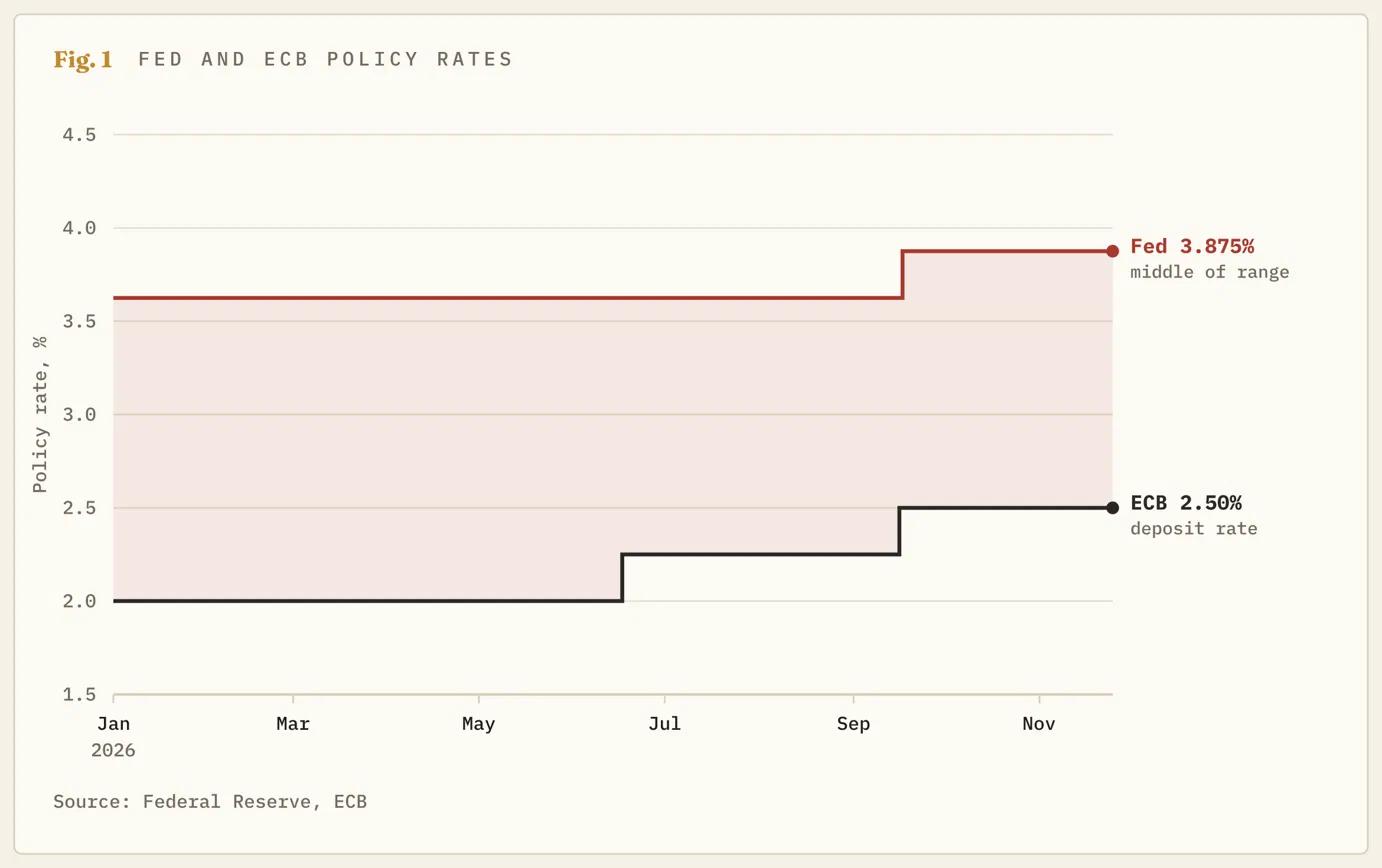
Against the Euro, that gap is about 1.4 points, measured from the middle of the Fed's range to the 2.50% the ECB pays on deposits, its main rate. The Euro also makes up 57.6% of the index, so a Dollar index is in practice mostly the Euro's exchange rate turned upside down. In November, the Euro has fallen to its lowest of 2026.
From mid-November, a second kind of buyer joined in. Shares in artificial intelligence companies sold off, and the Nasdaq index of US technology shares posted its biggest weekly fall since March 2020. Investors moved into Dollars and US government bonds for safety. That buying helped lift the index to Monday's high, and it's a different kind of support from the first because it lasts only as long as the fear does.
A hot number with nothing left to move
Wednesday's report gave Dollar buyers the headline they wanted. Core inflation, which leaves out food and energy, came in at 3.3% for the year to October on the Fed's chosen gauge, the Personal Consumption Expenditures Price Index (PCE). That was above the 3.2% forecast and the highest since November 2023. A currency moves on news that changes what traders expect, though, and this report changed very little.
Part of the reason may be what the inflation is made of. Since the war with Iran began in late February, most of the rise has come from gasoline, airfares, and computers, and a rate hike does little to address any of them.
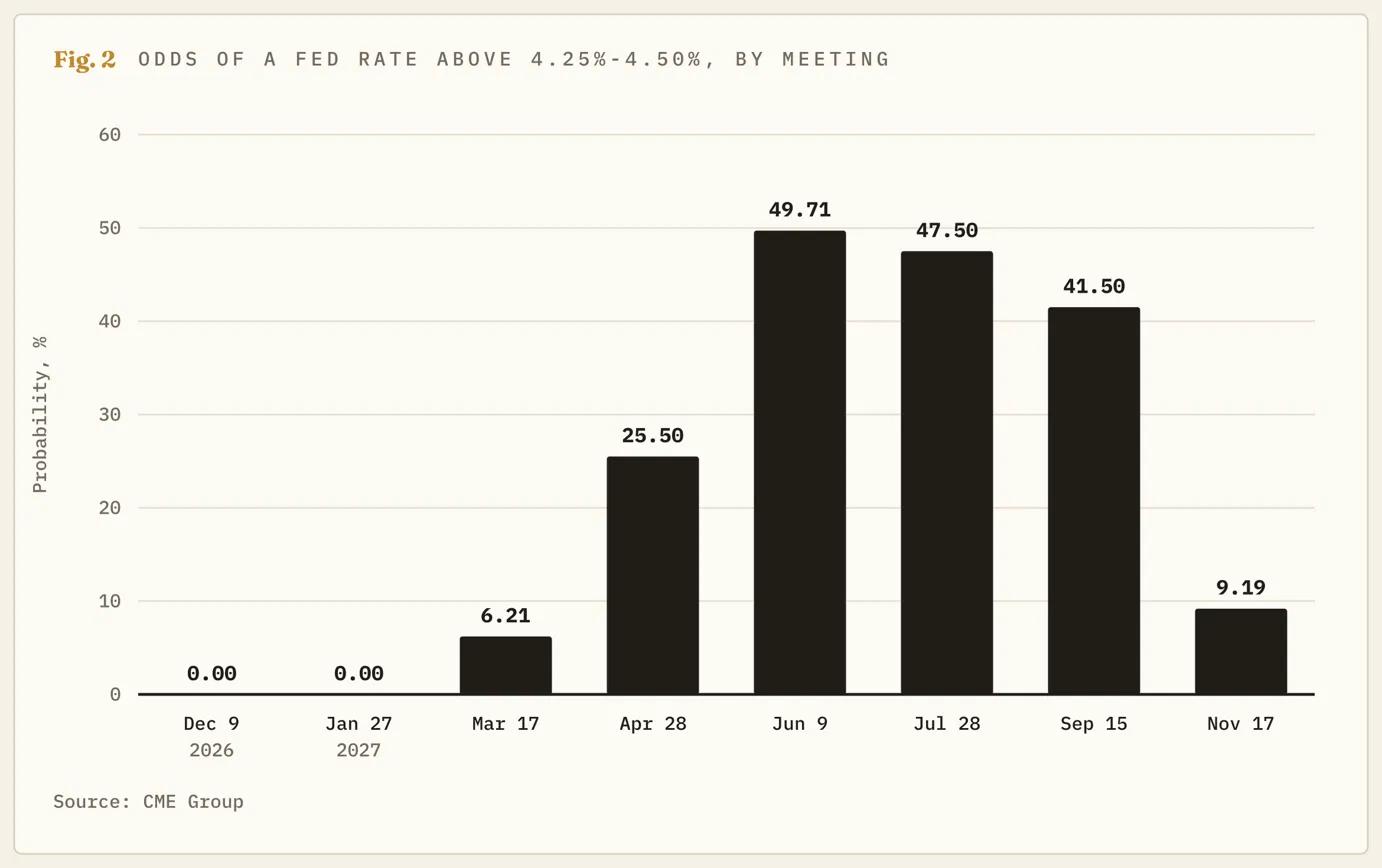
After the report, CME Group's FedWatch tool, which calculates odds from futures prices, shows a 94.09% chance that the Fed will raise its rate by a quarter-point on December 9. Traders also treat a second hike as certain by March 17, which would take the Fed's rate to 4.25%-4.50%. A third hike has a 49.71% chance by June, yet traders see only a 9.19% chance the rate is still above 4.25%-4.50% in November 2027. In effect, traders expect two more hikes and have priced the third to be gone within five months of arriving.
Bond yields show the same ceiling. The two-year Treasury yield, the rate the US government pays to borrow for two years, follows where traders think the Fed's rate is heading. It peaked at 4.92% on September 28 and was 4.63% on Monday, the day the index made its high. Over those eight weeks, the index gained about three points while the yield that is supposed to be driving it fell by more than a quarter of a point. That leaves safety buying holding up more of the rally than rate bets.
A lot of traders already own it
The other limit on the rally is the number of people already in it. In the week to November 17, speculators in the futures market had $33.1 billion more riding on a stronger Dollar than on a weaker one. The figures come from the Commodity Futures Trading Commission (CFTC), the US regulator that publishes them weekly. In early November, their bet against the Euro was the largest since January 2016, against a currency whose central bank is expected to raise rates on December 17.
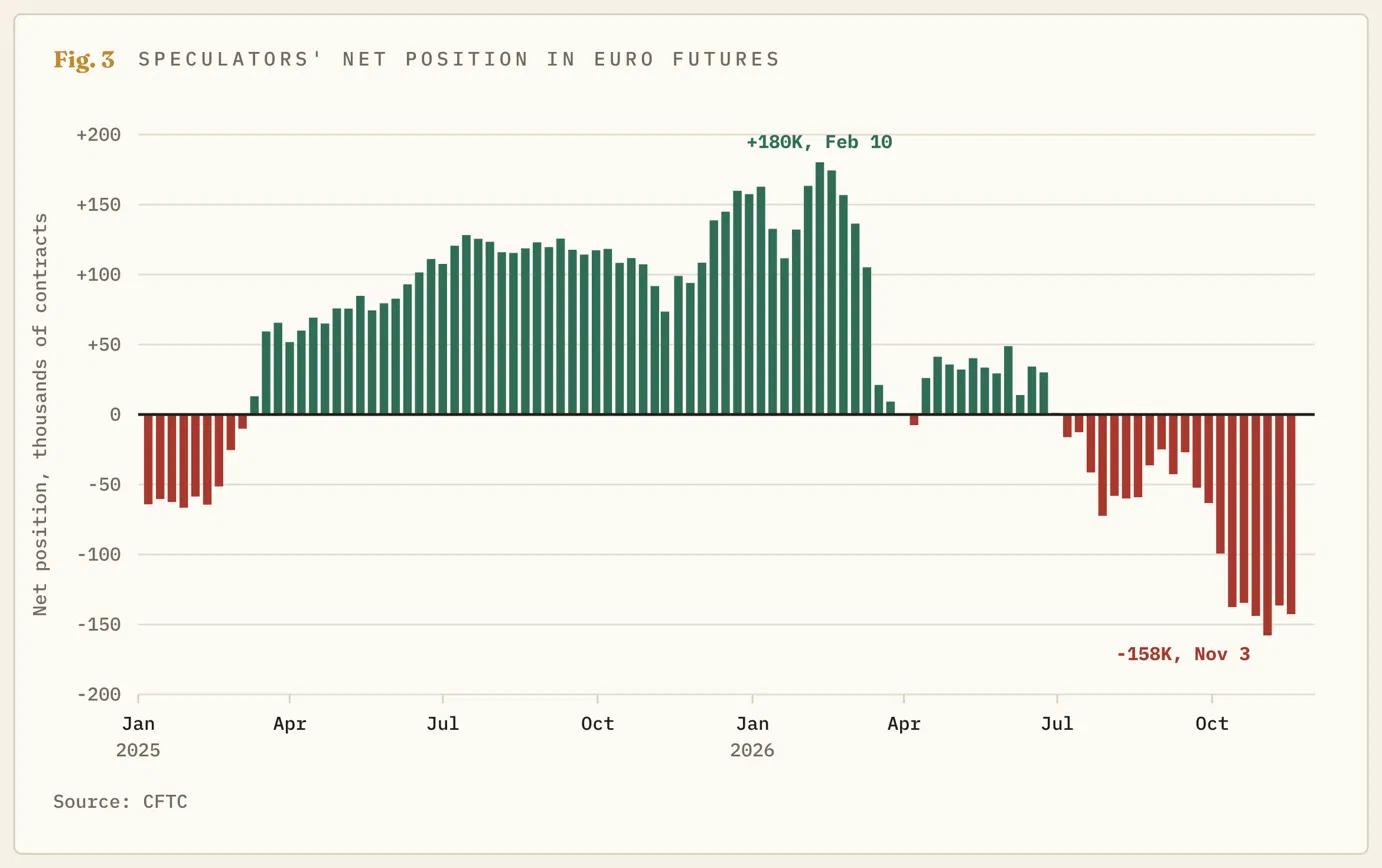
For the Dollar, a crowd that size cuts both ways. Everyone who has already bought is a buyer the rally can no longer count on, and each is a potential seller if the news disappoints. Getting out of a bet against the Euro means buying Euros, which pushes the index down. With that in mind, some bank analysts described the move to Monday's high as overdone and said they expected it to mark the top until the Fed decides.
On the daily chart, the picture is similar. The index is trading well above its average price over both the past 50 days and the past 200. The Stochastic Relative Strength Index (Stoch RSI), a momentum gauge, is also back at readings it last showed in early October. Shortly after that, the index stalled and gave back part of its gains over the following three weeks.
Two hikes eight days apart would leave the gap where it was
December 9 is where the rate support gets tested. Traders have pencilled in a quarter-point hike, and if it comes with no signal about January, it would likely do little for the Dollar. Eight days later, the ECB meets, and traders see a better-than-four-in-five chance it raises its deposit rate to 2.75%. If both hike, the gap between them would be back where it started.
For the gap to widen, the Fed would have to do something traders haven't priced. A clear signal that January brings another hike would qualify, as would forecasts from Fed officials, published with the decision, showing rates peaking above 4.25%-4.50%. In either case, the two-year yield would likely turn back up toward its September peak, and the rally would have its original support again.
Before then, the jobs report for November arrives on December 4, and a strong one would raise the odds of that signal. For now, the lean stays with the Dollar near its highs, so long as US rates remain well above Europe's and investors stay nervous about stocks. That lean breaks if December 9 brings a hike and a clear signal to wait, or if stocks steady and the safety buyers leave. Either outcome would show how much of the $33.1 billion in bets was placed on the rate gap and how much on shelter.
Author
Joshua Gibson
FXStreet
Joshua joins the FXStreet team as an Economics and Finance double major from Vancouver Island University with twelve years' experience as an independent trader focusing on technical analysis.

















