What a 3.3% core PCE reading means for a January Fed hike

Core inflation's rise to 3.3% in October makes a December rate hike by the Federal Reserve nearly certain, with a second expected by March. Whether that second hike comes as early as January depends on figures due on December 23.
Traders had all but decided that the Federal Reserve (Fed) would raise interest rates on December 9. October's inflation report, published on Wednesday, gave them no reason to think again. Core prices, which leave out food and energy, rose 3.3% from a year earlier on the measure the Fed targets, the Personal Consumption Expenditures Price Index (PCE). Economists had forecast a 3.2% rise. It was the last inflation report the Fed will see before that meeting, and it arrived with the decision already priced.
CME Group's FedWatch tool, which turns futures prices into probabilities, puts the odds of a quarter-point hike on December 9 at 94.09% after the report. A hike would take the Fed's rate from 3.75%-4.00% to 4.00%-4.25%. The same tool puts the chance of a second hike at 51.5% by January 27 and 100% by March 17. So traders agree another increase will follow December's, and they're split almost evenly on when.
A two-tenths jump that was closer to one
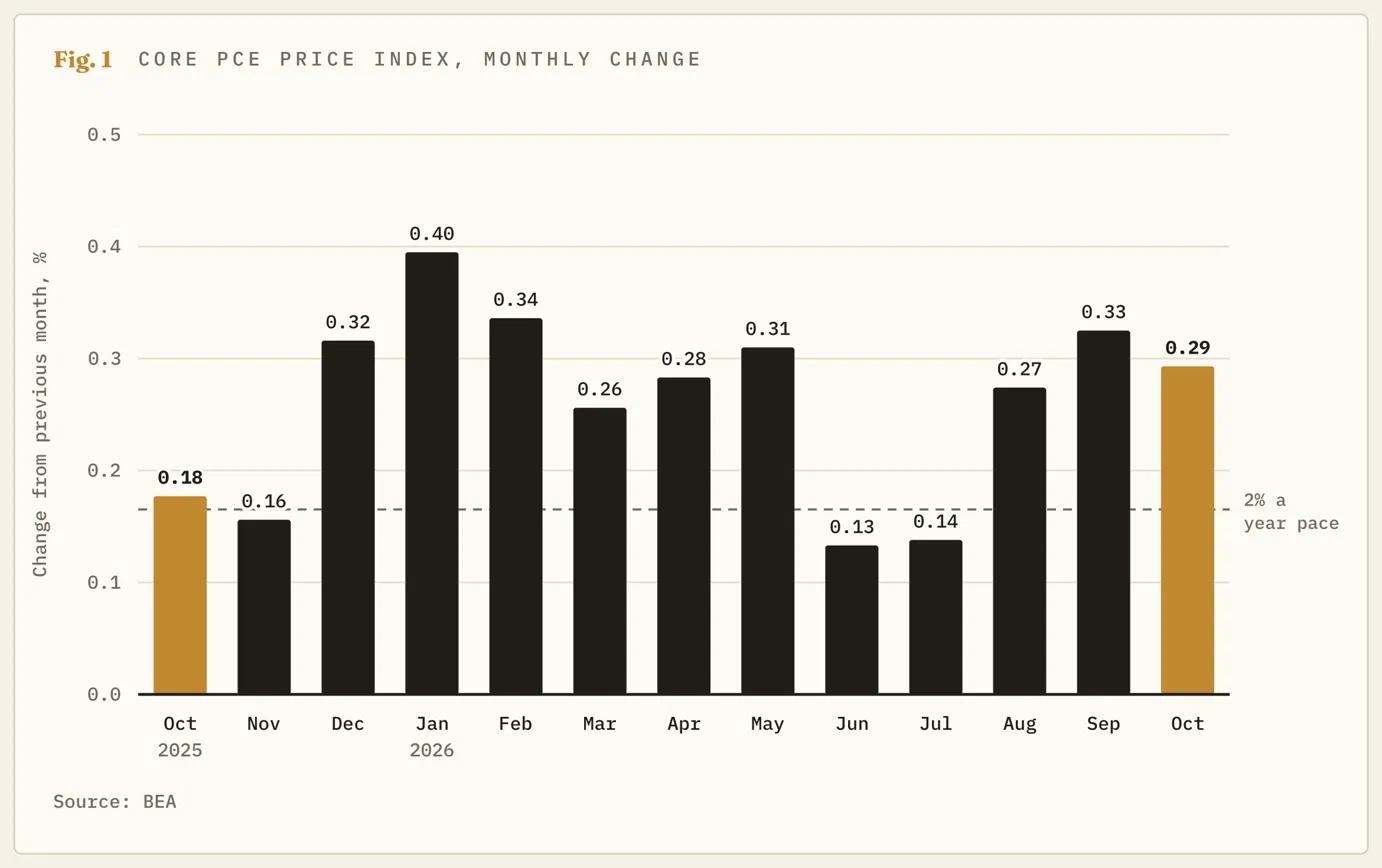
The yearly figure is what made the report look hot. Core inflation was 3.1% in September and 3.3% in October, the highest since November 2023. Measured from one month to the next, though, core prices rose 0.3%, which economists forecast and which matches September.
Behind that difference is the way a yearly rate is put together. Each month the newest reading goes in and the one from twelve months earlier drops out, so the yearly rate can climb without prices speeding up at all. The month that dropped out this time was October 2025, when a government shutdown stopped price collection and the estimated rise in core prices was only 0.18%. Swapping that month for this October's moved the yearly rate up by 0.12 of a point, and rounding turned that into a jump from 3.1% to 3.3%.
For the Fed, the 3.3% was not a surprise either. Fed Vice Chair for Supervision Michelle Bowman said earlier in November that she expected October's core rate to come in at about that level. Traders looking for a reason to bet on January needed a number the Fed hadn't seen coming. The figure that beat Wall Street's forecast had already been given out by a Fed official.
Fuel, flights and computers did most of the lifting
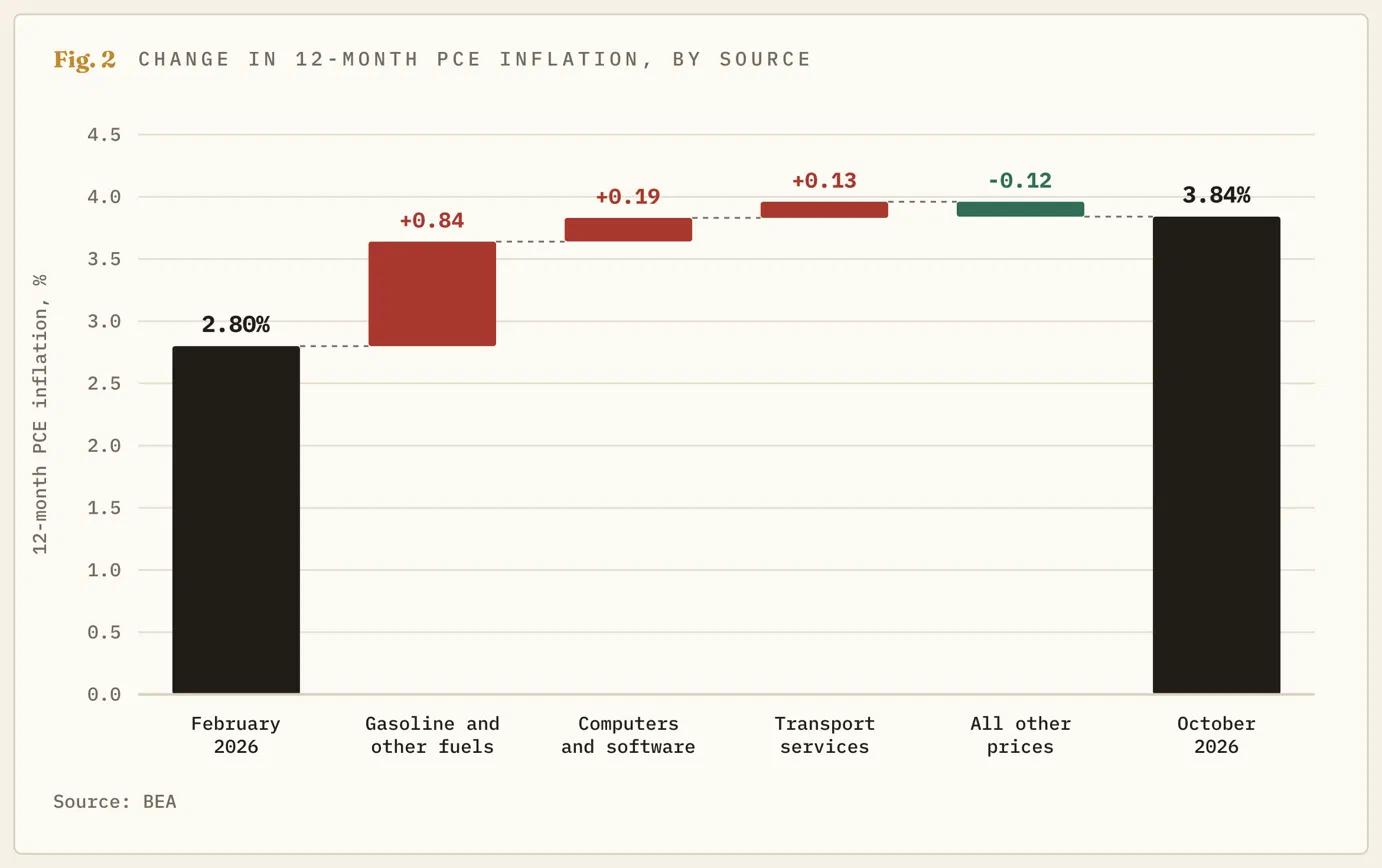
Inflation has been climbing since February, the last month before US and Israeli strikes on Iran started a war. The detailed tables from the Bureau of Economic Analysis (BEA), which compiles the PCE, show where the climb came from. The full inflation rate, which includes food and energy, rose from 2.8% to 3.8% over those eight months. Gasoline and other fuels, up 38% from a year earlier, account for about four-fifths of the increase.
Inside the core measure, the pattern is narrower still. Core inflation rose from 3% to 3.3% over the same period, and two groups of prices explain it all. One is transport services, led by airfares running 14.4% above a year earlier, and the other is computers and software, up 14.6%. Together they make up about 5% of household spending, and with both taken out, core inflation would be about 2.9%, slightly lower than in February. Computer prices have a cause of their own, which is that data centres built for artificial intelligence are buying up memory chips.
Transport is the part that leads back to the war. Jet fuel cost about 91% more in October than before the fighting started, and core prices have moved with the conflict since it began. They rose about 0.3% a month from March to May, then slowed to under 0.15% in June and July as a ceasefire took oil back to its pre-war price. From August, after US strikes resumed, they returned to 0.3%.
For January, that link is a reason to wait, because a rate hike can't lower the price of jet fuel. The price had already dropped by nearly a fifth between late October and mid-November.
October's rise came from somewhere else
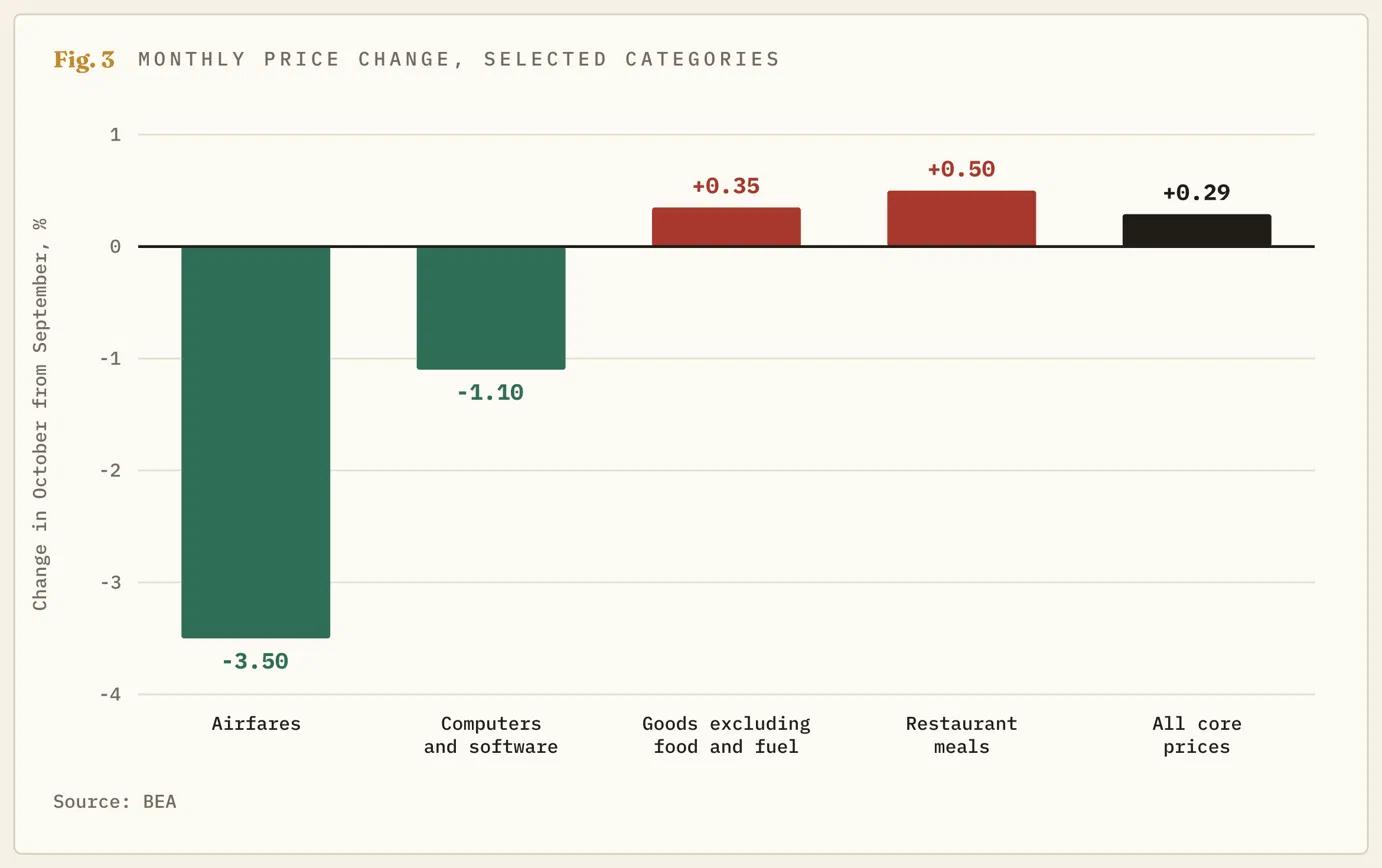
If fuel and chips were the whole story, October should have been mild. Airfares fell 3.5%, and computer and software prices fell 1.1%, and core prices still rose 0.3%. The increase came instead from restaurant meals, up 0.5% in their largest monthly rise of 2026, and from goods other than food and fuel, which had their largest since February.
So the pressure has started to show up in prices that have little to do with oil or chips, and that is the argument for January. Fed Governor Christopher Waller said on November 18 that inflation was heading the wrong way and spreading out. He argued that a quarter-point hike in December would need to be paired with a signal of another in January, and that a half-point hike would probably be necessary without one. New York Fed President John Williams said on Monday that he wouldn't rule out back-to-back hikes.
On pace alone, they have a case. The Fed aims for 2% inflation a year, or about 0.17% a month, and core prices have risen about 0.3% in each of the past three months. October matched the forecast and ran at nearly twice the pace the target allows, which says more about the forecast than about October.
More income, and nothing more bought with it
The case against January is in the other half of the same report. Personal income rose 0.7% in October, well above the 0.4% forecast, while spending rose 0.3% and missed its own 0.4% forecast. Once rising prices are taken out, households bought slightly less than in September, a fall small enough that the BEA rounds it to no change.
Much of the extra income was a one-off, as it turns out. The BEA said the rise in government benefits mainly reflected one-time Medicare premium rebates, and households kept the money. The saving rate, the share of after-tax income that isn't spent, rose to 4.1% from 3.6%. A rate hike is meant to slow spending, and spending stopped growing in a month when the Fed didn't raise rates.
Then there is the stock market, which has fallen hard since mid-November. The Nasdaq, the main index of US technology shares, had its worst week since March 2020 in the week to November 20. Traders have since dropped their bets on a half-point hike in December, which FedWatch now gives no chance at all. Falling share prices do some of the Fed's work, because people who feel poorer spend less. An official weighing a second hike seven weeks after the first could count that as a reason to wait.
January gets its answer in December
December 9 is the first test, and what the Fed says that day will matter more than it does now. Traders have pencilled in the quarter-point, so a hike that comes with no word on January would likely leave the odds near even. Fed Chair Kevin Warsh has argued against telling markets what comes next, while Governor Waller has gone on television to ask for that kind of signal. In practice, the closest substitute would be the rate forecasts each official publishes with the decision.
After that meeting, the data take over. November's consumer price figures arrive on December 10, the day after the decision, so the Fed will vote without them. Then, on December 23, comes the next PCE report, and the calendar has already tilted it. November 2025 was another weak month, at 0.16%, so a fourth straight 0.3% rise would lift the yearly core rate to about 3.4%.
From there, the two paths would be easy to tell apart. A 3.4% reading that again comes from outside fuel and flights would give the officials arguing for January their best evidence. If spending has started growing again as well, the odds would likely move well above even. A core rise of 0.2% would hold the yearly rate at 3.3%, and that or another month of flat spending would instead point to March. By then the Fed will be publishing new forecasts, and traders already treat a hike as certain. The 3.3% reading made a second hike the expectation, and it left the date to the report that follows it.
Author
Joshua Gibson
FXStreet
Joshua joins the FXStreet team as an Economics and Finance double major from Vancouver Island University with twelve years' experience as an independent trader focusing on technical analysis.

















