The president who cried peace
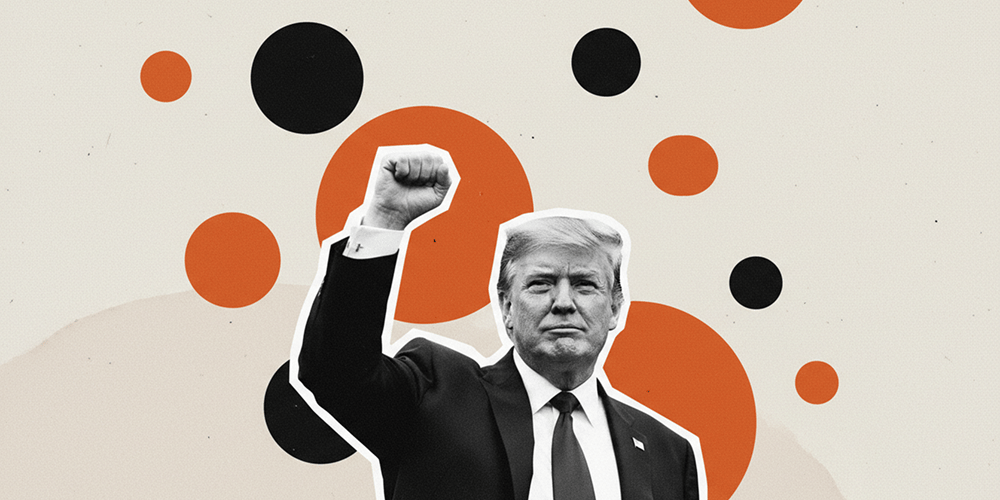
With Trump’s latest pronouncement that an agreement with Iran had been “largely negotiated,” I’m reminded of the story of the boy who cried wolf. I had to go back and refresh my memory, so to save you the trouble…. A shepherd boy who was minding his master’s sheep thought it would be fun to cry “wolf” as a joke, expecting the townsfolk to drop what they were doing and come to his aid. He did it not once, but twice. He thought it was funny; the villagers did not. Shortly after, a real wolf did show up. By that time, however, the trust of the community had been broken; and when the shepherd boy cried wolf this time, he was ignored.
Forgive me if I don’t break out the champagne when Trump announces what he’d like us to believe is an imminent solution to the war with Iran. He has lied to us so often, virtually nothing he says can be trusted. I’ll believe a negotiated settlement when the documents are signed. Until then, Trump ought to keep his mouth shut. His announcements only serve to increase price volatility in critical markets. Given the realities and uncertainties underlying this conflict, Trump’s latest pronouncements harken back to Neville Chamberlain claim that he expected “peace for our time” after meeting with Hitler. Trump’s announcement notwithstanding, that outcome doesn’t seem likely any time soon.
I expect the latest announcement to push the price of oil and other key commodities lower in the short run, only to ratchet back up when the optimism from the announcement fails to be realized. The timing of these price moves, however, is anything but certain. I assign a higher probability, though, to the prospect of higher volatility, which discourages investment activity and feeds through to lower production, fewer purchasing opportunities for consumers, and higher prices — i.e., more bad economic consequences, courtesy of Trump.
Besides that, Trump’s announcements of this ilk open the door for corruption. I wrote earlier about how the oil futures market had appeared to anticipate a coming announcement with similar optimistic implications for the war with Iran (see “When Presidents Move Markets”), and since then we’ve seen credible allegations that Trump had explicitly used his platform to promote stocks that he had just recently purchased. (See AP, USA Today, and Yahoo, for a sampling.) The level of corruption by Trump has never been seen before under any other president; but, somehow, with Trump, nothing is off the table. Every utterance creates the potential for market manipulation and self-dealing.
Speaking of which, it goes from bad to worse. First, the DOJ fails to 86 the bogus, unprecedented Trump suit seeking $10 billion — that’s billion! — for damages stemming from the release of Trump’s tax returns. Common sense challenges the legitimacy of this claim and, certainly, the appropriateness of the dollar amount that Trump was seeking. Every other president in modern times has released his tax returns in a timely fashion. Trump has resisted and makes the absurd claim that the release was damaging to him to the tune of $10 billion. Anyone taking this claim seriously deserves ridicule and derision. The fact that the DOJ failed to respond appropriately is a stain on that agency.
Rather than tossing this suit due to its lack of merit, the DOJ “settled” by proposing the legally dubious creation of a slush fund or thug fund (however you want to call it), to pay off Trump loyalists, many of whom seem likely to have been found guilty of participating in the January 6th assault on the Capitol. “Legally dubious” is a gross understatement. Title 18 of the U.S. Criminal Code §2339A expressly makes it a felony to pay or support people who’ve committed seditious conspiracy, destruction of government property, violence against federal officers, or conspiracy to impede federal functions. It’s only “legally dubious” because the DOJ appears not to be constrained by the wording of this straightforward provision of the criminal code.
Subsequent to the release of this “agreement, the DOJ added a cherry on top by issuing an amendment to immunize Trump, his family members, and his business enterprises from any prospect of future audit by the IRS. So much for the old adage that no man is above the law. That one is dead and gone — hopefully to be resurrected under a different president, Congress, and Supreme Court, but unlikely to be reversed anytime soon.
The complicity of the DOJ in furthering Trump’s authoritarian tendencies is mind-blowing; but as disturbing as it is, no one should be surprised. The transition of the DOJ has been developing in plain sight. Justice Connection tracks actions the Trump administration has taken to the detriment of the DOJ’s mission. It published a listing of 450 such actions or decisions from the start of Trump’s second term through April of this year. The listing is a firehose of developments. Take a look.
Trump supporters who dismiss this list of actions and decisions or consider them to be justifiable efforts to reform an out-of-control Justice Department with a vendetta against Trump have a distorted view of history. Trump bears responsibility for his own actions. Congress is obliged to investigate possible misconduct on the part of the President and the executive branch, and any resulting sanctions or consequences that arose in that regard during prior administrations did so as a function of legitimate government institutions operating within the limits of the law. Whatever weaponizing of the Justice Department that may have occurred during prior administrations pales in comparison to the selective and vindictive policies that the current Justice Department has implemented and plans to implement.
Trump has hollowed out the DOJ leaving loyalists dominating positions of responsibility; and these people have sold their souls. They’ve abandoned any pretense of objectivity as well as their commitments to the Constitution. May they suffer the consequences, and the sooner the better.
Author
_Profile.jpg)
Ira Kawaller
Derivatives Litigation Services, LLC
Ira Kawaller is the principal and founder of Derivatives Litigation Services.