The Pound is pressured not by politics, but by a strong US Dollar
The GBP/USD pair fell to 1.3193 on Wednesday. The British pound came under pressure amid a stronger US dollar and political uncertainty in the UK following the announcement of Prime Minister Keir Starmer’s resignation.
Andy Burnham is considered the main contender for the post of head of government and has already received support from several influential figures within the ruling party. Markets are generally taking the prospect of his appointment positively, as investors expect a smooth transfer of power without serious shocks to the economy or financial markets.
The appointment of a new finance minister also remains in focus. Wes Streeting is seen as the favourite for the role. Market participants view him as a more predictable and business-friendly candidate.
Weak macroeconomic data added further pressure on the pound. According to S&P Global, business activity in the UK contracted in June at the fastest pace since April 2025. The composite PMI fell below the 50-point mark, signalling a decline in economic activity. The services sector posted its weakest performance since early 2023.
Against this backdrop, the pound declined against the US dollar, while showing little change against the euro. Investors are assessing the prospects of the new political team and its ability to support the economy. Meanwhile, the UK economy remains close to stagnation.
Technical analysis
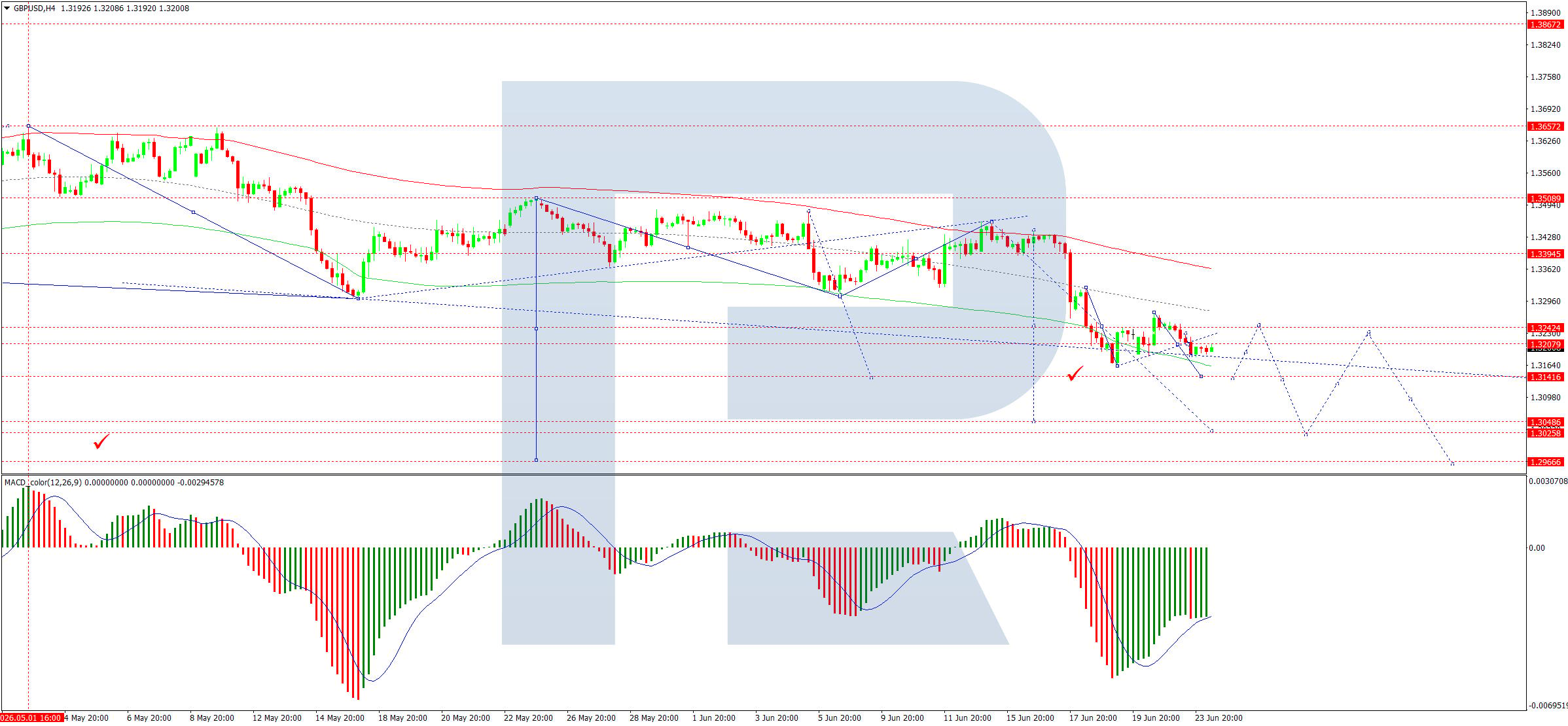
On the H4 chart of GBP/USD, the market completed a downward wave to 1.3185. We expect a growth phase towards 1.3200. In practice, a wide consolidation range is forming below this level.
If the pair breaks out of the range to the upside, the potential will open for the wave to continue towards 1.3240. If the pair breaks out to the downside, the potential will open for a continuation of the decline towards 1.3140.
Technically, this scenario is confirmed by the MACD indicator. Its signal line is below the zero mark and is pointing firmly downwards.
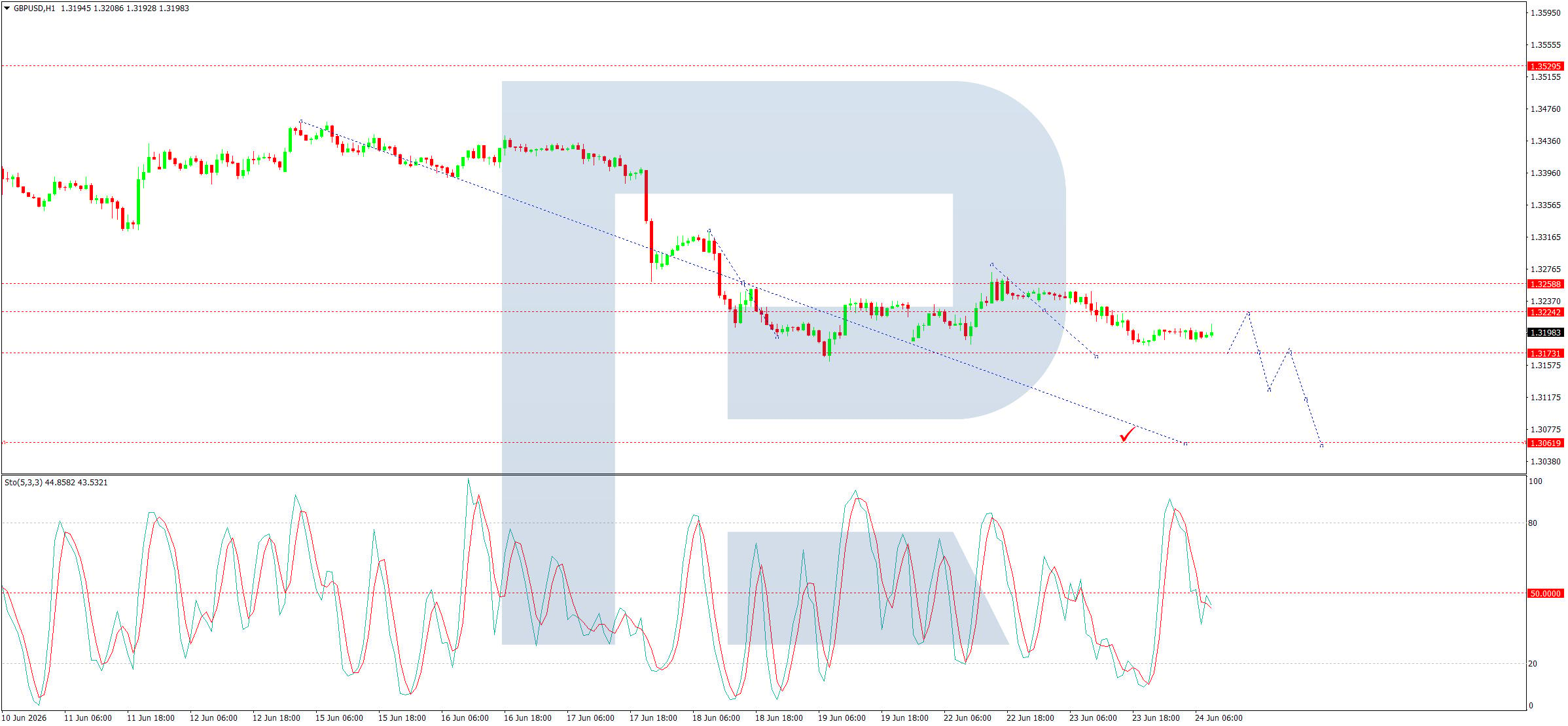
On the H1 chart, GBP/USD has formed a compact consolidation range around 1.3222. At the moment, the range has expanded downwards to 1.3185. Further growth towards 1.3200 is expected, followed by a decline to 1.3140.
The Stochastic oscillator also supports this scenario. Its signal line is below 50 and is pointing firmly downwards towards 20.
Author

RoboForex Analysis Department
RoboForex
RoboForex Analysis Department provides timely market insights, expert technical analysis, and actionable forecasts across forex, commodities, indices, and equities.