The next big AI trade may not be about chips or software
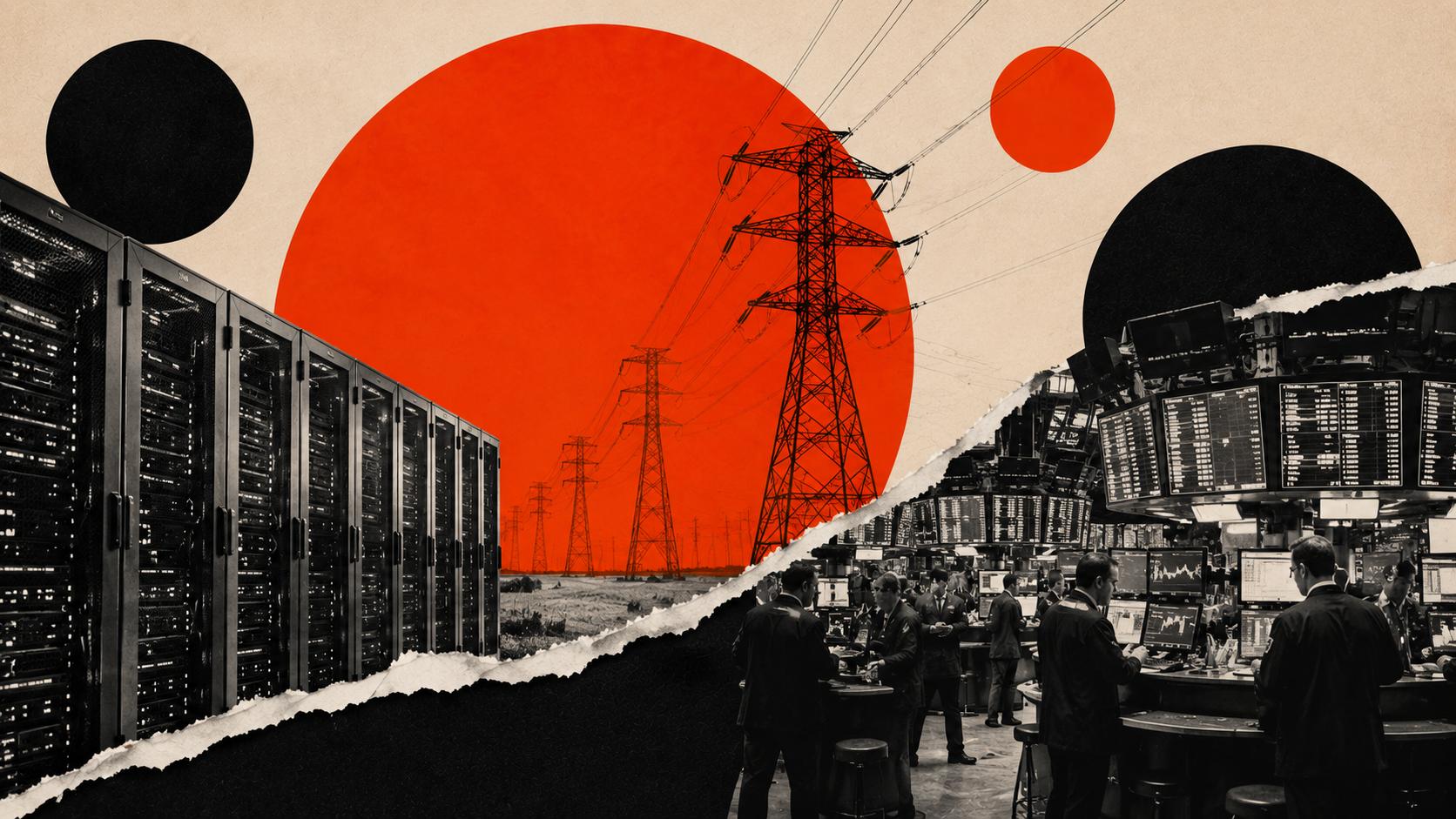
Artificial intelligence has already created some of the biggest winners in modern market history.
Chipmakers have surged, data centre construction is booming, and electricity demand forecasts are changing globally.
Yet a growing number of investors believe the next opportunity may not be AI itself but rather the emergence of a market around the resource that powers it: compute.
The concept is still unfamiliar to many outside the technology industry, but some analysts are already comparing its potential evolution to the development of electricity, oil and even carbon markets.
If they are right, compute futures could eventually become one of the most important financial innovations of the AI era.
What are compute futures?
To understand compute futures, it helps to start with a simple question: what is the most important raw material for artificial intelligence?
Many people would answer semiconductors. Others might say electricity.
The reality is that both are simply inputs into a broader resource known as compute, the processing power required to train and run AI models. Every chatbot interaction, image generation request or large language model training session consumes compute capacity.
As demand for AI applications explodes, access to that capacity is becoming increasingly valuable.
A compute futures contract would allow companies to lock in future access to computing resources at a predetermined price, much like airlines hedge fuel costs or utilities hedge electricity prices.
In simple terms, firms would be able to buy tomorrow's computing power today.
Why investors are paying attention
The AI industry is facing a challenge that commodity markets know very well: scarcity.
Demand for advanced computing power has surged far faster than supply. Training cutting-edge AI models can require tens of thousands of specialised processors running around the clock. At the same time, data centre construction, power infrastructure and chip manufacturing all face capacity constraints.
The result is a growing mismatch between supply and demand.
Whenever markets face persistent shortages, financial tools designed to hedge future prices often follow.
That is precisely how futures markets emerged for oil, natural gas, electricity and agricultural products. Compute may simply be the next resource heading down the same path.
The real investment opportunity
Most investors instinctively focus on AI software companies. The more interesting question may be who benefits if compute itself becomes a tradeable commodity.
The answer extends well beyond the companies building chatbots.
The chip giants
The most obvious beneficiaries remain semiconductor producers.
Companies such as NVIDIA have become the backbone of the AI revolution because their graphics processing units, or GPUs, power much of today's AI infrastructure.
If demand for compute continues to rise, demand for the hardware that enables it is likely to remain strong.
But investors should remember that chipmakers are already among the most widely owned and heavily valued AI plays in the market.
The hyperscalers
The technology giants operating the world's largest cloud infrastructure often receive less attention.
Amazon, Microsoft and Alphabet increasingly resemble landlords in the digital economy. Rather than simply selling software, they rent access to enormous pools of computing resources.
As AI adoption expands, these firms could emerge as some of the largest suppliers of compute capacity globally. In effect, they may end up owning the digital equivalent of power plants.
Data centres
Perhaps the most direct beneficiaries are data centre operators.
Every new AI model requires physical infrastructure: buildings, cooling systems, networking equipment and vast quantities of electricity. The AI boom has triggered a global race to build more capacity, with many investors comparing data centres to the railroads and pipelines of previous industrial revolutions.
If compute becomes increasingly valuable, the facilities that house it may become equally important.
The overlooked winner: Electricity
One of the most intriguing implications of the AI revolution may lie outside technology altogether.
AI requires enormous amounts of power. Data centres are already among the largest electricity consumers in many regions, and future demand projections continue to rise sharply.
That has brought renewed attention to utility companies, power generation firms and even nuclear energy developers.
In many respects, AI is not only a technology story. It is also an energy story.
Could compute become the next commodity?
Sceptics argue that compute is too complex and too difficult to standardise, making it unlikely to become a mainstream futures market.
That may prove true.
A barrel of oil is relatively easy to define. Compute varies according to hardware specifications, energy efficiency and performance characteristics.
Yet similar doubts once surrounded electricity markets, which today represent trillions of dollars in annual trading activity.
The key question is not whether compute looks like a traditional commodity today. The question is whether it becomes indispensable enough to require financial tools that help buyers and sellers manage future price risk.
If the answer is yes, the market's centre of gravity could shift from AI applications to the infrastructure that supports them.
The bottom line
The first generation of AI winners focused on software and semiconductors.
The next phase may be about infrastructure.
Whether compute futures ultimately become a major asset class remains uncertain. What appears increasingly clear, however, is that access to computing power is becoming one of the most valuable resources in the global economy.
Investors searching for the next chapter of the AI story may need to look beyond chatbots and algorithms, because a bigger opportunity could lie in the companies building, supplying and powering the digital factories of the future.
Author

Pablo Piovano
FXStreet
Born and bred in Argentina, Pablo has been carrying on with his passion for FX markets and trading since his first college years.