The Iran war may be over, inflation is definitely not
Euphoria. That’s the best way to describe the market reaction to Tuesday's headlines about the US-Iran two-week ceasefire. But deeper knowledge of the situation and reading between the lines, the “agreement” shows the truce is as fragile as it could be, and fulfilled with conditions yet to be met by all parties.
US President Donald Trump announced the ceasefire on Truth Social, subject to the reopening of the Strait of Hormuz. The critical sea bottleneck, however, remains closed. Iran could reopen it on Thursday or Friday, according to a senior Iranian official, ahead of a planned meeting between the US and Tehran in Pakistan. Not to mention, back-and-forth attacks in the Middle East continue. Despite the ceasefire, Israel clarified that operations against Hezbollah in Lebanon will continue.
Iran's demands are not workable
President Trump also noted that a ten-point proposal from Iran is a “workable basis on which to negotiate”.
Still, Iran demands border delusion, as the country pretty much wants to continue with its nuclear enrichment program, control and fee the Strait of Hormuz, the lifting of all sanctions, the withdrawal of US combat forces from all bases in the region, and full compensation for the damages suffered during the war. There’s no way the US will agree to any of that.
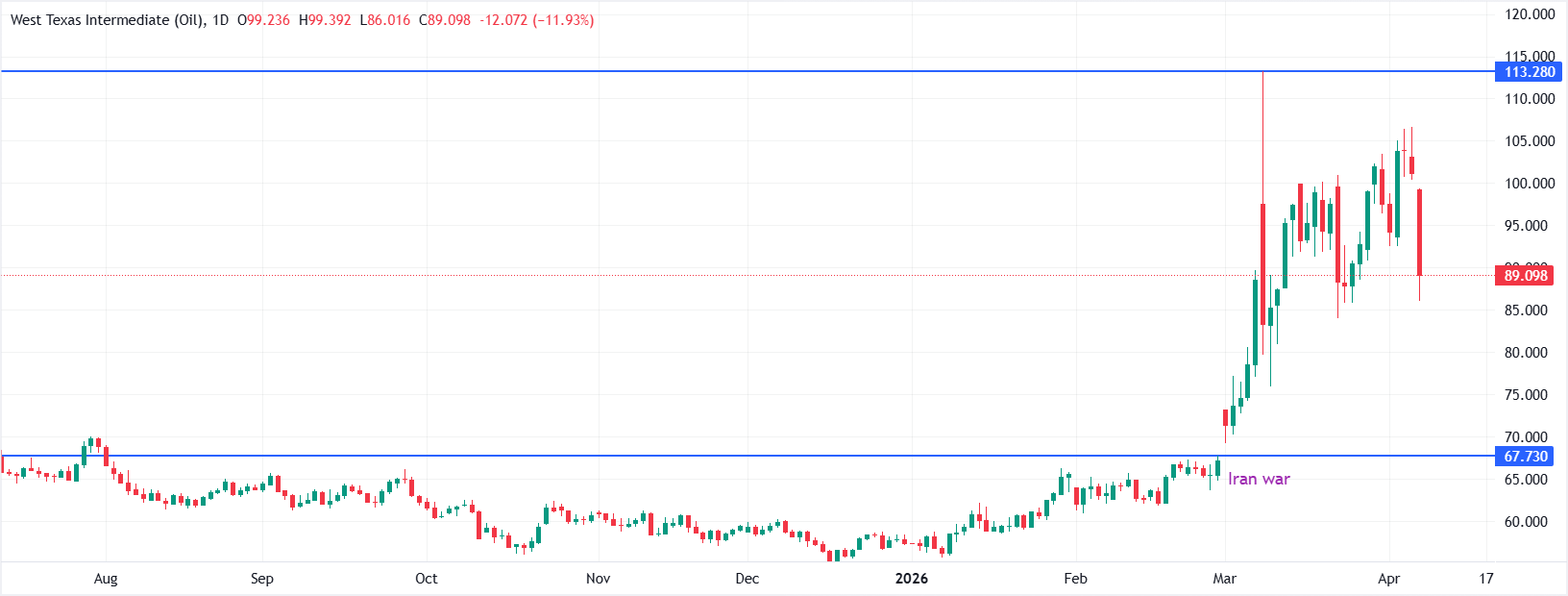
Meanwhile, the barrel of West Texas Intermediate Crude Oil fell from around $106 to around $85 with the headlines. Markets cheered the decline, and global stocks soared. However, the WTI barrel was around $65 before the war started. That means that the price is roughly still 35% higher than it was a month ago.
Beyond higher energy prices, let’s not forget about disruptions that are likely to extend in time. Even if fighting subsides for good, Qatar’s Liquefied Natural Gas (LNG) export capacity has been curtailed by roughly 17%, while several Middle East countries have cut output amid fulfilled storage capacity. Resuming production and delivery, even if there are no more issues around the Strait, would take months.
So, not only do energy prices remain way higher than before the war, but shortages are to continue. This means prices are more likely to go up than down, even if the ceasefire turns into a definitive peace, quite an unlikely scenario at this point. Inflation won’t recede at the pace markets are hoping it will. Most likely, inflation will remain high and continue to rise.
Inflation won’t recede, central banks will hike
Near-term optimism can’t overshadow long-term consequences. And for markets, such consequences are higher inflation and a sudden shift in central banks’ monetary policy paths.
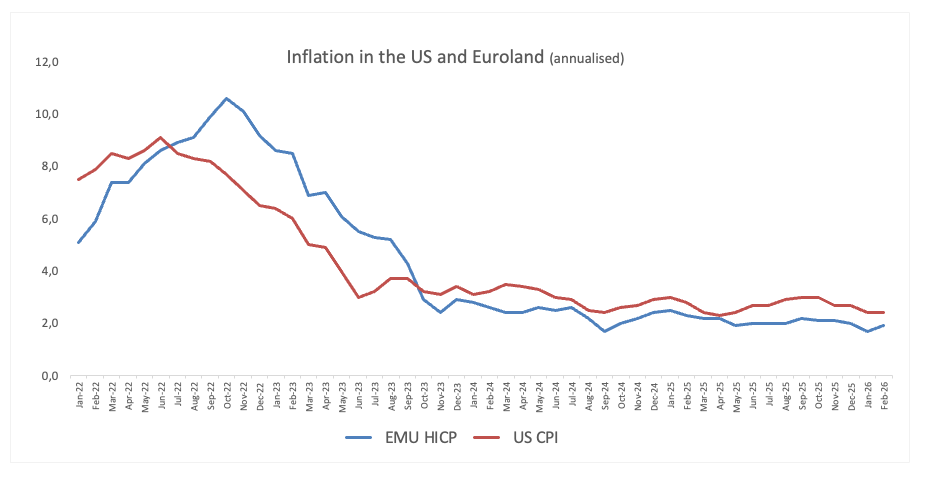
Just for the sake of numbers, it’s worth noting that the Eurozone inflation rose to 2.5% in March. The reading was better than the 2.7% expected, but much higher than the 1.9% posted in February. In the United States, the Consumer Price Index (CPI) is forecast at 3.3% YoY in March, following a 2.4% print in February. Other major economies will report March data in the upcoming days, but the uptrend is widespread.
Source: Reuters
In fact, the Reserve Bank of Australia (RBA) has already proceeded with a rate hike, given stubborn inflationary pressures before the Middle East war began.
Major central banks, including the Federal Reserve (Fed), have adopted a hawkish stance. Odds for rate cuts dilute as data reflect price pressures mounting. Central banks grappling with on-hold stances also warn about remaining vigilant and being ready to act.
Financial markets are breathing a sigh of relief. They shouldn’t.
Author

Valeria Bednarik
FXStreet
Valeria Bednarik was born and lives in Buenos Aires, Argentina. Her passion for math and numbers pushed her into studying economics in her younger years.

















