Strength for the Dollar after higher inflation
Both headline and core inflation in April beat the consensus, reducing the likelihood of the Fed cutting this year.
In the aftermath of 12 May’s data on inflation in the USA, the US dollar has gained at least slightly against all other major currencies while gold has declined slightly. Traders have also concentrated on the probability of a resolution in the Gulf and the ongoing summit between Donald Trump and Xi Jinping in China. This article summarises recent news and data then looks briefly at the charts of EUR/USD and GBP/USD.
Tuesday 12 May’s American inflation was higher than the consensus for both the headline and core figures, with the headline figure rising to a high of about three years:
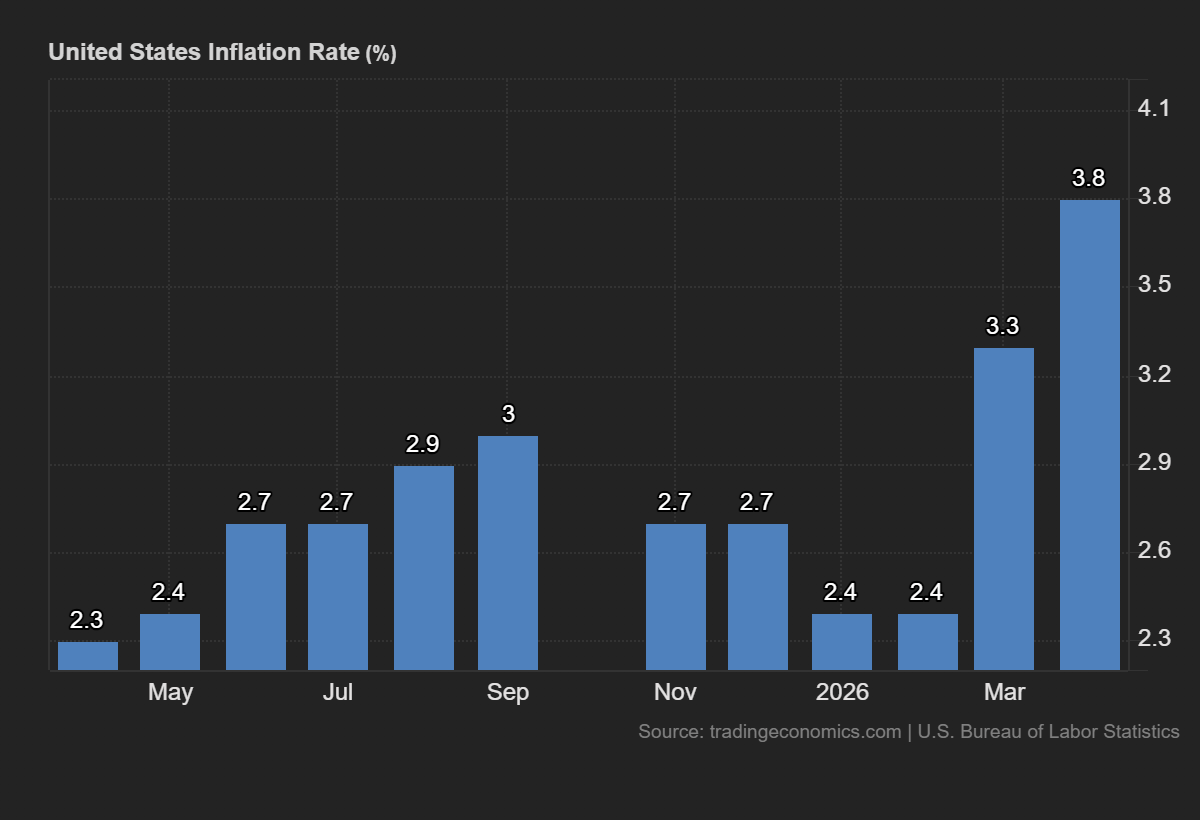
April saw the biggest annual increase in the cost of energy since 2022, which wasn’t a big surprise given the effects of the Gulf conflict on the price of oil. 3.8% annual non-core inflation against 3.6% expected isn’t a huge difference considering the context, but the annual core figure was also slightly higher than expected at 2.8%.
Higher inflation led participants to price out the probability of a cut by the Fed before the end of the year. According to CME FedWatch, the majority of around 66% expects the funds rate to stay at the current 3.5-3.75% until the end of the year. The probability of at least one hike by December has increased to around 32% but there’s no majority expecting at least one hike until April 2027.
A lot could happen between now and then, with the main focus in recent weeks having been on negotiations between the USA and Iran mediated by Pakistan. The American government has threatened Iran with various attacks if it doesn’t agree to transfer or dispose of its enriched uranium and halt further enrichment. This is a primary sticking point in negotiations which seems unlikely to be resolved imminently. However, Israel’s ongoing offensive in Lebanon also complicates the achievement of a lasting peace.
The ongoing summit between the leaders of China and the USA is unlikely to bring much relevant news for the Gulf conflict with the discussions being mainly about Taiwan and trade. Some American politicians have mooted establishing a board of trade with China to resolve issues more fairly while the Chinese government is likely to pressure the Americans into reducing their support for Taiwan; neither of these seem immediately likely to happen, but traders will continue to watch key quotes and summaries from the meetings.
Euro-Dollar back at $1.17 after stronger US inflation
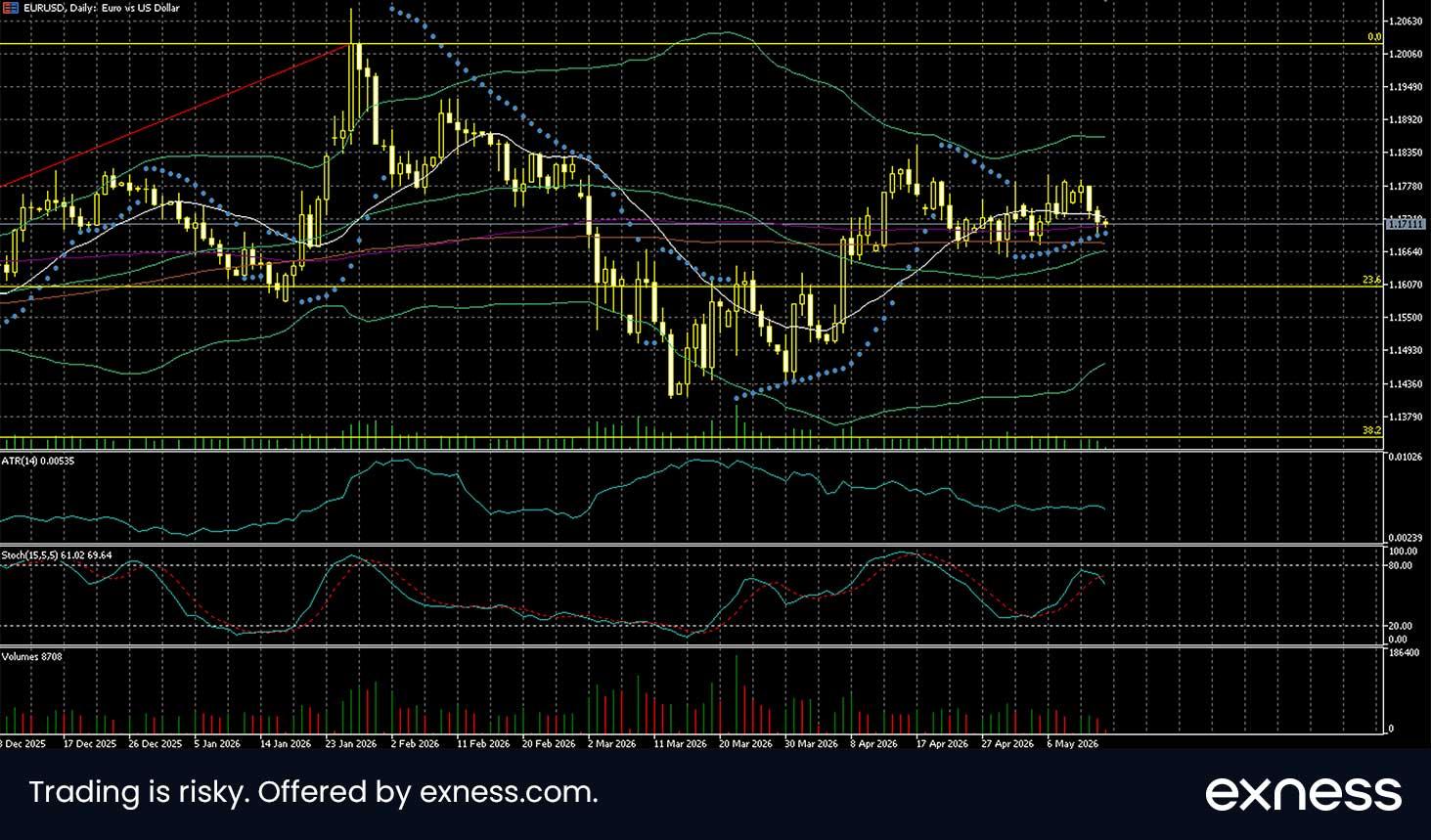
With the ceasefire in the Gulf still looking fragile and American inflation having beaten expectations on 12 May, euro-dollar declined in the aftermath although the likelihood of the ECB hiking rates soon seems to be higher. The consensus for now seems to be three hikes to the deposit facility rate by the end of the year, which would take it to 2.75%, with around an 85% of a hike next month. Meanwhile the probability of a cut by the Fed before the end of 2026 has declined sharply although there’s still a fairly clear majority of participants expecting a hold until next spring.
Volume has been relatively low for most of May so far with the price not currently showing a clear directional trend. The main moving averages on the chart – 20, 50, 100 and 200 – are all bunched closely together with the price currently testing the 100. If it breaks though, the next possibly strong support might be around $1.165. Beyond there, the 23.6% weekly Fibonacci retracement coincides with the psychological area of $1.16.
Given the context and lack of clear signals from saturation or volume, a break back above $1.18 seems very unlikely for now barring some major unexpected news. Traders will probably continue to watch the US-Chinese leaders’ summit and US-Iranian negotiations ahead of the Fed’s minutes on Wednesday 20 May.
Cable under pressure as PM’s control seems weak
Rumbling discontent among Labour’s backbenchers increased significantly after poor results from recent local elections. Although so far only a few junior ministers have quit and nobody has formally challenged Keir Starmer’s leadership, the Health Secretary Wes Streeting has been reported in various sources to have reached the threshold of 80 MPs ready to nominate him for election to leader of the party.
Other potential candidates include Angela Rayner and Andy Burnham although the latter would need to be reelected as an MP before running for leadership of Labour. None of these figures if made Prime Minister would be likely to drive a significant leftward shift in the government’s policies but the British bond market has reacted strongly to the instability. Yields from decade gilts briefly reached 5.1% on 12 May, the highest since the Global Financial Crisis in 2008.
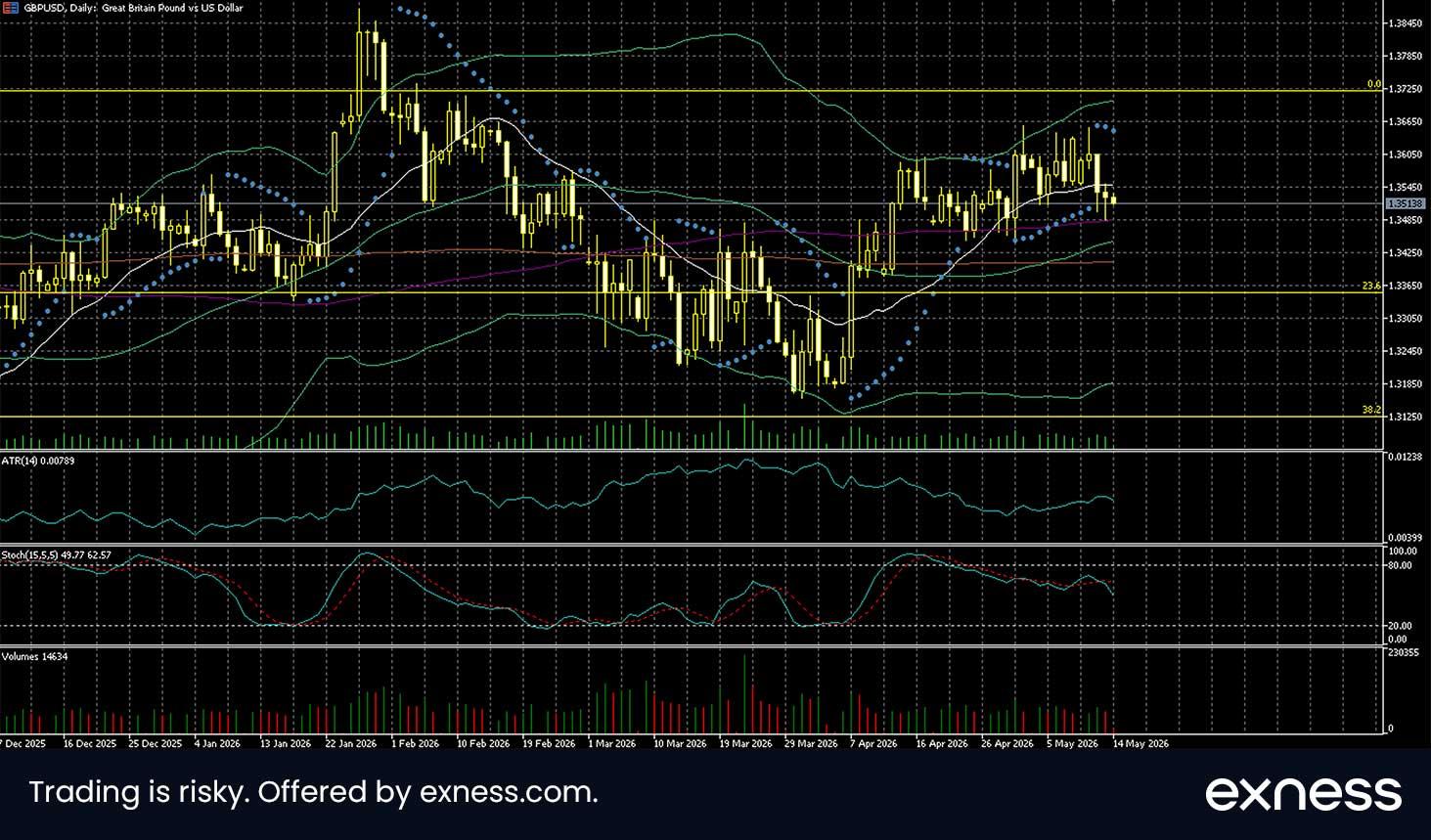
Cable possibly has more room to decline than euro-dollar with volume having declined a bit less so far this month so far and volatility higher. Momentum below $1.35 might lead the price down to the 200 SMA around $1.34. The slow stochastic is almost exactly neutral.
$1.36 is a possible resistance which could cap gains. After British GDP for the first quarter came in much stronger than expected (1.1% compared to the consensus of 0.8%), traders are looking ahead to the British job report on 19 May which is expected to be broadly negative.
Author

Michael Stark
Exness
Michael has been investing since 2007 and trading CFDs since 2013. He favors considering both fundamental and technical analysis where possible, with a focus on swing and position trading.