Silver market still expected to run sixth straight supply deficit in 2026


Higher prices are dragging down silver demand; however, the market will still chart its sixth annual supply deficit.
The Silver Institute projects demand will outstrip supply by 35 million ounces. Last year, the silver market charted a 40.2-million-ounce (1,250.36 tonnes) market deficit.
Earlier this year, the Silver Institute forecast a slightly higher deficit of 46.3 million ounces. Higher prices have created headwinds for industrial demand, while falling prices have softened investment demand.
The projected 2026 supply shortfall will increase the cumulative 6-year deficit to approximately 746 million ounces.
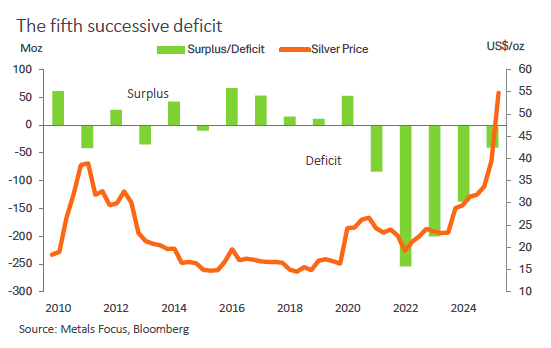
To put that into perspective, analysts expect silver miners to produce 834 million ounces this year.
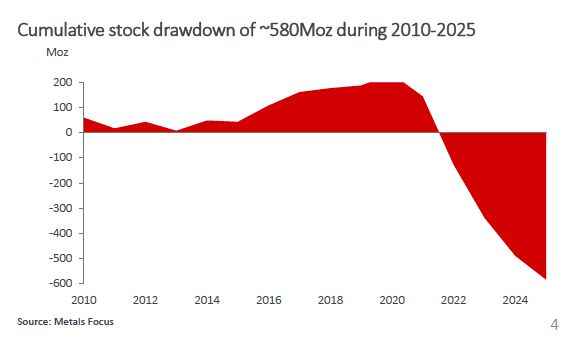
Before this string of successive market deficits, there was a cumulative above-ground stock rise of 243 million ounces between 2010 and 2020. Cumulative silver stocks have declined by 473 million ounces over the last 15 years.
This metal shortage drove two silver squeezes. The first pushed silver to over $50, and the second took it to well over $100.
When silver demand outstrips mining and recycling volumes, users must source silver from existing above-ground stocks. This tends to nudge prices higher, incentivizing holders to release metal into the market.
2026 Silver supply and demand forecast by the numbers
The Silver Institute expects total demand to dip by 5 percent to 1.08 billion ounces this year.
Industrial demand is expected to fall about 3 percent in 2026, despite a 4.5 percent increase in non-photovoltaic offtake. Even so, total industrial demand is expected to hit the fourth-highest level on record at 492 million ounces.
Higher silver prices have put a significant drag on demand for silver in solar panels as manufacturers accelerate thrifting and substitution.
Bar and coin demand is forecast to come in around 215 million ounces, a 2 percent year-on-year decline. However, physical silver investment demand will remain around 13 percent higher than in 2024.
U.S. retail investment is expected to reach its lowest level since 2010.
Indian demand has also fallen off, partly due to increased import duties imposed last summer. Analysts say Indian demand will likely decline around 10 percent this year.
The Silver Institute forecasts that jewelry and silverware demand will decline by 22 percent and 17 percent, respectively, this year. Analysts say higher prices and weaker rural spending in India are incentivizing purchases of smaller, lighter products. Changing consumer preferences in China and subdued demand in Europe and the U.S. have also weighed on jewelry volumes.
Interestingly, overall jewelry spending has increased slightly despite the decline in volume.
Silver mining output is expected to remain flat, dipping by 0.5 percent.
Meanwhile, the higher silver price is encouraging recycling. The Silver Institute projects recycled silver volumes will rise around 6 percent this year.
Significant silver outflows from ETFs, combined with softer demand, have eased the physical market tightness that drove two silver squeezes last year. However, the Silver Institute says ETF silver holdings have recovered by 24 million ounces since the end of June, partially reversing first-half outflows.
To receive free commentary and analysis on the gold and silver markets, click here to be added to the Money Metals news service.
Author
Mike Maharrey
Money Metals Exchange
Mike Maharrey is a journalist and market analyst for MoneyMetals.com with over a decade of experience in precious metals. He holds a BS in accounting from the University of Kentucky and a BA in journalism from the University of South Florida.