Prediction markets: The holy grail of insider trading

Prediction markets, such as Polymarket or Kalshi, are becoming difficult for traders to ignore. These platforms can provide potentially useful signals to read the market, but beware: what may seem an opportunity can easily become a speculative trap.
Prediction markets allow users to buy or sell contracts linked to future events, often in the form of binary questions: an event either happens or it does not. The contract price is generally interpreted as an implied probability.
For a Forex trader, the appeal is clear. A platform that aggregates real-time expectations on an election, a central bank decision, a geopolitical crisis or even a macroeconomic release can become a sentiment indicator. But this promise comes with a major risk as these markets can be fed by insider information and be manipulated at low cost.
Why are traders paying attention to prediction markets
Prediction markets offer a direct reading of events that traditional markets often only reflect indirectly. A trader trying to anticipate a Federal Reserve (Fed) decision can look at rate futures, the US Dollar (USD), Bond yields or swaps. But a binary contract on the next rate decision provides a simpler and more immediate reading.
This simplicity is particularly attractive to traders used to short-term options. The product is easy to understand: if a contract trades at $0.55, the market appears to assign a probability of around 55% to the event. For political or geopolitical events, this information can complement traditional indicators, especially when currencies or Bond markets react with a delay.
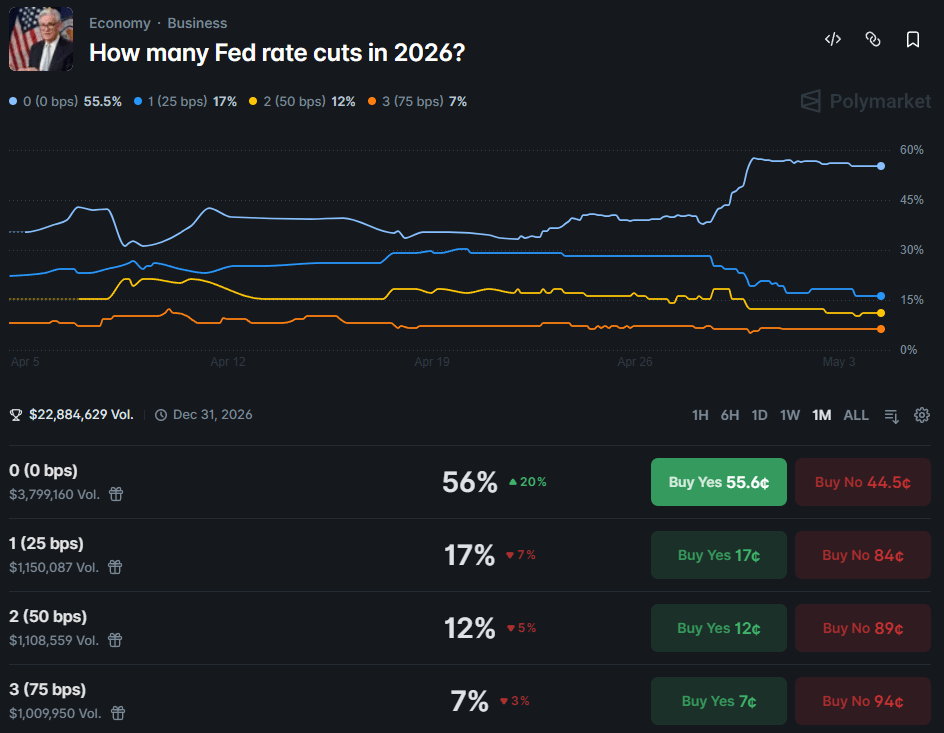
For Forex traders, these platforms can therefore act as a thermometer. A sudden rise in the probability of a conflict, a government change or a monetary policy decision can help explain a move in the US Dollar, Japanese Yen (JPY), Gold (XAU/USD) or Oil.
Advantages of prediction markets
The first advantage is speed. Prediction markets sometimes react before traditional media and before some financial assets. In a market dominated by algorithms, any early signal has value.
The second advantage is granularity. Contracts can focus on very specific events, as a political appointment, an inflation figure, a rate decision, a military strike, a maximum temperature or the departure of a leader. This precision can be useful to isolate a risk that the FX market has not yet fully priced.
The third advantage is aggregation. In theory, these markets mobilize the “wisdom of crowds.” Thousands of participants put money behind their views, which can produce a stronger signal than a simple poll or an analyst comment.
But these advantages are also their weaknesses.
The central risk: Insiders can have an overwhelming edge
According to ABC News, a US soldier allegedly made more than $400,000 on Polymarket by betting on Nicolás Maduro’s removal, while he allegedly had access to classified information linked to the operation. If the allegations are confirmed, this is not simply a good trade, it is the use of non-public information in a market where other participants believed they were betting on genuine uncertainty.
The weather sensor case at Charles de Gaulle airport in France adds another dimension. According to The Independent, French authorities are investigating suspected tampering with a temperature sensor, after winning bets had been placed on Polymarket. Here, the risk is not only insider information, but the manipulation of the data that determines contract settlement.
These examples are especially important for traders. In traditional markets, manipulating a major asset such as EUR/USD or Brent is extremely costly. On some prediction markets, however, a very specific contract can depend on a fragile data source, an administrative event or a decision known by a small group of people.
The risk of a false signal for traders
For a Forex trader, the danger is not only losing money, but also using a contaminated signal to take a position in a much more liquid market.
If suspicious flows appear on a contract linked to a military strike, algorithms or discretionary traders may interpret the rise in probability as useful information, which can influence financial asset prices. If the signal comes from an insider, it may be accurate but legally and ethically problematic, but if it comes from manipulation, it may be false and destructive.
The risk becomes even more serious if prediction market data is integrated into systematic trading models. In that case, a small opaque market can become an input for much larger decisions in commodities, currencies or indices.
Finance or sports betting?
Prediction platforms argue that they are not bookmakers because they do not set the odds but just connect buyers and sellers. Critics respond that the economic outcome looks very similar to betting.
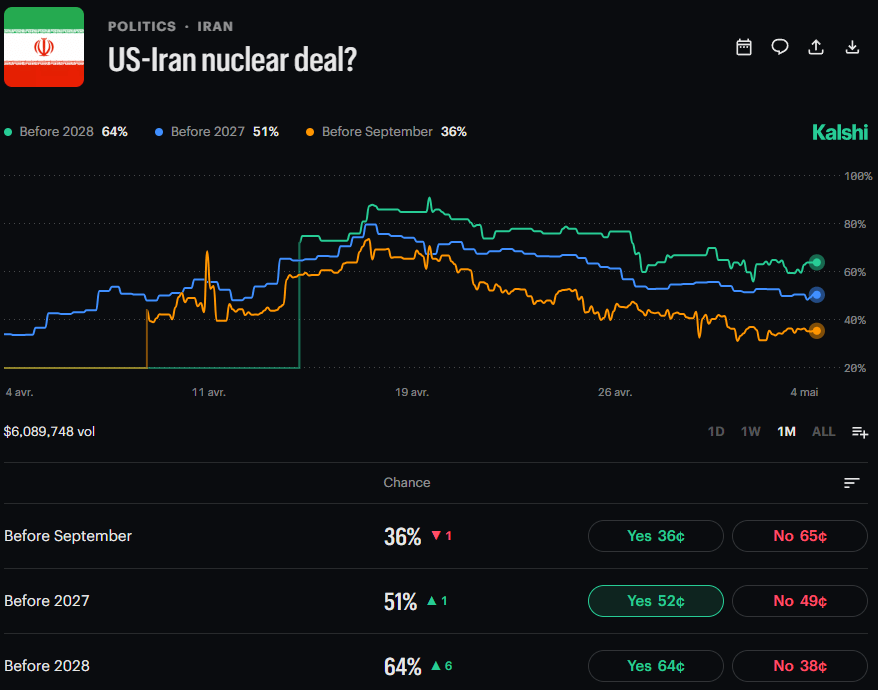
For traders, this legal distinction matters less than market quality. A useful market needs clear rules, effective surveillance, know-your-customer procedures, transparency on volumes and the ability to detect abuse. Without that, the displayed price can create an illusion of precision.
Regulated markets offer more safeguards than offshore or crypto-native platforms, but the risk does not disappear. Event contracts remain exposed to non-public information, especially when they involve politics, war, national security or internal corporate decisions.
Useful as a secondary signal, dangerous as a main trading venue
Prediction markets represent an important innovation for financial markets. They turn political, macroeconomic and geopolitical events into tradable prices. This innovation can enrich traders’ analysis, especially in an environment where information moves quickly and currencies react to non-economic shocks.
But their rise also exposes a gray area between finance, betting and manipulation. Recent cases of insider information and suspected manipulation show that these platforms are not yet fully mature markets.
For FX traders, the conclusion is simple: Prediction markets are worth watching, but with caution. They can be a useful indicator of sentiment and event risk. They should not be mistaken for a reliable source of truth, nor for a market robust enough to replace traditional macroeconomic analysis.
Author

Ghiles Guezout
FXStreet
Ghiles Guezout is a Market Analyst with a strong background in stock market investments, trading, and cryptocurrencies. He combines fundamental and technical analysis skills to identify market opportunities.