|

NZD/USD dips as market anticipates RBNZ rate cut

The NZD/USD pair continues its downward trend, dropping to 0.6240 in its third consecutive session of declines. This ongoing sell-off in the New Zealand dollar is driven by market expectations of an upcoming interest rate cut by the Reserve Bank of New Zealand (RBNZ). New Zealand's borrowing costs are currently at 5.25% per annum, with widespread anticipation of a 50-basis point reduction at the next RBNZ meeting.

The RBNZ is known for its proactive and flexible monetary policy, which swiftly adjusts to inflationary pressures and external economic indicators. This expected rate cut responds to such factors and aligns with the bank's strategy to manage economic growth and inflation.

Moreover, the NZD has been under additional pressure from a strengthening US dollar, bolstered by unexpectedly robust US employment statistics for September, reported by ADP. Although the ADP report does not directly correlate with the Nonfarm Payrolls (NFP) due shortly, it still shapes market expectations and sentiment.

Global risk appetite has also waned significantly due to escalating geopolitical tensions in the Middle East, further dampening the prospects for growth-sensitive currencies like the NZD.

NZD/USD technical analysis
Chart

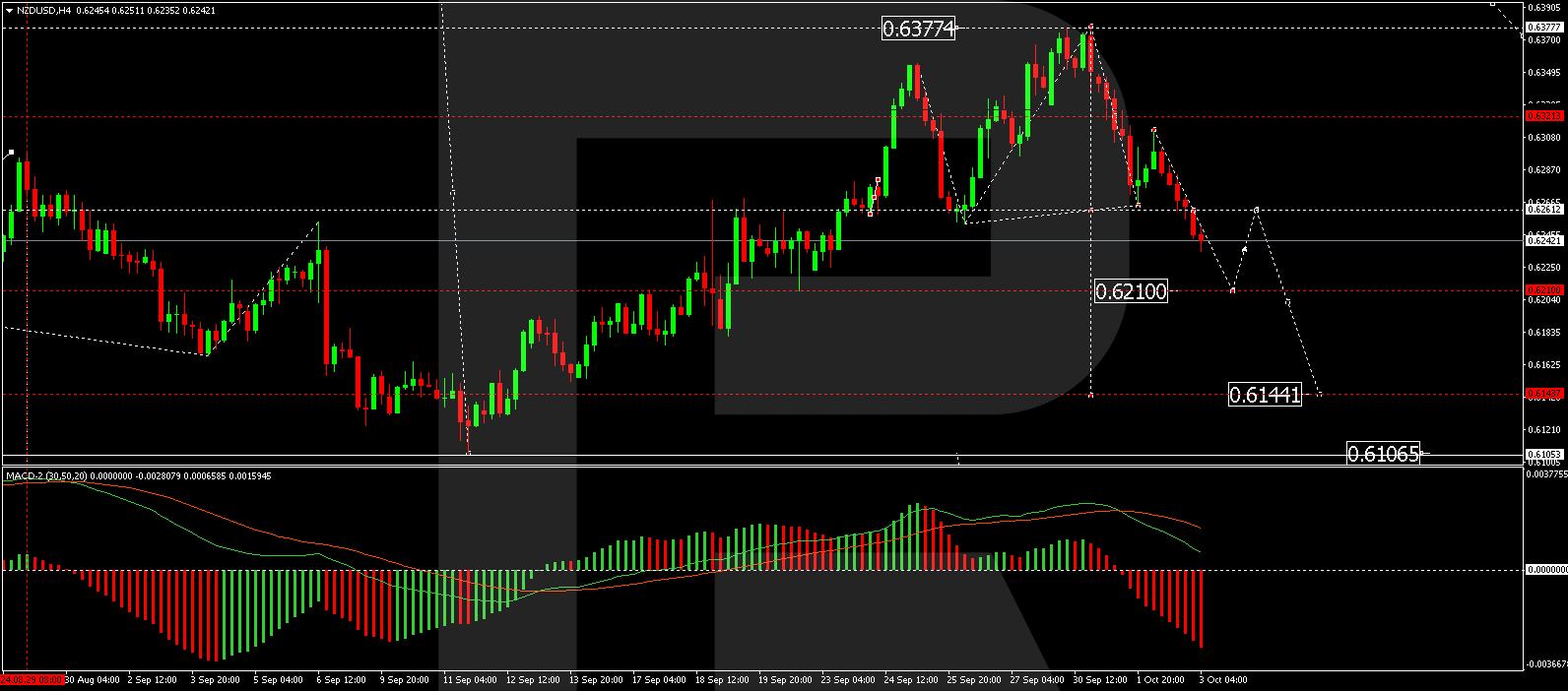
The NZD/USD pair followed a bearish pattern, confirming a downward wave to 0.6265 and a corrective rise to 0.6313. The market is now forming a new decline towards 0.6210. Once this target is reached, a corrective move to retest 0.6265 from below may occur, potentially leading to further declines towards 0.6144. This bearish NZD/USD outlook is supported by the MACD indicator, which, despite being above zero, shows a strong downward trajectory.
Chart

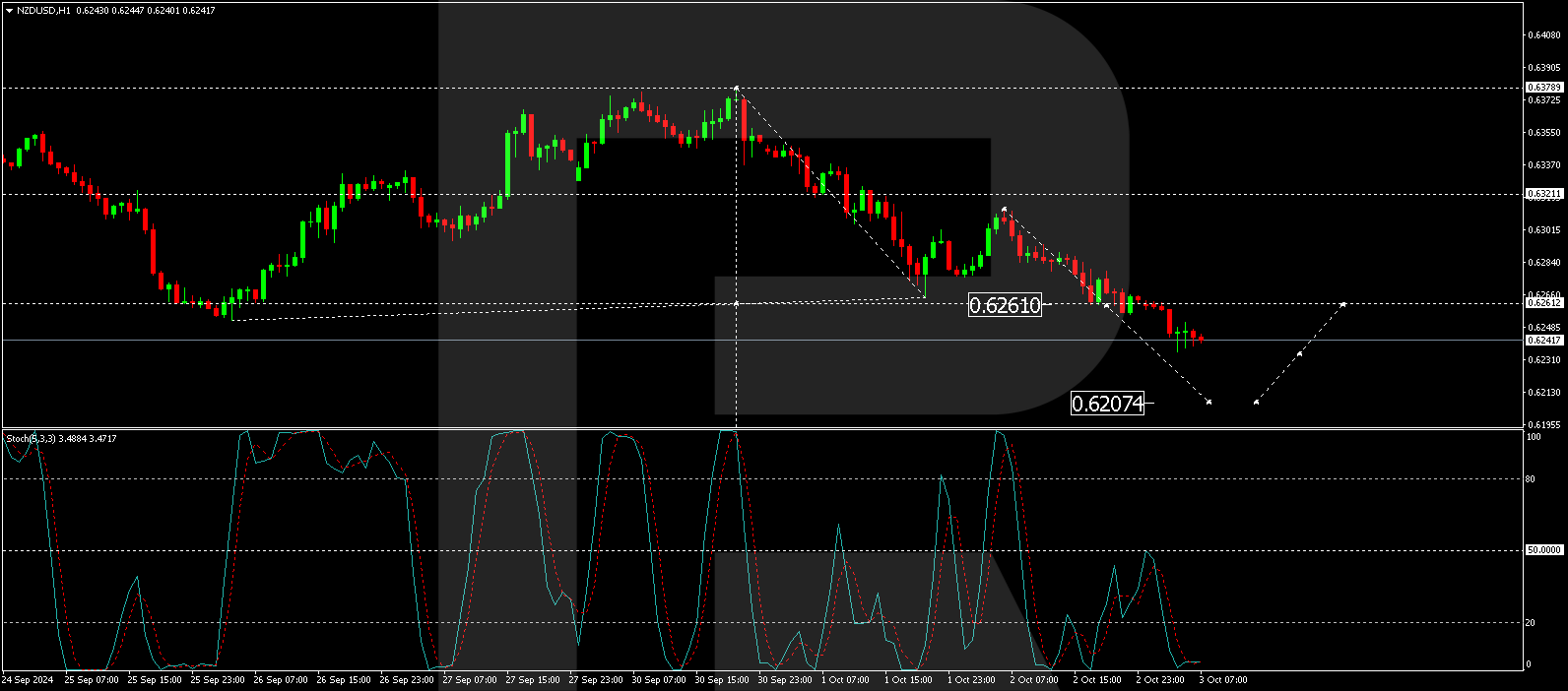
On the hourly chart, the pair is developing the third wave of its decline towards 0.6210. Following this, a corrective fourth wave up to 0.6260 is anticipated. This forecast aligns with the Stochastic oscillator readings, which indicate the signal line is below 50 and heading towards 20, suggesting a continuation of the downward momentum after a brief correction.

Author

Andrey Goilov

Andrey Goilov

RoboForex

Higher economic education. Andrey Goilov has been working on the Forex market since 2005. A financial analyst and successful trader. Preference in trading is highly volatile instruments.


More from Andrey Goilov
Share:

Editor's Picks

GBP/USD back to 1.3250, down modestly for the day

GBP/USD now comes under fresh downside pressure and recedes toward the mid-1.3200s on Tuesday, partially reversing the optimism seen at the beginning of the week. Meanwhile, Cable’s bearish tone follows the resumption of the upside traction in the Greenback, always amid the sharp rally in USD/JPY.

EUR/USD looks inconclusive in the low 1.1400s

EUR/USD alternates gains with losses in the 1.1420 region in the latter part of the NA session on turnaround Tuesday. The pair’s vacillating price action comes amid the lack of clear direction in the US Dollar. Meanwhile, market participants are expected to gear up for the upcoming key releases on the US docket and developments from the ECB Forum in Sintra.

Gold clings to daily gains beyond $4,000

Following multi-month lows near $3,950, Gold now manages to regain some composure and reclaim the area beyond the key $4,000 yardstick per troy ounce on Wednesday. Still, any meaningful recovery appears limited as a broadly firmer US Dollar and rising US Treasury yields weigh on the yellow metal.

Coinbase, BlackRock, Visa and Stripe support Open Standard’s OUSD stablecoin
Open Standard on Tuesday unveiled Open USD (OUSD), a dollar-pegged stablecoin designed for global payments, backed by more than 140 companies. The founding coalition spans payment networks, banks, fintech firms, technology platforms and crypto infrastructure providers, including Shopify, Google, Ripple, Solana, Coinbase, Visa, Mastercard, Stripe, BlackRock and BNY.
Why a hawkish Bank of Japan could trigger the next Bitcoin sell-off

The Japanese Yen hits a 40-year low of 162.00 against the US Dollar, raising concerns about intervention or additional rate hikes by the Bank of Japan. BoJ may sell US Treasuries to buy back Yen, potentially pushing US bond yields higher and making Bitcoin less attractive to investors.

Kevin Warsh isn't expected to say much in Sintra: That's exactly why markets will listen

Financial markets could find an important catalyst in the enchanting, fairytale-like landscape of Sintra this week. The ECB Forum will, as it does every year, gather the crème de la crème of central banks. The new boss at the Fed, who has clearly said that the Fed should stop explaining everything, will need to talk – and traders should listen.