Markets want rate cuts – Oil may not let them happen


Summer 2026 is shaping up as a choppy macro battleground. While strong tech earnings and AI enthusiasm continue to put a floor under stocks, fixed-income markets are singing a completely different tune. Crude has pushed higher, bringing inflation back into the spotlight and forcing trading desks to seriously price in the risk of another Federal Reserve rate hike.
The tension behind US100 vs WTI now runs between two very different convictions: confidence that technology earnings can sustain expensive valuations and concern that another energy shock could keep borrowing costs elevated. Wall Street still wants relief from high borrowing costs, but oil has shifted the immediate debate from rate cuts to the risk of renewed tightening.
Earnings optimism meets an energy shock
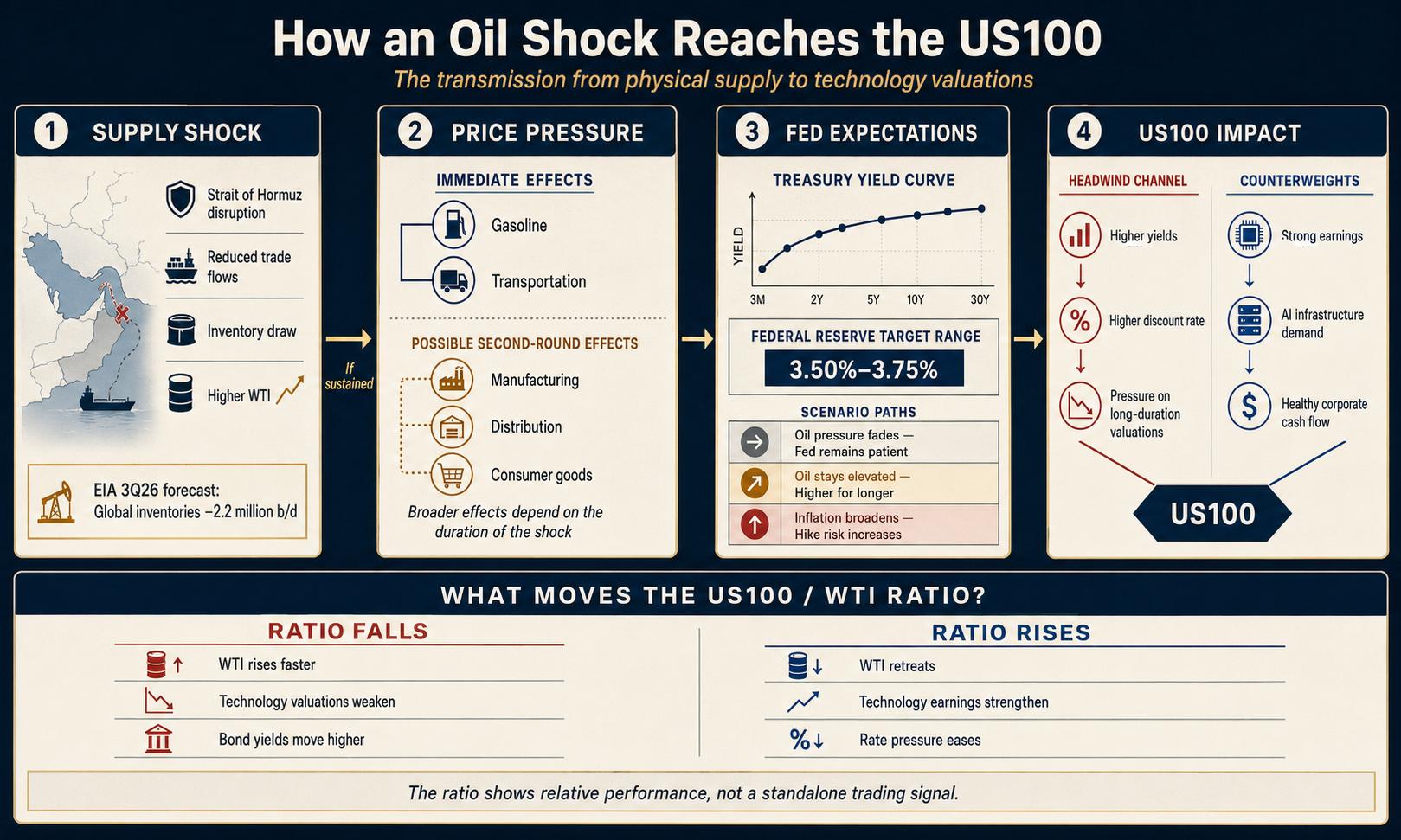
Imminent rate cuts have largely disappeared from the market’s base case. After holding the target range at 3.50% to 3.75% back in June, the Fed is facing data that makes easing look distant, with pricing starting to lean toward a hike instead. Growth portfolios live and die by liquidity, which makes the stock market vs. oil prices dynamic the ultimate stress test right now.
Renewed conflict in the Middle East and disrupted flows through the Strait of Hormuz have kept the physical oil market unusually tight. The U.S. Energy Information Administration (EIA) expects global inventories to fall by 2.2 million barrels per day in the third quarter of 2026, leaving the physical market tight through much of the summer. The drawdown is substantial, although far smaller than the agency expected in June. Rising production and recovering trade flows could provide some relief later in the year.
Higher energy costs appear quickly in gasoline and transportation, while a sustained increase can gradually reach manufacturing and consumer prices. That means the rate cuts vs. inflation trade has changed character. It is no longer only about when the Fed might ease; it is about whether a sustained oil shock strengthens the case for another hike.
Decoding the spread: Growth under pressure
A resilient economy can support both stocks and raw materials, but the current move in equities vs. commodities is being driven by different forces. Tech is leaning on corporate earnings and aggressive AI spending, while crude is responding to supply disruptions, geopolitical risk, inventory changes, and expectations for demand. If energy stays expensive, it can weaken margins in transportation, manufacturing, retail, and other fuel-sensitive industries.
- Big tech needs strong earnings and continued demand for artificial intelligence infrastructure to justify lofty valuations.
- Energy markets can react immediately to disruptions in critical shipping lanes, largely independent of what Wall Street models project for corporate earnings.
The US100/WTI ratio offers a useful snapshot of relative performance, although it is not a standalone trading signal. A falling ratio can reflect pressure on technology valuations, a crude rally, or both, while a rebound can come from stronger technology shares or weaker oil prices.
The broader Nasdaq vs. oil comparison captures an unusual split between an earnings-driven technology market and a commodity exposed to immediate physical disruption. Participants who trade Nasdaq vs. oil are balancing corporate cash flows against rapidly changing geopolitical and supply risks.
When bond yields rise, the math behind growth stocks vs. inflation becomes less forgiving. Higher discount rates reduce the present value of future earnings, leaving expensive technology stocks more vulnerable even when their balance sheets remain solid. Persistent fuel costs can add pressure by reducing household spending power and raising expenses across supply chains.
The debate around growth vs. value stocks and inflation has returned as higher yields make distant earnings less attractive and improve the relative position of sectors with current cash flow. The same backdrop complicates the usual commodities vs. equities relationship because expensive oil can support energy producers while raising costs elsewhere.
When Oil rewrites the rate outlook
A Q3 outlook from Thrivent Asset Management published by Nasdaq Insights captures the shift under way. Rising crude prices lifted short-term yields and brought the possibility of Fed tightening back into the debate, even as strong earnings continued to support equities. The outlook projects one rate hike in 2026 and notes that persistently high energy costs can spread into a broader range of goods and services.
The old cross-asset playbook has become less reliable. A tactical Versus Trade US100 WTI position carries exposure to two distinct but connected forces: the staying power of technology earnings and the duration of oil supply disruptions.
Another sustained oil surge would strengthen the case for higher rates and test how much valuation pressure the technology rally can absorb. A normalization in trade flows and inventories would remove part of that threat, although earnings and Treasury yields would still matter more than any single commodity move. For the summer, liquidity expectations vs. energy prices remains the lens to watch. Oil is no longer merely delaying the prospect of rate cuts. A sustained rally could strengthen the case for renewed tightening.
Author