Kevn Warsh as Fed Chairman? Unqualified
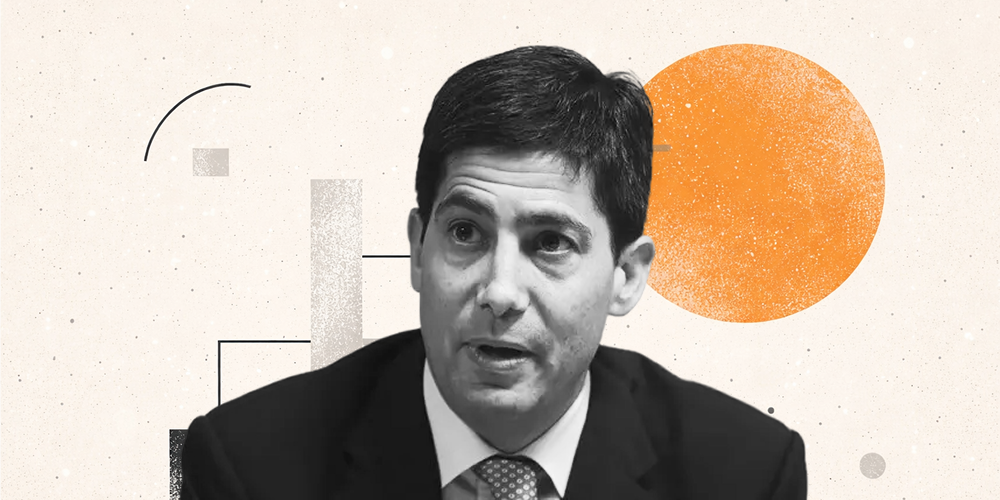
The reality is that I spent too much of my time this morning listening to the confirmation hearings being held in the Senate for Kevin Warsh, nominated to follow Jerome Powell as the Fed Chairman. Despite knowing that these public hearings more often than not serve as grandstanding opportunities for Democrats and Republicans alike, I’m drawn to these hearings much as I am to car crashes.
Like so much else in Washington these days, this hearing was yet another showcase of the partisan divide. Warsh, to his credit, seemed to have maintained his cool — at least for the portion of the hearing that I sat through; but, to me, what he had to say was disqualifying. Of course, he said all the right things about the necessity for the Fed to be independent, but when challenged on the framework with which he would evaluate monetary policy choices, his answers belied that proposition.
The fear on the part of the Democrats is that Warsh would act as a Trump toady, effectively dispensing with the Fed’s independence. Elizabeth Warren’s questions gave us the first indication that this fear needs to be taken seriously. She asked Warsh who won the 2020 election — a simple enough question, yet one that Warsh chose to duck.
While seemingly having little to do with the formulation of monetary policy, assessing this lack of response as anything other than revealing is naïve. In fact, this question and the answers to this question offer a double-sided litmus test. For the Democrats, the unwillingness to clearly assert that Trump lost the 2020 election is — or should be — disqualifying for any position of responsibility in government. On the other hand, Republicans seem to have knuckled under to the idea that maintaining the fiction of Trump’s victory in that election has become a prerequisite for any subsequent congressional approval. Somehow, we’re supposed to believe that someone who has either drunk the Kool-Aid or pretended to do so is someone we can trust with the reins of power.
To me, this litmus test, which to my mind Warsh flunked, is sufficient to deny him the position of Fed Chair, but there’s more….
Warsh, of course, is a trained economist. He understands that the Fed’s mandate to strive for full employment and price stability. These two objectives impose an inherent tension as, in general, the policy directed toward stimulating employment tends to exacerbate inflation, while the policy to dampen inflation tends to depress economic activity to the detriment of employment. Without using the same words as Powell, Warsh certainly seemed to endorse the idea that Fed policy should be responsive to changing economic conditions. Powell repeatedly says that Fed decisions will be guided by incoming data, which I take to be fully consistent with what Warsh said at the hearing.
Trump has been pushing for lower interest rates at least since last July; and Warsh who had been known as an inflation hawk — i.e., one who prioritized fighting inflation over concerns about unemployment or sluggish economic growth — suddenly aligned with the Trump prescription, reversing an earlier stance. Since then, however, I think most objective observers would agree that inflation has become increasingly problematic, even as the unemployment rate, at 4.3 percent in March, remains low by post‑1980 standards.
Despite these recent developments and the ongoing supply chain vulnerabilities, Warsh appears to be committed to a path of lower interest rates. Why? It seems that he thinks AI will lead to productivity gains that will permit producers to enjoy greater profitability without having to ratchet up prices. Even if this hypothesis had merit, which is questionable, lowering interest rates now, in advance of any evidence of this phenomenon imposes, would impose an unacceptable risk that inflation and perhaps inflationary expectations could rise precipitously.
Warsh’s statements about the necessity of the Fed’s independence notwithstanding, his nomination puts that independence in jeopardy; and that’s a risk not worth taking. If he were to be confirmed, it would be at our peril.
Author
_Profile.jpg)
Ira Kawaller
Derivatives Litigation Services, LLC
Ira Kawaller is the principal and founder of Derivatives Litigation Services.