Is the Eurozone debt crisis coming back to haunt the Euro?

The euro is once again trading as if fiscal fragmentation matters more than the relative strength of the European economy. The EUR/USD forex pair fell to around $1.1160 on October 5 according to Activtrade’s trading data, its lowest level since May 2025, as renewed concerns over France’s public finances coincided with political uncertainty in Spain. The move of the currency pair, down around 4.60% since the beginning of the year, has revived comparisons with the eurozone sovereign debt crisis of the early 2010s, when rising government borrowing costs, widening spreads and fears over the integrity of the single currency placed the euro under severe pressure.
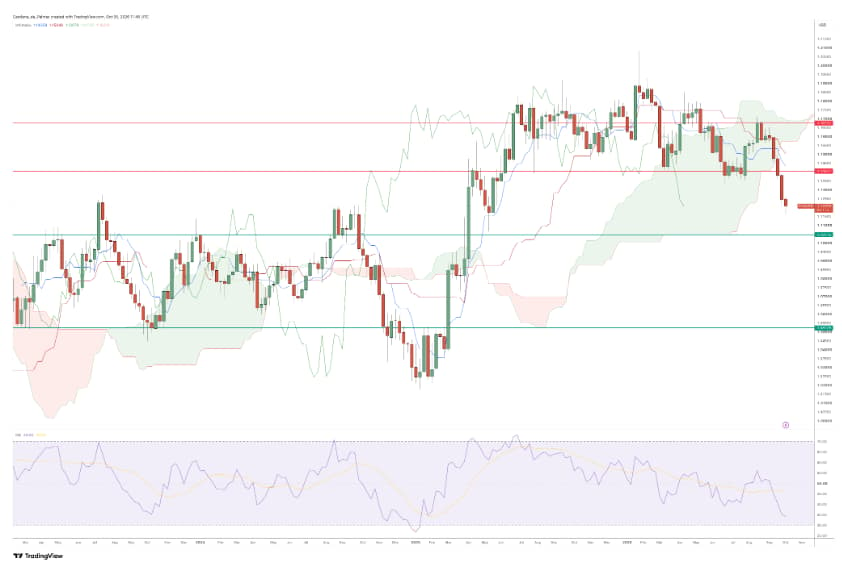
Of course, the comparison should not be taken literally. The eurozone is institutionally better equipped today than it was in 2010-12, while there is no immediate evidence of the banking and sovereign funding crisis that characterised that period. Yet financial markets tend to remember old vulnerabilities. When government bond spreads widen, political divisions increase and investors begin questioning the ability of governments to deliver credible fiscal adjustments, the currency can once again become the transmission mechanism for those concerns.
For EUR/USD traders, the important question is therefore not whether Europe is heading for another sovereign debt crisis, but whether the combination of higher European risk premia and a comparatively attractive dollar is creating a new, self-reinforcing source of euro weakness.
France puts fiscal credibility back at the centre of the Euro story
France is currently at the heart of the market’s concerns. Its public debt has risen to about 119% of GDP, compared with 97.9% in 2019, while the government faces growing political resistance to measures aimed at containing the deficit. Interest costs are also becoming an increasingly important component of public spending.
The problem for financial markets is not simply the size of French debt. It is the difficulty of reconciling fiscal consolidation with political reality. France is preparing for a presidential election in 2027, while the government faces opposition from both the left and the right. The possibility that a future administration could favour less European integration, lower contributions to the EU budget or greater national control over policy adds a political dimension to what would otherwise be a conventional fiscal debate.
Bond markets have already reflected part of this uncertainty. The spread between French and German 10-year yields has moved towards levels last seen during the eurozone crisis, while French government bond yields have topped 5% last week.
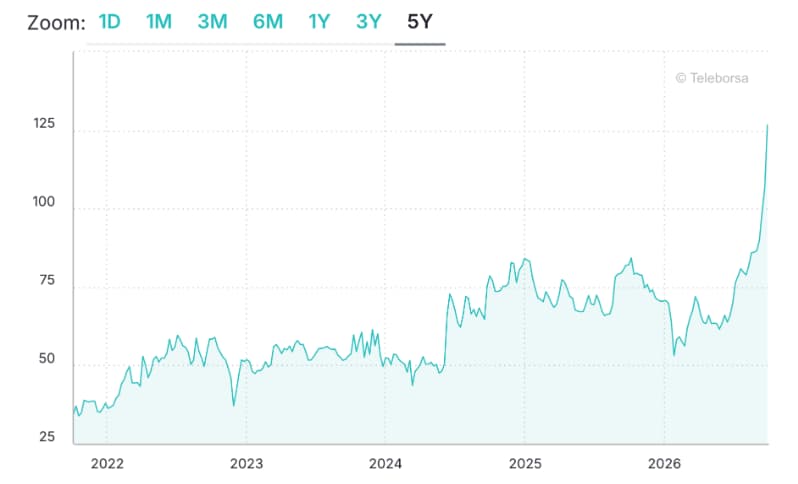
Spain is now adding another layer to the equation. Prime Minister Pedro Sánchez has called an early election for November 29 after his government suffered a parliamentary defeat over housing measures. Spain’s fiscal position is not equivalent to France’s, and its bond spread over Germany remains considerably narrower. But for currency traders, the significance is that political uncertainty is no longer concentrated in one major eurozone economy.
That distinction matters because the euro is a common currency issued by a monetary union but backed by national fiscal policies. During periods of calm, that arrangement can appear relatively unimportant. During periods of stress, investors start examining the links between the two. This is where memories of 2011-12 become relevant.
Why today’s concerns resemble the old debt crisis — But are not the same
During the eurozone sovereign debt crisis, markets were not simply questioning whether individual governments could service their debts. They were questioning whether the monetary union itself could survive. The feedback loop was powerful.
Higher sovereign yields increased governments’ financing costs. Banks holding large quantities of domestic government debt became more vulnerable. Tighter financial conditions weakened economic activity, which further damaged public finances. At the same time, investors began pricing the possibility that some countries could leave the euro, creating what the ECB later described as redenomination risk.
The result was fragmentation. German assets benefited from safe-haven demand while borrowing conditions deteriorated sharply elsewhere. In 2012, Spanish and Italian government spreads over Germany surged despite relatively limited changes in underlying fundamentals. The ECB eventually responded with its Outright Monetary Transactions framework, designed to address excessive risk premia and preserve the transmission of monetary policy across the currency union.
Today’s situation is different in several important respects.
The euro has a stronger institutional framework, the banking system is more resilient, and the ECB has considerably more experience in dealing with fragmented sovereign markets. The central bank also has instruments designed to prevent disorderly market fragmentation. The existence of such mechanisms makes a direct replay of the eurozone crisis much less likely.
But these tools do not eliminate the underlying political problem.
The ECB can prevent a disorderly market dynamic from becoming systemic, but it cannot determine national budgets, eliminate political disagreements or force governments to implement unpopular reforms. The central bank’s own experience during the previous crisis demonstrated that monetary policy could provide a backstop, but fiscal credibility ultimately had to come from governments.
This is why the upcoming European political calendar matters for EUR/USD traders.
France will hold its presidential election in 2027, while Italy and Poland also face elections later that year. Germany is not scheduled for a national election before 2029, but the rise of the Alternative for Germany has already increased political pressure on Chancellor Friedrich Merz’s government. A government approaching an election has less incentive to pursue reforms that impose short-term costs, particularly when those reforms involve greater fiscal coordination or the transfer of elements of national sovereignty.
That creates a potentially important problem for investors: the market may demand fiscal discipline precisely when European governments have the least political room to provide it.
The US economy continues to offer several arguments in favour of the Dollar
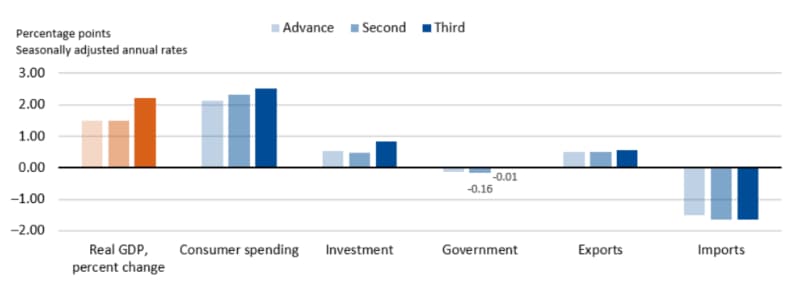
Economic growth data have proven surprisingly resilient, with the US economy expanding at an annualized rate of 2.2% in Q2 2026 (up by 0.7 percentage point from the second estimate), after 2.5% growth in Q1. Strong corporate investment in artificial intelligence is reinforcing expectations that productivity and technology spending could support the U.S. economy beyond the current cycle. Robust AI expenditure, particularly across semiconductors, data centres and cloud infrastructure, has become an important component of the broader investment story.
At the same time, U.S. economic data have not been uniformly strong. The latest employment report provided a notable reminder that the labour market is losing some momentum, with September payroll growth significantly below expectations with only 29,000 jobs created. Some market participants are now expecting further Federal Reserve easing rather than assuming that U.S. interest rates will remain higher indefinitely.
Yet the softer jobs picture has not been enough to undermine the dollar decisively. U.S. Treasury yields have remained close to multiyear highs, reflecting concerns about inflation, government borrowing requirements and the longer-term outlook for public finances. European government bond yields have also remained elevated, highlighting that the bond market is no longer offering investors an obvious low-yield alternative to U.S. assets. This creates an important dynamic for the EUR/USD. The dollar can remain supported even if expectations for Fed policy become less hawkish, provided U.S. yields remain relatively attractive and investors continue to view dollar assets as a source of liquidity and safety.
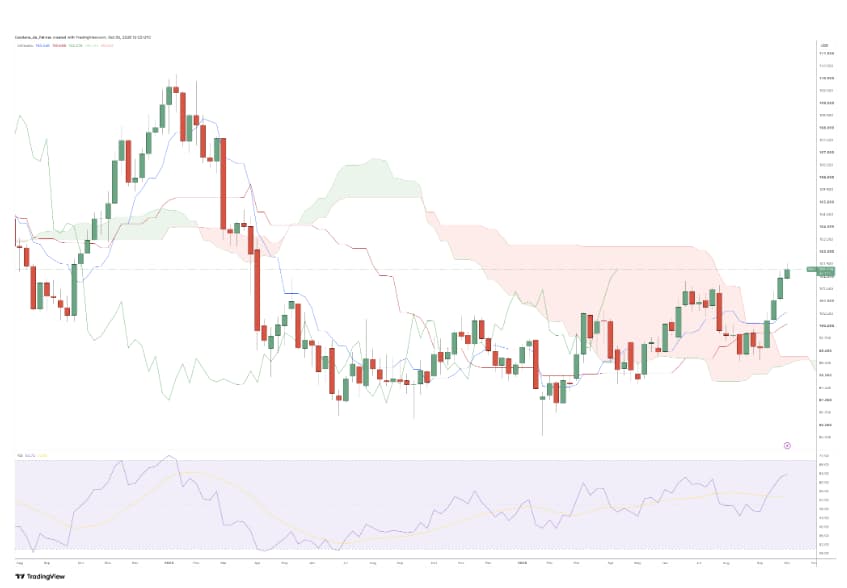
The euro, meanwhile, faces an additional burden that the dollar does not face to the same extent: political and fiscal fragmentation within a monetary union. Rising borrowing costs are therefore being interpreted not only through the lens of interest-rate differentials, but also through questions about individual governments’ fiscal credibility and the future direction of European integration.
This is also what makes the current environment different from a straightforward interest-rate trade. If the Fed moves towards lower rates but European fiscal concerns intensify at the same time, the euro may struggle to benefit from the narrowing U.S.-European rate differential. A reduction in the dollar’s yield advantage could simply be offset by a higher risk premium attached to euro-denominated assets.
Bottom line
The eurozone therefore does not need to reproduce the sovereign debt crisis of the early 2010s for investors to remember its vulnerabilities. Widening government bond spreads, resistance to fiscal consolidation, political uncertainty and questions over the willingness of national governments to pursue deeper European integration can be enough to put pressure on the common currency.
The key difference is that today’s risk is less about the immediate survival of the euro and more about the resilience of the monetary union. The institutional safeguards created since the debt crisis make a direct repeat of 2010s unlikely. However, markets are still testing how much fiscal and political divergence the eurozone can absorb before investors demand a larger risk premium. For now, that premium is increasingly visible in the EUR/USD pair.
As long as U.S. growth and investment remain relatively resilient, Treasury yields stay elevated and European fiscal concerns remain unresolved, the dollar should retain an advantage. The euro may therefore need more than a softer Federal Reserve or a temporary rebound in risk appetite to establish a lasting recovery. It may first need to convince investors that Europe’s fiscal and political tensions can be contained without reopening the divisions that once threatened the foundations of the single currency.
Stay up to date with what's moving and shaking on the world's markets and never miss another important headline again! Check ActivTrades daily news and analyses here.
Author

Carolane de Palmas
ActivTrades
Carolane graduated with a Masters in Corporate Finance & Financial Markets and got the AMF Certification (Financial Markets Regulator in France). Afterward, she became an independent trader, investing mostly in European and American stocks/indices.