Iran war: Endgame?

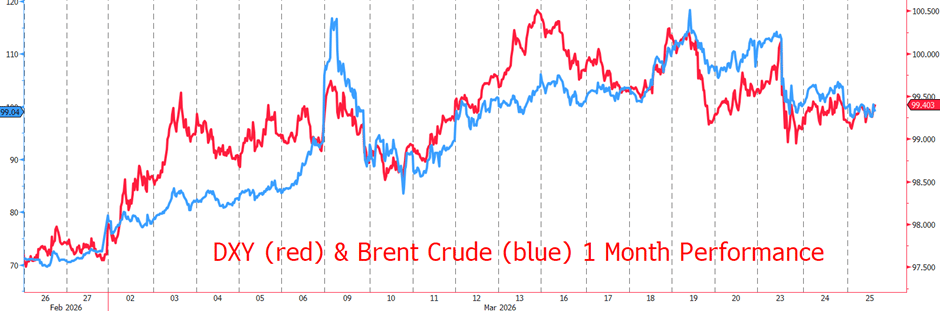
After the President halted the attacks on Iranian power plants supposed to take place following the expiration of the US ultimatum to open the Strait of Hormuz, there was some hope that the end of the conflict was approaching. After all, the President hailed “productive talks” with the regime, triggering a strong retreat in Oil and an accompanying softening in USD.
As part of these talks, a “15 point plan” has been produced by the US that essentially marks out what the President would need from Iran for a ceasefire. A commitment to never attempt to develop Nuclear weapons, a dismantlement of Iran’s system of proxies in the region and a variety of other serious limits to Iranian ambition are demanded, with the prospect of a removal of any and all sanctions being the reward.
What a deal some may think, clearly not sharing minds with the Iranians, who have entirely rejected any deal. Unsurprising considering that the last two rounds of negotiations have seen the Iranians being bombed. The Dollar bullish reaction to this news that should be expected has failed to materialise, hinting that traders may well be positioning for an end to the war way ahead of the actual conclusion.
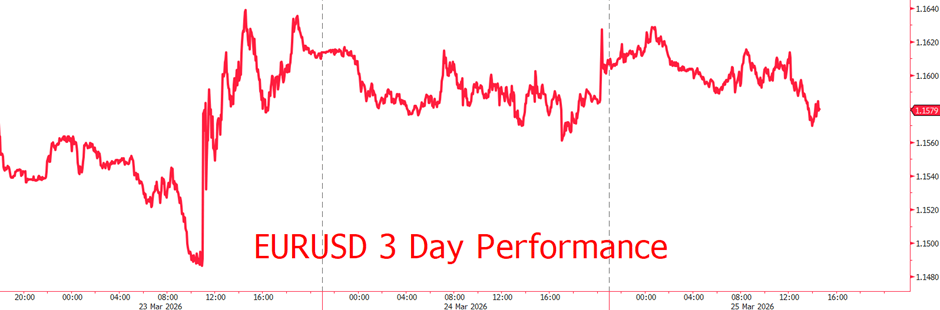
The Iranians have just fired back their list of 5 demands, one of which includes a respect for Iranian authority over the Strait, creating an immediate impasse for negotiations. There is even speculation that the UAE and Saudi Arabia would be willing to join the war against Iran to remove the regime, threatening that even should the US pull out, a war between the key figures of the region may yet continue.
This would mean long run Oil prices are likely to remain elevated, the ECB has said as much with its expectations last week, forecasting a 33% increase in Oil costs this year, from $60 a barrel to $80. Bad news for any currency that isn’t USD, even if the market is pricing in a swifter end to the war than first anticipated, it doesn’t change the facts on the ground. The level of distrust between the Iranians and Americans will make any kind of negotiations slow and likely obvious, meaning that the market reaction will continue to be jerky and difficult to predict.
Author

David Stritch
Caxton
Working as an FX Analyst at London-based payments provider Caxton since 2022, David has deftly guided clients through the immediate post-Liz Truss volatility, the 2020 and 2024 US elections and innumerable other crises and events.