|

Ichimoku cloud analysis: USD/CHF, AUD/USD, USD/CAD

USD/CHF, “US Dollar vs Swiss Franc”

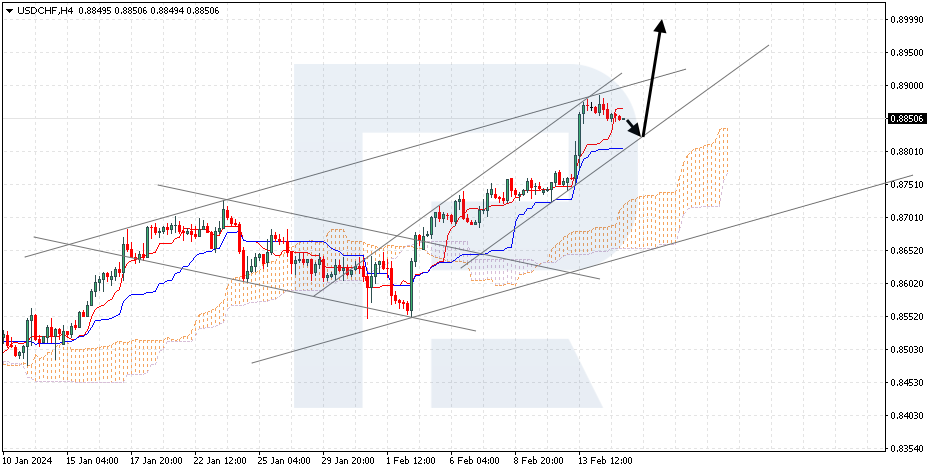
USDCHF has found a foothold under the Tenkan-Sen line. The instrument is going above the Ichimoku Cloud, which suggests an uptrend. A test of the Kijun-Sen line at 0.8535 is expected, followed by a rise to 0.8995. An additional signal confirming the rise might be a rebound from the lower boundary of the bullish channel. The scenario can be cancelled by a breakout of the lower boundary of the Cloud with the price finding a foothold under 0.8635, which will mean a further decline to 0.8545.
Chart

AUD/USD, “Australian Dollar vs US Dollar”

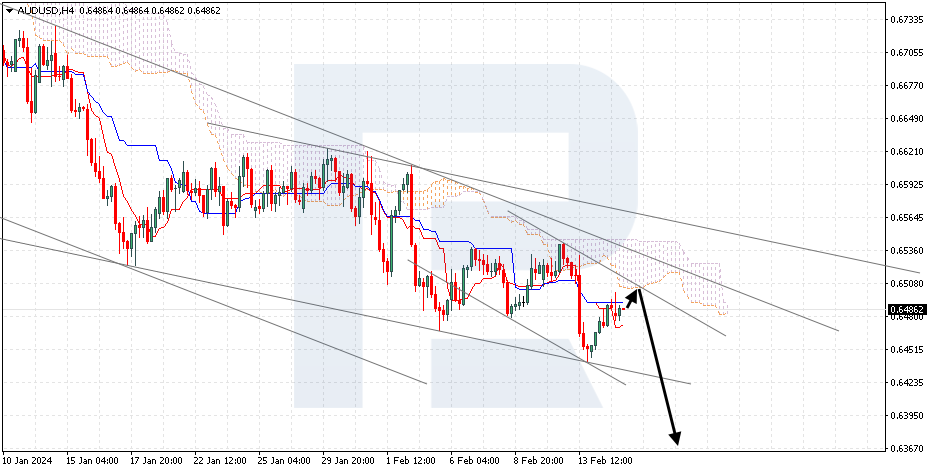
AUDUSD is rebounding from the resistance level. The instrument is going below the Ichimoku Cloud, which suggests a downtrend. A test of the lower boundary of the Cloud at 0.6505 is expected, followed by a decline to 0.6365. An additional signal confirming the decline could be a rebound from the upper boundary of the bearish channel. The scenario can be cancelled by a breakout of the upper boundary of the Cloud with the price finding a foothold above 0.6565, which will mean further growth to 0.6755.
Chart

USD/CAD, “US Dollar vs Canadian Dollar”

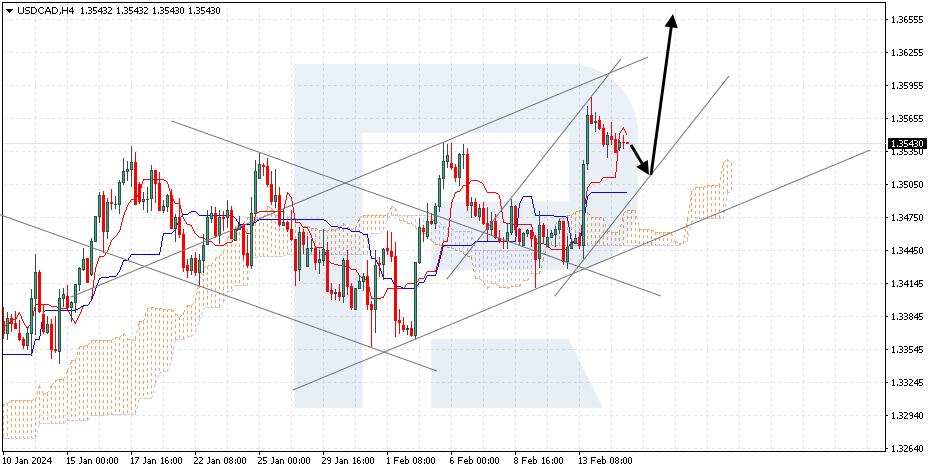
USDCAD is testing the support area. The instrument is going above the Ichimoku Cloud, which suggests an uptrend. A test of the Kijun-Sen line at 1.3525 is expected, followed by a rise to 1.3655. An additional signal confirming the rise might be a rebound from the lower boundary of the bullish channel. The scenario can be cancelled by a breakout of the lower boundary of the Cloud with the price finding a foothold under 1.3430, which will mean a further decline to 1.3340.
Chart

Author

RoboForex Team

RoboForex Team is a group of professional financial experts with high experience on financial market, whose main purpose is to provide traders with quality and up-to-date market information.


More from RoboForex Team
Share:

Editor's Picks

AUD/USD sticks to positive bias above 0.7100; lacks bullish conviction

AUD/USD trades with a positive bias for the second straight day, holding above 0.7100 during the Asian session on Friday as softer US bond yields keep US Dollar bulls on the back foot. Furthermore, bets that the RBA will hike interest rates later this month support the Aussie. However, the Fed's hawkish outlook, along with geopolitical uncertainties, limits USD losses and caps the currency pair.

USD/JPY trades near two-week top, above 156.00 after Japan's CPI and ahead of BoJ

USD/JPY catches some bids during the Asian session after data released Friday showed Japan's core consumer inflation held near the BoJ’s 2% target in August. Spot prices trade above 156.00 as traders await the BoJ's expected interest rates hike to a 31-year high. Meanwhile, softer US bond yields undermine the US Dollar, capping the currency pair.

Gold holds above $4,350 as softer US bond yields cap USD

Gold trades with a positive bias for the second straight day and holds above $4,350 during the Asian session on Friday, though the upside seems capped. US bond yields move away from multi-year highs amid a pullback in oil prices, capping the US Dollar and supporting the non-yielding bullion. However, the Fed's hawkish stance and geopolitical risks limit USD losses, keeping XAU/USD below the weekly top, set on Thursday.

Bank of Japan is set to raise interest rates as inflation, economic growth support tighter policy

The Bank of Japan’s monetary policy meeting will close a week packed with central bank decisions on Friday, with markets particularly interested in confirming expectations of a hawkish shift that has boosted a strong Japanese Yen recovery in September.

S&P Global to acquire OpenZeppelin in on-chain security expansion

S&P Global has agreed to acquire blockchain security firm OpenZeppelin as the financial data and analytics company expands its on-chain risk assessment capabilities. The acquisition, announced Thursday, will bring OpenZeppelin’s smart contract security services, development tools and open-source libraries into S&P Global’s existing digital asset and risk assessment business.

How Japan became the World's Banker and why that era may be ending

Japan's ultra-low interest rates helped finance trillions of dollars in global investments for more than a decade, making the Japanese Yen one of the world’s cheapest sources of funding. With the Bank of Japan expected to tighten policy again this week, that advantage may be entering a new phase. While most major economies raised interest rates, Japan remained the world's outlier.