How stablecoins are redrawing offshore currency demand
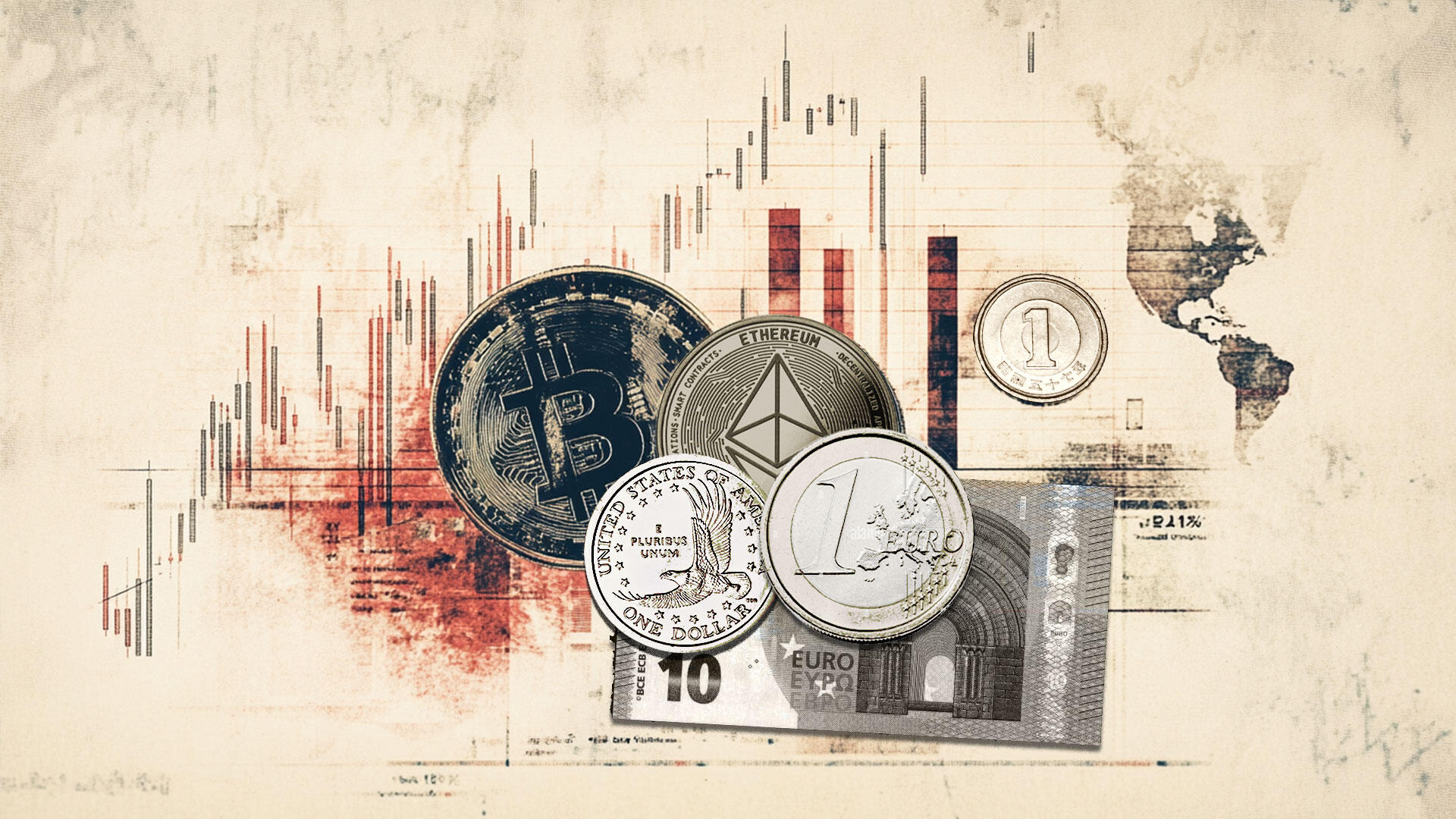
Dollar-pegged stablecoins are no longer a crypto trading curiosity. They are becoming a private, digital version of offshore dollar accounts — one that links retail demand in emerging markets directly to short-term US Treasury debt.
As of early May 2026, the total stablecoin market sits near $323 billion (per DeFiLlama), with USDT holding roughly 59% dominance. That figure is still modest against the $30.8 trillion US Treasury market, but the growth trajectory and reserve mechanics now matter enough to be on every macro and FX trader's radar.
In this read, we’ll be covering:
- How stablecoin reserves create systematic T-bill demand.
- Why emerging-market users — not US investors — drive the macro story.
- How stablecoin adoption could quietly pressure local currencies.
- Why dollar utility and dollar strength are increasingly separate questions.
- A practical checklist of indicators worth tracking.
What are stablecoins actually backed by?
The reserve structure is where the FX implications begin. A dollar stablecoin is, at its core, a money-market product wrapped in blockchain infrastructure. Users pay $1 for one token; issuers hold $1 in liquid assets to support redemption on demand.
The two largest issuers take different approaches to those reserves:
Issuer | Token | Approx. market cap | Primary reserve assets | Avg. maturity |
Tether | USDT | ~$190B | Treasury bills, gold, other | Short-term |
Circle | USDC | ~$60B | Gov. money-market fund (BlackRock) | ~10 days |
Circle holds its reserves in an SEC-registered 2a-7 government money-market fund — the Circle Reserve Fund — which showed approximately $67 billion in assets as of May 6, 2026, with 100% daily liquid assets. Tether's reserve mix is broader: as of March 31, 2026, it held approximately $117 billion in US Treasury bills alongside smaller allocations to gold and other instruments.
The US GENIUS Act formalizes this T-bill preference by requiring payment stablecoin reserves to include only cash, deposits, repo, or Treasury securities with remaining maturities of 93 days or less (or money-market funds holding equivalent assets). That effectively hard-codes short-end Treasury demand into future stablecoin growth.
Where is the money coming from?
Not all stablecoin growth creates equal Treasury demand — and this distinction matters more than headline market cap figures suggest. A US investor rotating from a government money-market fund into USDC shifts money between two instruments that already hold T-bills. The net new demand is close to zero.
However, a Turkish lira, Pakistani rupee, Nigerian naira, or Argentine peso converting into USDT is a genuinely different story. That represents incremental demand for dollar reserve assets that did not previously exist in any dollar instrument.
The Treasury Borrowing Advisory Committee made this exact point: increased stablecoin issuance creates new demand for short-maturity securities only when it substitutes for non-dollar or non-cash-equivalent savings.
For FX traders, the question to ask is not simply "is the stablecoin market growing?" It is "where is the growth actually coming from?"
Why do emerging-market users drive this story?
The strongest practical case for holding stablecoins doesn't come from US retail investors looking to avoid bank fees. It comes from users in economies where local currency is unreliable, cross-border payments are expensive, or dollar bank accounts are difficult to access — which describes a significant share of global GDP.
For these users, dollar stablecoins can act as:
- A savings account denominated in digital dollars (with no US bank account required).
- A payment rail for freelancers, importers, and small businesses.
- A remittance bridge when traditional corridors are slow or costly.
- A hedge against inflation and domestic currency depreciation.
- A working-capital account that escapes local banking limits.
Standard Chartered estimated that dollar-backed stablecoins could pull $1 trillion from emerging-market banks over three years, with stablecoin savings rising from $173 billion to $1.22 trillion by 2028 across 16 vulnerable countries including Egypt, Pakistan, Turkey, India, Brazil, and South Africa. Even with a discount for optimism, the directional signal is clear.
Currency substitution risk
The IMF has warned that stablecoins can accelerate currency substitution — the process by which households and firms gradually shift savings and transactions from local money into foreign currency — by removing friction that previously slowed it down.
Opening a stablecoin wallet is faster than opening a dollar bank account. Transfers settle outside banking hours. Small balances move across borders without correspondent banking delays or minimum thresholds.
For economies already dealing with inflation or capital controls, stablecoins don't need to replace local currency to create pressure. They only need to become the preferred savings and settlement instrument for enough households and firms to affect local liquidity conditions.
This is why the story belongs in FX analysis — not just crypto coverage. Services that already operate in high-dollarization corridors (such as RemitBee, which handles Canada-to-South Asia and Canada-to-Latin America transfers) are working in the same markets where stablecoin substitution risk is highest. The question of whether local recipients hold dollars digitally or convert immediately has real implications for local FX demand.
How could stablecoins move Treasury markets?
The most direct price signal sits at the short end of the US Treasury curve. Because stablecoin issuers prefer short-duration assets — and the GENIUS Act restricts reserve maturities to 93 days or less — bill market dynamics are the first place to watch for stablecoin influence.
- Large stablecoin inflows increase demand for one-month and three-month T-bills
- If bill supply doesn't keep pace, front-end yields could compress at the margin
- That links crypto liquidity events to Treasury funding markets in a way that wasn't true 5 years ago
- Stablecoin redemption spikes (confidence shocks, regulatory events) could force rapid reserve sales
Moreover, the Federal Reserve has flagged that reserve composition determines banking-system effects. Stablecoins backed by bank deposits leave credit creation mostly intact; stablecoins backed by T-bills and money-market funds can reduce bank funding, particularly in emerging markets where deposit bases are already fragile.
What does this mean for the Dollar's exchange rate?
The counterintuitive point here: stablecoins may strengthen the dollar's global utility while the DXY weakens.
Treasury Secretary Scott Bessent described stablecoins as an "internet-native payment rail" — one that widens dollar access and supports Treasury demand regardless of the euro or yen's performance against USD.
FX traders should treat these as separate questions. Stablecoins speak to the dollar's network role in global payments and savings, not to EUR/USD or USD/JPY.
A falling DXY driven by Fed cuts or European growth does not mean dollar stablecoins are losing ground in Nairobi, Karachi, or Buenos Aires.
What risks should FX traders weigh?
The stablecoin growth story isn't one-directional. Several scenarios complicate it:
- A major issuer confidence shock could trigger rapid reserve liquidation (a stablecoin run becomes a T-bill event, not just a crypto event).
- If most stablecoin growth comes from existing money-market funds, net new Treasury demand may be modest despite headline market cap growth.
- USDC's reserve structure is more auditable and predictable than USDT's, which means issuer-specific risk is not uniform.
- Emerging-market regulators may restrict exchanges, wallets, or on-ramps if stablecoin adoption visibly weakens monetary control.
- Central banks may struggle to track the pressure because stablecoin flows sit on public blockchains, not in interbank data — creating a visibility gap that complicates reserve management.
What should FX traders actually monitor?
Rather than watching stablecoin prices (which don't move by design), the relevant signals fall across three groups.
Stablecoin signals
- Net exchange inflows and outflows.
- Total stablecoin market cap and week-on-week change.
- USDT and USDC supply by chain (Tron, Ethereum, Solana, Base).
- Stablecoin peg deviations (a spread from $1.00 is a stress signal worth taking seriously).
Treasury signals
- Tether quarterly reserve attestations.
- Government money-market fund total assets.
- Circle Reserve Fund size and weighted average maturity.
- One-month and three-month T-bill yields relative to the Fed funds rate.
FX and policy signals
- EM central bank warnings about currency substitution.
- Local currency premiums on stablecoins in parallel markets.
- Capital-control updates and GENIUS Act implementation milestones.
- Central bank reserve changes in high-dollarization-risk countries (Egypt, Pakistan, Turkey, Argentina).
Author

Muhammad Uddin
RemitBee
Muhammad Uddin is a financial content writer with a focus on global markets, foreign exchange, and digital payments. He creates clear, research-driven content aimed at helping readers better understand market trends and financial topics.