Gold price holds firm as Middle East conflict boosts safe-haven demand

Gold (XAUUSD) continues to attract demand as geopolitical tensions and economic uncertainty shape market sentiment. Rising conflict in the Middle East has increased concerns about regional stability and encouraged investors to seek defensive assets. At the same time, energy market volatility and shifting expectations for U.S. monetary policy are influencing gold’s near-term direction. These developments have helped gold recover from a brief pullback while keeping the broader upward trend intact.
Gold supported by rising Middle East tensions and global uncertainty
Gold briefly pulled back before rebounding as safe-haven demand returned amid rising geopolitical tensions in the Middle East. The ongoing conflict involving Iran has heightened concerns about regional stability. Markets remain highly sensitive to any signs of escalation. Investors typically shift toward gold during periods of uncertainty. This behavior highlights gold’s traditional appeal during times of market stress.
Recent developments in energy markets have also influenced gold’s price action. Oil prices have surged on fears that shipping routes near the Strait of Hormuz could face disruptions. Potential interruptions to these routes could tighten global energy supply and lift inflation expectations. Rising energy prices are adding to market uncertainty and increasing concerns about inflation pressures. This environment has supported gold, as investors look for protection against geopolitical risk and potential inflation shocks.
Currency movements are also influencing gold’s near-term direction. The US Dollar has paused after a strong advance, easing some pressure on the metal. A slower pace of Dollar strength typically provides support for gold prices. At the same time, attention is shifting to upcoming US economic data. Weaker labor or services data could revive expectations for monetary easing. Lower interest rates typically favor gold, as declining yields reduce the cost of holding non-yielding assets.
Gold holds firm within ascending channel as uptrend remains intact
The gold chart below shows price moving within a well-defined ascending channel that has guided the trend for several months. This formation reflects steady upward momentum. Price continues to trade between the rising lower boundary, which acts as support, and the upper boundary that caps advances. The structure indicates persistent demand as the market gradually accepts higher price levels.
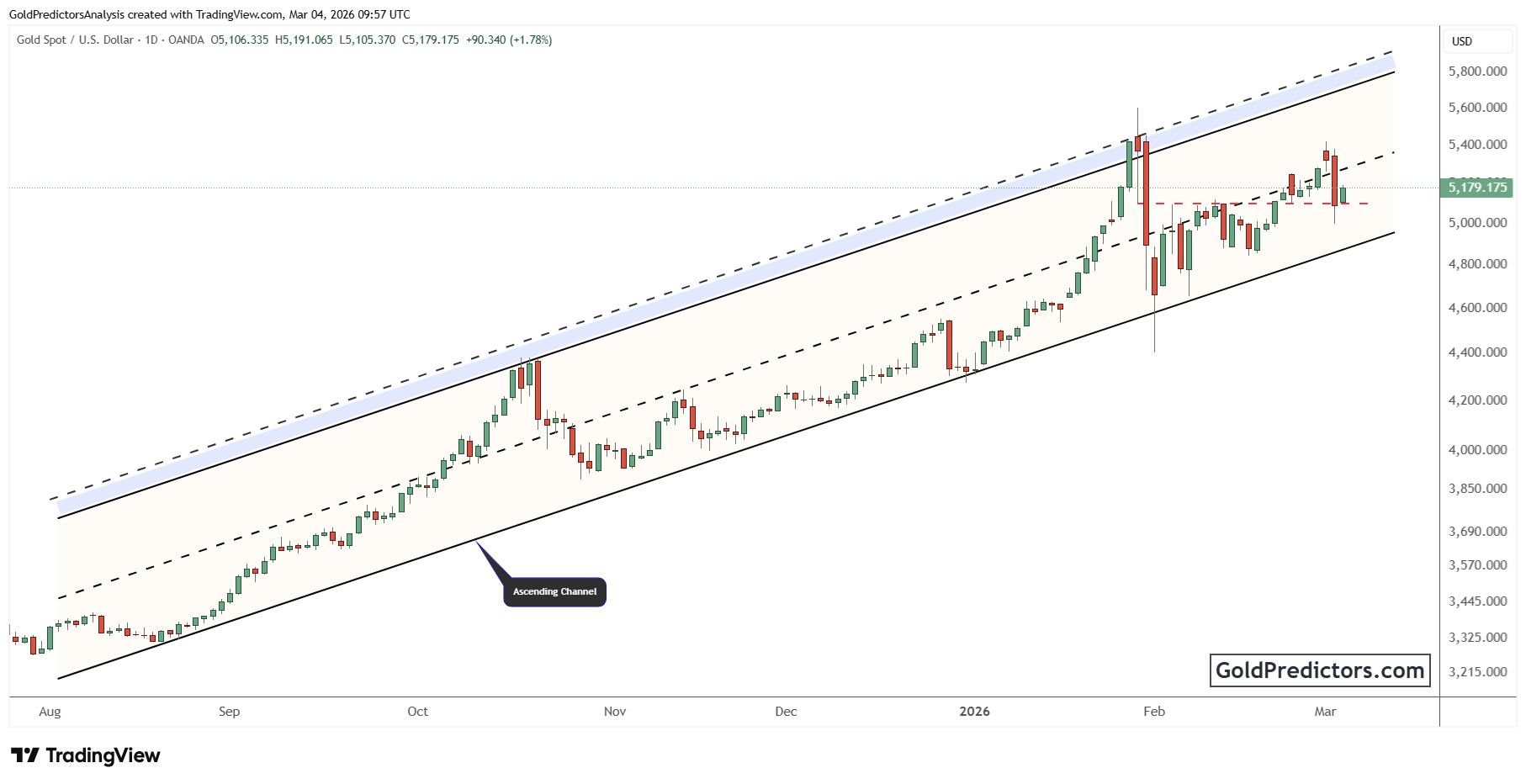
The lower boundary of the channel has repeatedly provided firm support during pullbacks. Each approach toward this rising trendline attracted renewed demand, lifting the price back toward the upper portion of the structure. This pattern signals steady acceptance of higher price levels. It also suggests that investors view dips as opportunities to accumulate positions within the ongoing uptrend.
Currently, gold is stabilizing after the rebound from the $5,100 level. Price remains firmly positioned within the rising channel, keeping the overall structure intact. As long as channel support continues to hold, the broader trend favors continued upside. Short-term pauses may appear along the way, yet the prevailing structure still points toward further gains in the weeks ahead.
Gold outlook: Geopolitical risks and technical structure support higher prices
Gold remains supported by geopolitical uncertainty and shifting macro expectations. Ongoing tensions in the Middle East continue to sustain safe-haven demand. At the same time, movements in oil prices, the US Dollar, and economic data are shaping short-term market direction. The technical structure also shows a stable upward trend within a rising channel. Short-term pullbacks may occur during periods of volatility. However, as long as channel support holds, the broader trend still points toward further upside.
Unlock exclusive gold and silver trading signals and updates that most investors don’t see. Join our free newsletter now!
Author

Muhammad Umair, PhD
Gold Predictors
Muhammad Umair is a financial markets analyst and investor who focuses on the forex and precious metals markets.