Gold price declines as strong US jobs data boosts Fed rate hike bets

Gold (XAU/USD) is consolidating after its recent pullback as markets reassess the outlook for US interest rates. The latest employment report showed stronger job growth and a steady unemployment rate. This increased expectations that the Federal Reserve could raise rates at its September meeting. Rising oil prices have also added to inflation concerns. Markets now turn to upcoming US inflation data for further direction on interest rates and gold.
Gold price remains under pressure as US jobs data lift Fed hike bets
Gold is consolidating after its recent decline as firm US labor data keeps September rate hike expectations elevated. Nonfarm Payrolls increased by 162,000 in August, compared with expectations for an increase of 55,000. The unemployment rate remained unchanged at 4.1%. The Labor Force Participation Rate also increased. The figures showed that the US labor market remains firm despite earlier signs of weakness.
The strong employment report has increased expectations that the Federal Reserve could raise interest rates at its September meeting. Markets are pricing in around a 58% chance of a rate increase. Higher interest rates can weigh on gold because the precious metal does not provide interest income. The stronger labor market also gives the Fed more room to focus on inflation risks. This shift in rate expectations has kept gold under pressure after its recent decline.
Rising oil prices are adding another layer of uncertainty. Higher energy costs could keep inflation elevated and support a tighter policy stance from major central banks. At the same time, the US Dollar has continued to decline despite stronger employment data. This has helped limit further pressure on gold. Markets now focus on the upcoming US inflation figures. A stronger inflation report could increase expectations for a September rate hike, while softer data could reduce those expectations.
Gold price consolidates above rising trendline as broadening wedge remains intact
The gold chart below shows price trading within a large ascending broadening wedge. Price has remained between the two rising trendlines that form the pattern. Gold previously climbed toward the upper part of the wedge before turning lower. The latest decline has shifted attention toward the lower rising trendline, which remains an important support for the current structure.
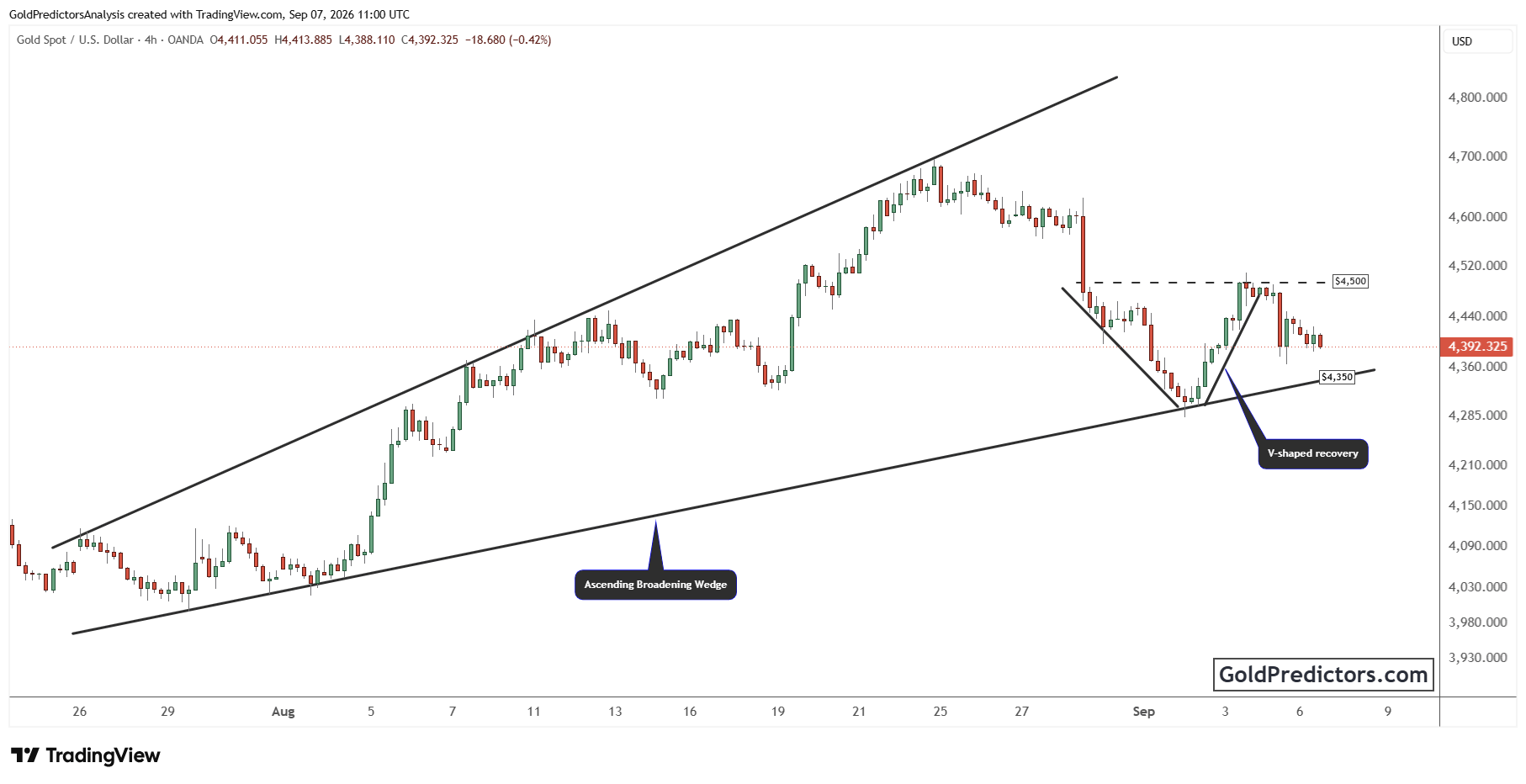
Recently, gold formed a V-shaped recovery from the lower support of the ascending broadening wedge. Price climbed from the rising trendline and moved toward the $4,500 resistance. However, gold failed to break above this level and turned lower again. Price is holding above the rising support trendline, keeping the structure intact.
The $4,350 support is now the key technical level to monitor. Holding above this level would keep gold within the ascending broadening wedge and leave room for another recovery toward $4,500. A break above $4,500 could strengthen the technical structure. However, a sustained move below $4,350 would weaken the current setup and could bring lower support levels into focus.
Gold outlook: US inflation data could shape the next move
Gold remains under pressure as strong US employment data increase expectations for a Federal Reserve rate hike. Rising oil prices also keep inflation concerns in focus. However, weakness in the US Dollar and geopolitical uncertainty continue to provide some support. From a technical perspective, gold is holding above the rising trendline of the ascending broadening wedge. The $4,350 support region is now in focus, while upcoming US inflation data could determine the next major direction.
Unlock exclusive gold and silver trading signals and updates that most investors don’t see. Join our free newsletter now!
Author

Muhammad Umair, PhD
Gold Predictors
Muhammad Umair is a financial markets analyst and investor who focuses on the forex and precious metals markets.

















