Gold is now more than just a safe-haven investment

Everyone is now talking about gold prices' correction. But few realize that nowadays gold is not just a safe-haven asset but an essential element of the financial infrastructure.
The key difference between gold and any other financial asset is that gold does not have an issuer. In other words, unlike the US Fed, gold does not have a balance sheet, it does not have an FOMC, and it is not exposed to any individual country's credit risk. This is of paramount importance in a world where sanctions lead to the freezing of national reserves, while countries' national debts increase substantially faster than their GDPs.
Debt-to-GDP ratio
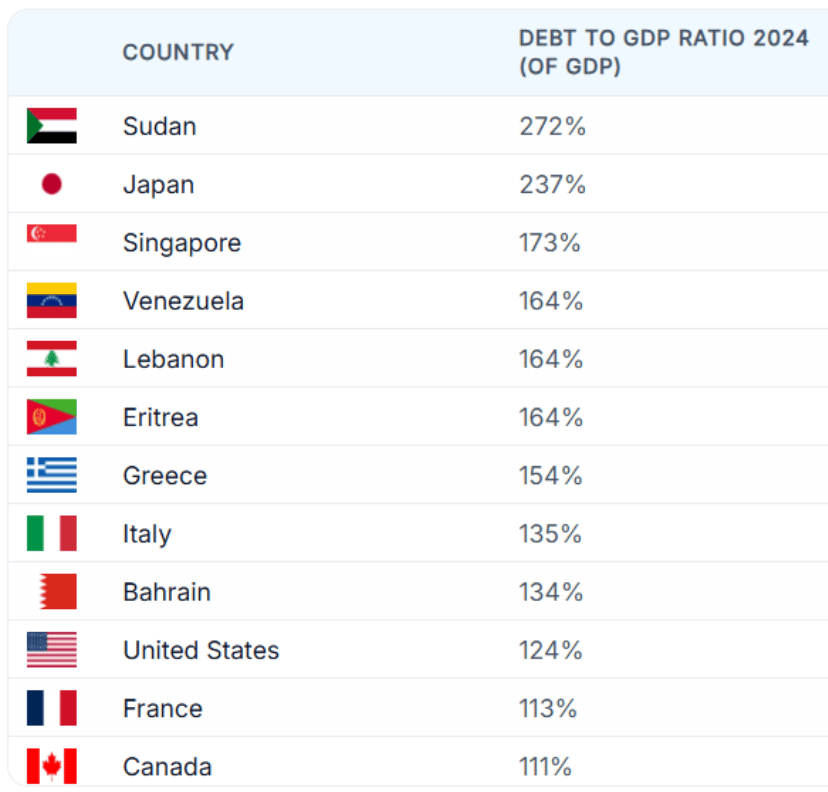
A lot of developed countries have enormously high national debt-to-GDP ratios. This is particularly true of Japan (237%), the United States (124%), and Canada (111%).
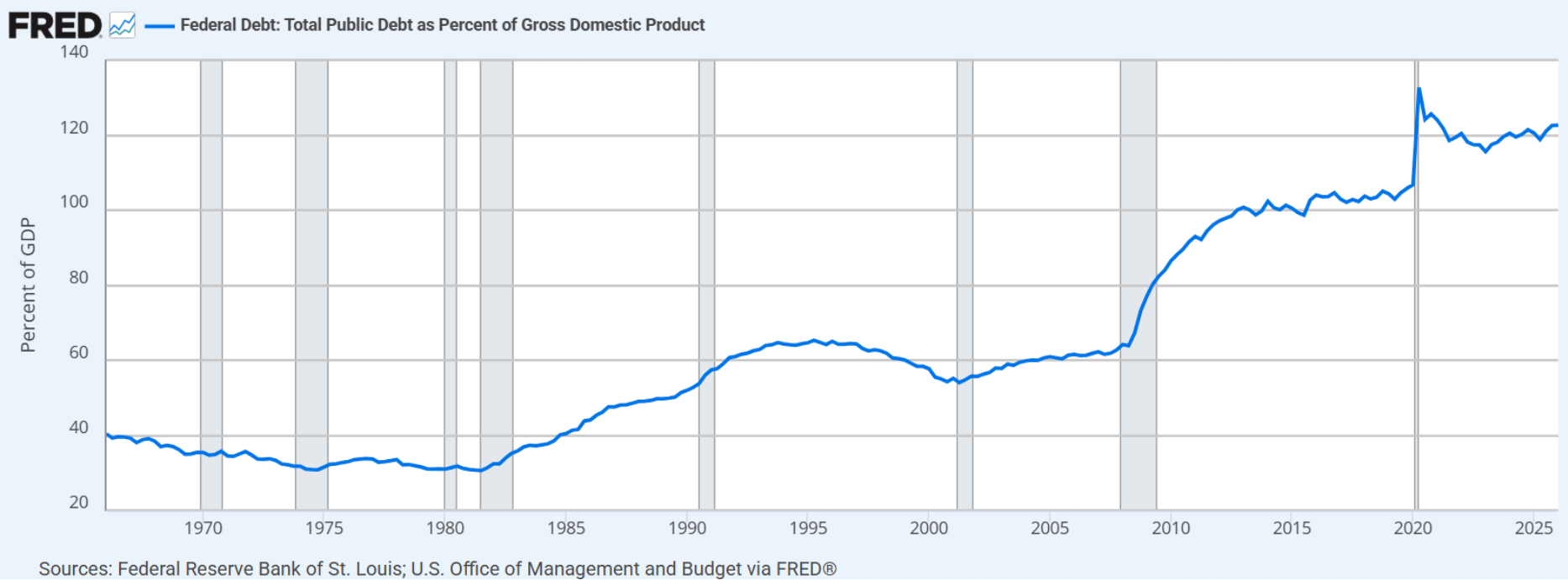
A very obvious example of this is the US, whose debt-to-GDP ratio, not just its national debt, is rising fast.
US national debt
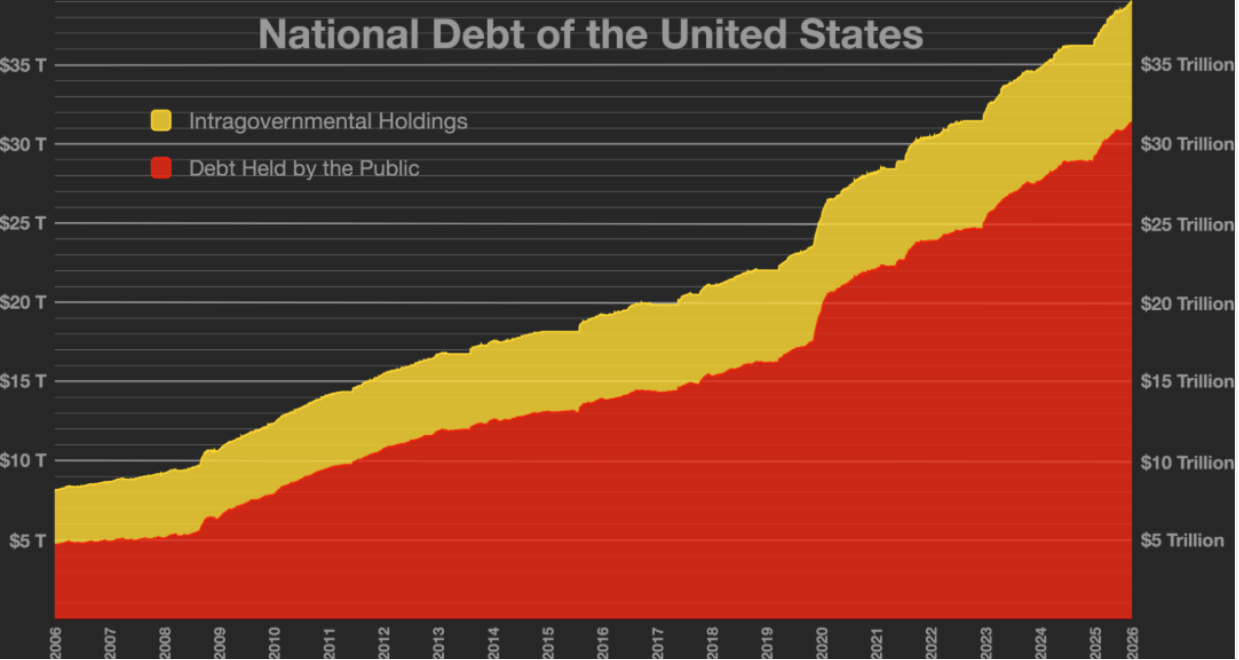
The US debt is soaring fast, but even worse is the fact that the US debt is rising faster than its gross domestic product. This means that the money printed by the Fed to pay the national debt is rising, while the amount of goods and services produced in the US is not rising as fast. This situation means demand-pull inflation when too much money is chasing too few goods.
US Debt-to-GDP ratio history
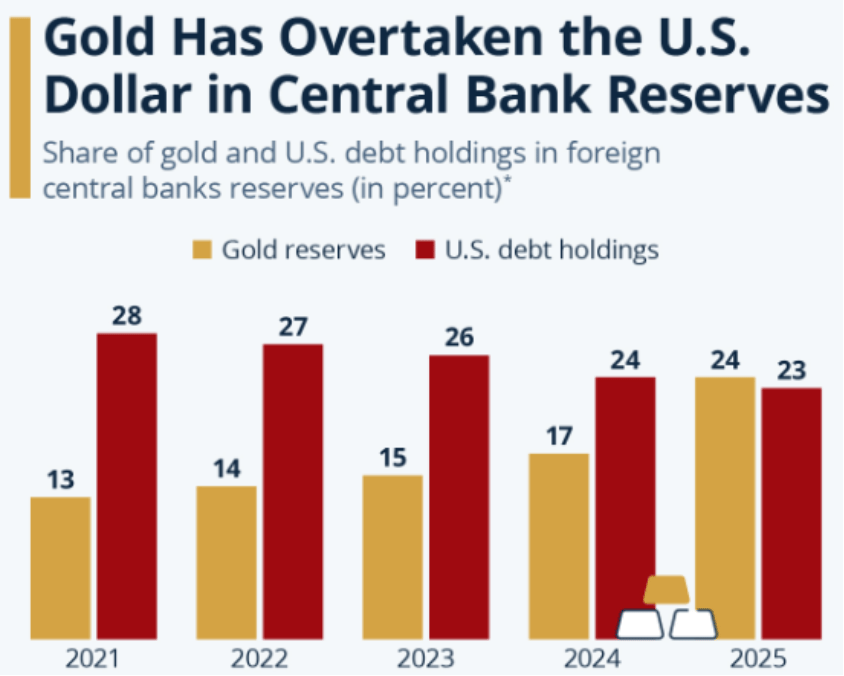
It seems that there has recently been a historical shift. According to the ECB's data, by the end of 2025 gold has gained a larger share of central bankers' foreign reserves than US Treasuries—27% versus just 22%.
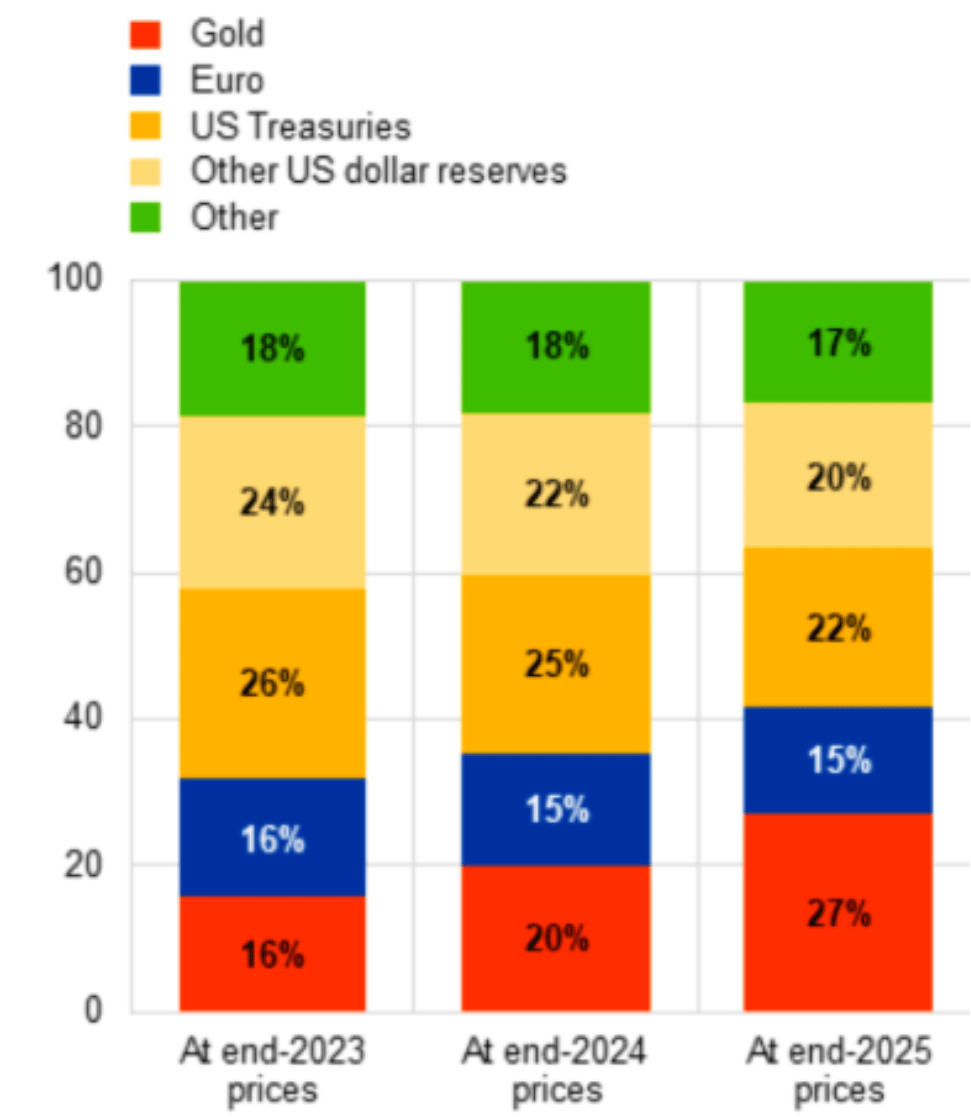
This has happened for the first time since the 1990s. The global gold reserves have exceeded 36,000 tons, a record high since the end of the Bretton Woods system. Particularly interesting is the situation with the central bank of Turkey. In the first quarter of 2026, Turkey sold off all its US Treasuries in order to import fossil fuels. At the same time, its gold reserves remained untouched. Indeed, Turkey sold almost $14 billion of its US Treasury securities, reducing its holdings from $16 billion down to just $1.8 billion.
As I have written in my other articles, in 1944 during World War II, the US dollar became the global reserve currency as part of the Bretton Woods agreement. Concurrently, the USD has received gold's backing. That is why both the USD and gold became the key components of central banks' foreign reserves, which meant central banks started stockpiling them.
In the 1970s, however, due to the rising budget deficits, President Nixon canceled gold’s backing of the US dollar for the Federal Reserve to be able to print more money. Obviously, this allowed somehow managing the US national debt. At the same time, this led to the US dollar’s fast devaluation and also gold prices’ surge. Even though the US debt is very high and increasing fast as well, many countries still hold US Treasuries and US dollars as part of their foreign reserves. But now it seems to be changing; gold reserves are rising, unlike US Treasury holdings. BRICS countries in particular are raising their gold holdings to move away from the US dollar. Russia and Iran in particular, BRICS members, have faced sanctions from the collective West. Russia’s foreign reserves that the country used to store in Western banks were frozen in 2022. In order to spread the risks, many other countries, including China, have started moving away from the US dollar by buying gold. Gold is free from counterparty risks and also offers protection from inflation.
It has been discussed in the press that gold prices have decreased. But gold prices do not even matter anymore. The key question is now which role gold would play in the global monetary system. It is not just a conservative safe-haven asset but an essential part of the monetary system, as it protects foreign reserves from fiat currencies’ devaluation and political and counterparty risks.
Author

Anna Sokolidou
Independent Analyst
A research analyst, a freelance finance writer and an economics teacher looking for interesting investment opportunities. I have been investing for years. I am mostly interested in writing about commodities, precious metals and large corporations.
















