Gold had its moment and Copper is crowded: Why Aluminum could be the next scarcity trade
While Gold and Copper dominate market attention, Aluminum may be setting up for a much bigger surprise. Beneath the surface, the Aluminum market is tightening fast in what could be the start of a structural supply squeeze.

Moving beyond traditional cyclical demand
Aluminum has spent years being treated like a classic cyclical metal, which and falls with construction demand, Chinese growth, and global manufacturing sentiment. But that framework may now be outdated.
Aluminum is no longer just tied to old-economy demand; it’s increasingly tied to electrification, energy infrastructure, transport lightweighting, and manufacturing substitution.
Geopolitical fears briefly sent LME Aluminum soaring to a four-year high near $3,800 per tonne in early June. Yet the rally proved short-lived, with prices plunging nearly 16% by month-end as easing regional tensions and prospects of a US-Iran peace deal calmed supply concerns.
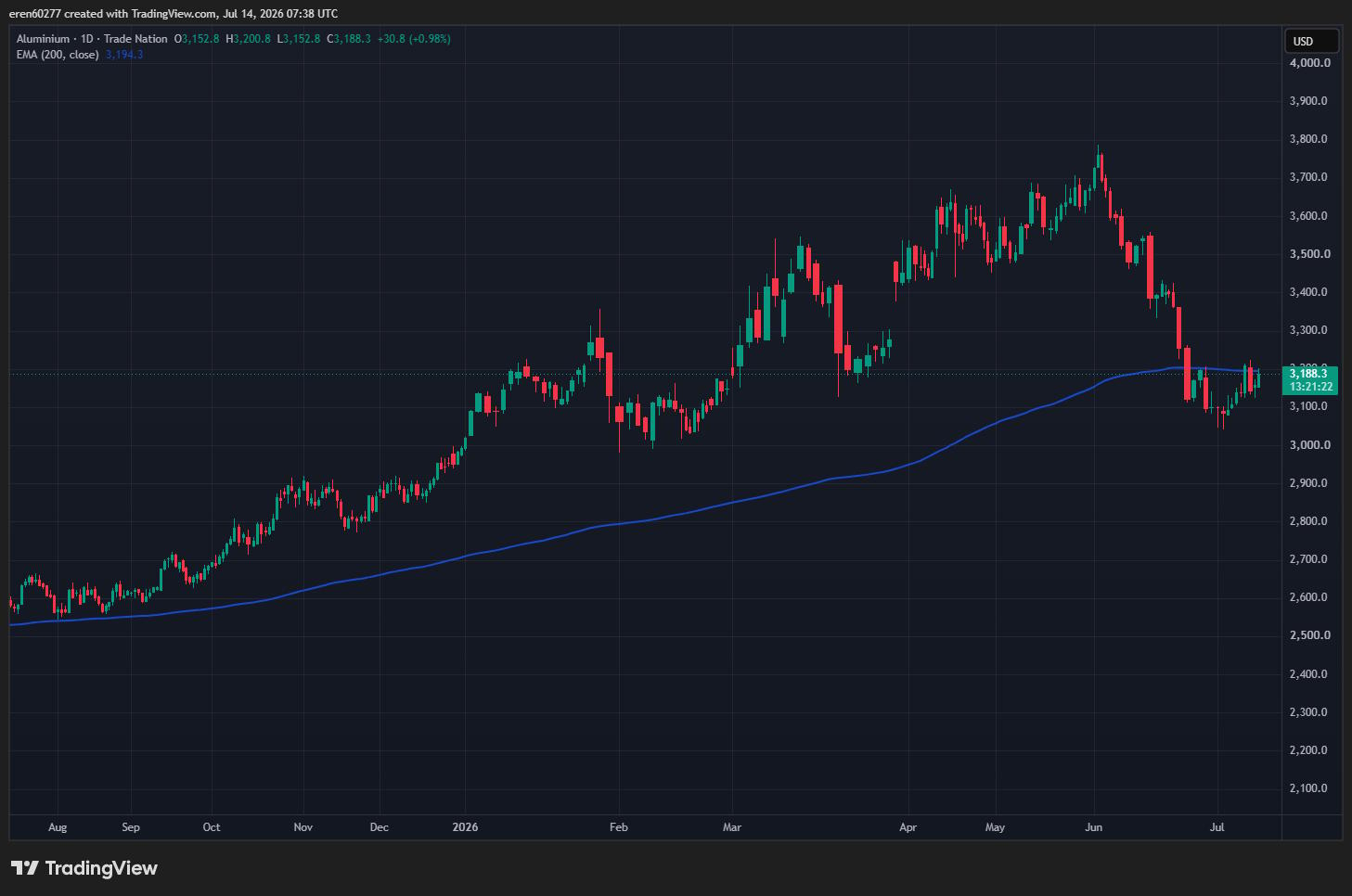
Now, with the Aluminum price trading around $3,100, ING said the Aluminum deficit will persist even if Middle East tensions ease, keeping its 2026 forecasts elevated at $3,500 per ton in Q3 and $3,400 in Q4. This is no longer a market pricing in a simple rebound, it’s a market increasingly worried about structural tightness.
Supply faces mounting pressures
For years, Aluminum was priced according to one question: Is global manufacturing getting stronger or weaker?
Now traders are asking something completely different: Is there enough Aluminum available? Supply is currently facing pressure from multiple angles:
- The Middle East factor: The Middle East matters far more to Aluminum than many traders realize. ING estimates the region accounts for roughly 9% of global Aluminum production, but an even larger share of seaborne supply, meaning disruptions there can hit global availability disproportionately hard. Lost production isn’t instantly restored, and Chinese exports haven’t fully rebalanced the market. The World Bank sees Aluminum prices rising to record highs this year as supply struggles to keep up with building demand.
- Power and energy constraints: Aluminum is one of the most energy-intensive metals in the world to produce. Higher power prices, energy shortages, or smelter outages can quickly turn into a supply squeeze. S&P Global noted that Aluminum prices were revised higher because of conflict-driven energy costs and supply disruptions, while Reuters highlighted that Aluminum was among the metals most heavily whipsawed by war-and-peace swings in the Middle East. A few large smelters running below capacity can have an outsized impact.
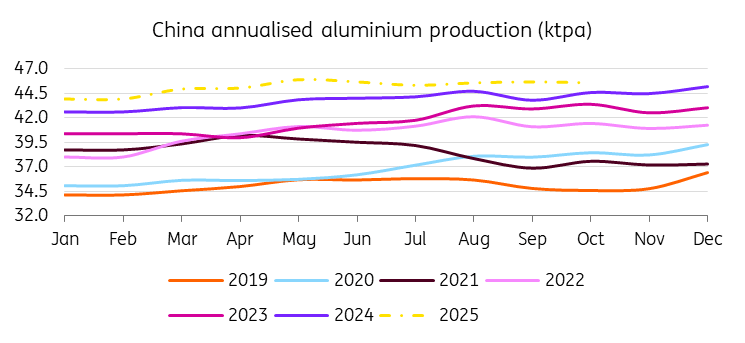
- China’s capacity caps: Normally, when prices rise, traders assume China will just ramp up output and kill the rally. But industry experts have repeatedly flagged that China’s self-imposed 45-million-tonne capacity cap is almost reached. If Beijing sticks to production constraints, it limits how much China can offset tightness elsewhere.
What inventory trends reveal
Instead of merely watching geopolitical headlines, traders should focus on whether inventories are rebuilding. LME Aluminum inventories remain at their lowest levels since September 2022, and even after Gulf production began recovering, the market continued trading in backwardation—a classic sign that buyers are willing to pay a premium for immediate metal delivery.
The market isn't worried about Aluminum five years from now; it's worried about Aluminum today. The bullish thesis is not just that demand goes up, but that demand rises into a supply system that may no longer be flexible enough to absorb it cleanly.
Emerging demand drivers and copper substitution
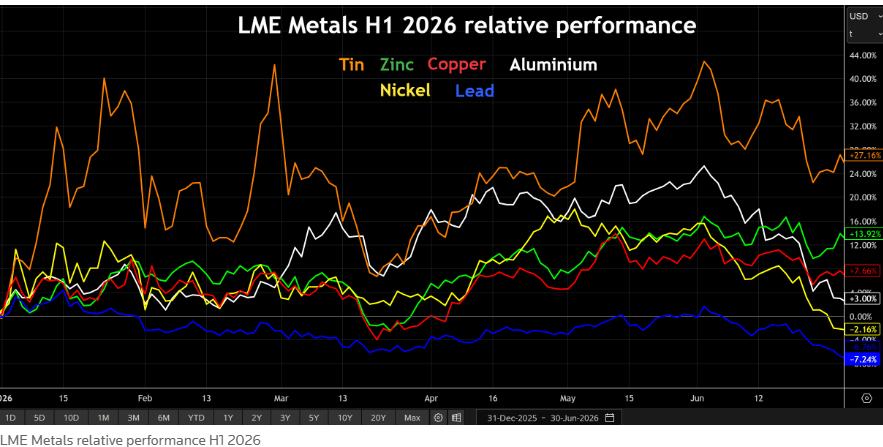
The World Bank notes base metal demand is increasingly supported by the energy transition, renewable power, transmission upgrades, and AI-linked data-center investment. It expects Aluminum, copper, and tin prices to hit all-time highs in 2026 before easing in 2027, while still remaining near record levels.
Aluminum sits right at the intersection of several structural demand themes:
- Power grids and electrification: As countries expand power transmission networks and renewable infrastructure, Aluminum becomes more valuable because it’s lighter and cheaper than copper in many applications.
- Electric vehicles and lightweighting: Automakers continue pushing for lighter vehicles to improve efficiency and range, supporting Aluminum use in transportation.
- Solar and industrial infrastructure: Solar panel frames, mounting systems, transmission equipment, packaging, and construction all add to baseline demand.
- Copper substitution: As copper prices surge, manufacturers are increasingly looking at Aluminum as a cheaper alternative in selected applications, such as power transmission, appliances, and industrial uses. Aluminum is not just benefiting from its own fundamentals; it’s also potentially gaining from copper’s bull market.
Why the market may be underpricing the move
The market still tends to think about Aluminum as a growth metal that should struggle if China’s property sector is weak or if global manufacturing softens. While those risks matter, that view underestimates how much the market structure has changed.
Aluminum is no longer driven only by Chinese construction demand; it’s increasingly influenced by supply bottlenecks outside China, energy costs, geopolitics, and structural demand from electrification and substitution.
In April, Aluminum became one of the most volatile corners of the commodity complex, described as the “storm center” of the commodity market after prices spiked on geopolitical disruption. That kind of move shows the market is vulnerable to upside shocks because spare supply is not as abundant as assumed. When a market is structurally tight, it doesn’t take much to force a repricing – whether through a smelter outage, shipping bottleneck, power disruption, industrial rebound, or accelerated copper substitution.
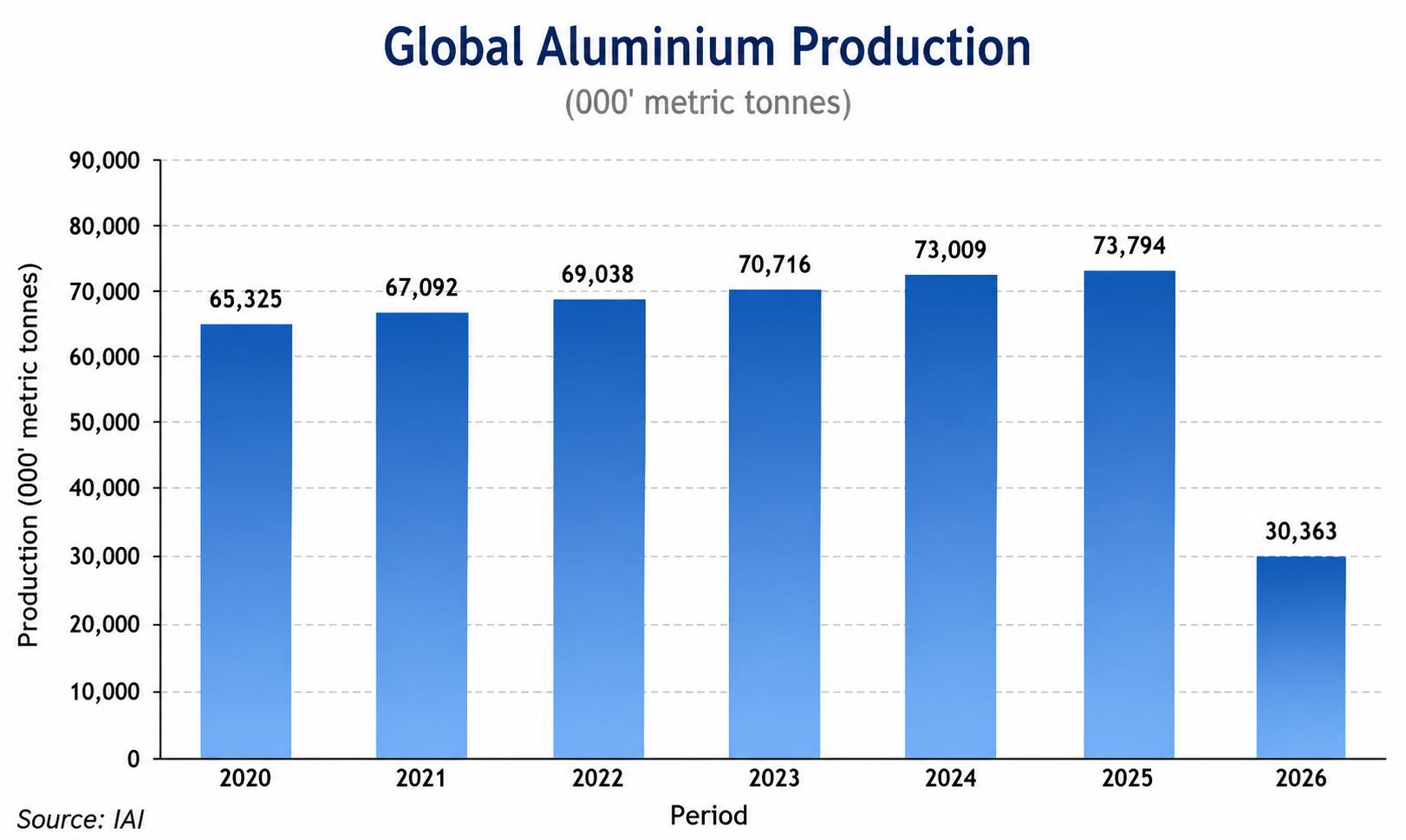
Key risks to the bullish thesis
No trade is risk-free, and four specific risks could invalidate this bullish outlook:
- China ramps up supply faster than expected: If China significantly increases output or exports enough metal to ease the deficit, that could cap the upside.
- Global growth rolls over hard: If industrial demand weakens sharply in Europe, China, or the US, Aluminum demand could soften enough to offset supply tightness.
- Energy prices collapse and capacity returns: If geopolitical premiums disappear and affected smelters return faster than expected, the deficit could narrow.
- Market positioning: If traders are too aggressively long after a strong run, even a bullish long-term story can see a painful short-term correction.
Key indicators for traders to watch
If supply stays constrained and demand remains structurally supported, Aluminum looks like a market where dips could be bought rather than chased lower. Traders tracking this theme should monitor five main factors:
- LME price action and inventory trends: Elevated prices alongside inventory draws reinforce the deficit story.
- China’s production stance: Watch signals around output, exports, and capacity discipline.
- Middle East and energy headlines: Power or shipping disruptions can move this energy-intensive market quickly.
- Copper prices: Higher copper prices accelerate the Aluminum substitution trade.
- Global manufacturing and power-grid demand: Industrial stabilization paired with tight supply could trigger another major leg higher.
Conclusion
Every major commodity bull market begins the same way: first, it’s seen as a short-term disruption; then inventories disappear and producers struggle to respond; finally, prices move much further than expected.
Gold has already had its moment, and Copper is becoming increasingly crowded. Aluminum may be the next market where traders realize there simply isn't enough supply, transforming this from an industrial metal story into a structural scarcity trade.
(This article was created with the help of an Artificial Intelligence tool and reviewed by an editor. Know more.)
Author

Dhwani Mehta
FXStreet
Residing in Mumbai (India), Dhwani is a Senior Analyst and Manager of the Asian session at FXStreet. She has over 10 years of experience in analyzing and covering the global financial markets, with specialization in Forex and commodities markets.